



- /
- Librarie online
- /
- Carti in engleza
- /
- Religion
- /
- Reference
- /
- On the Incomprehensible Nature of God - St John Chrysostom
On the Incomprehensible Nature of God
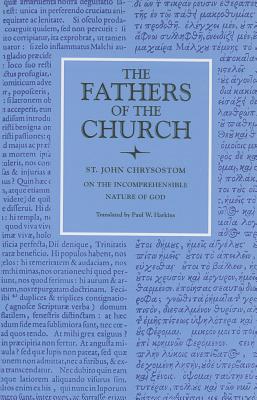
Ten of the twelve homilies of St. John Chrysostom presented here were delivered at Antioch over a period of several years beginning in A.D. 386. The final two homilies were delivered in 398 after Chrysostom became patriarch of Constantinople.
All but one of the homilies aim at refuting the Anomoeans, heretics who revived the most radical tenets of Arius and blatantly claimed that man knows God in the very same way that God knows himself. Chrysostom's refutations and instructions to the faithful are based on the Scriptures rather than on human reasoning. He departed from this series of refutations only in the sixth homily, which he delivered on December 20, 386, again at Antioch. It consists of a panegyric of St. Philogonius, bishop of Antioch ca. A.D. 319-23, who before his episcopal ordination had led a very exemplary life, practiced law and contracted a marriage that was blessed with a daughter.
In addition to their theological content, these homilies contain many other points of interest. On one occasion, people applauded the speaker and were very attentive to the homily but then left the church so that when Christ is about to appear in the holy mysteries the church becomes empty (Hom III.32; Hom VII.2). During another homily, pickpockets plied their trade so that Chrysostom urged "let no one come into the church carrying money" (Hom IV.46). Chrysostom also indicates that people kept talking to one another at the sacred moment when Christ becomes present (Hom IV.36). He also mentions that chariot races often proved more enticing than going to church (Hom VII.1). Finally, valuable information on fourth-century Eastern liturgies is found in Hom III.41, 42, and Hom IV.32.
PRP: 441.75 Lei

Acesta este Prețul Recomandat de Producător. Prețul de vânzare al produsului este afișat mai jos.
397.57Lei
397.57Lei
441.75 LeiPrimești 397 puncte

Livrare in 2-4 saptamani
Descrierea produsului
Ten of the twelve homilies of St. John Chrysostom presented here were delivered at Antioch over a period of several years beginning in A.D. 386. The final two homilies were delivered in 398 after Chrysostom became patriarch of Constantinople.
All but one of the homilies aim at refuting the Anomoeans, heretics who revived the most radical tenets of Arius and blatantly claimed that man knows God in the very same way that God knows himself. Chrysostom's refutations and instructions to the faithful are based on the Scriptures rather than on human reasoning. He departed from this series of refutations only in the sixth homily, which he delivered on December 20, 386, again at Antioch. It consists of a panegyric of St. Philogonius, bishop of Antioch ca. A.D. 319-23, who before his episcopal ordination had led a very exemplary life, practiced law and contracted a marriage that was blessed with a daughter.
In addition to their theological content, these homilies contain many other points of interest. On one occasion, people applauded the speaker and were very attentive to the homily but then left the church so that when Christ is about to appear in the holy mysteries the church becomes empty (Hom III.32; Hom VII.2). During another homily, pickpockets plied their trade so that Chrysostom urged "let no one come into the church carrying money" (Hom IV.46). Chrysostom also indicates that people kept talking to one another at the sacred moment when Christ becomes present (Hom IV.36). He also mentions that chariot races often proved more enticing than going to church (Hom VII.1). Finally, valuable information on fourth-century Eastern liturgies is found in Hom III.41, 42, and Hom IV.32.
Detaliile produsului