- /
- Librarie online
- /
- Carti in engleza
- /
- History
- /
- Jewish
- /
- Pinkas Tishevits - Y. Zipper
Pinkas Tishevits
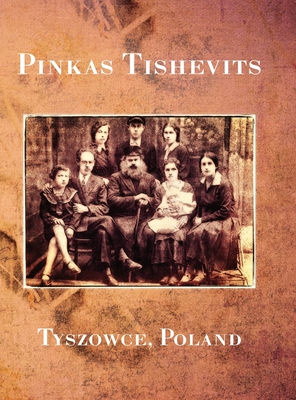
"On September 1, 1939, the dark clouds descending on Jews everywhere, especially on the Jews of Poland, quickly enveloped the Jews of Tishevits (as Jews called Tyszowce in Yiddish). Every Tishevits Jew was consumed with deathly fear by the question: Where to run to?"
So it is recorded in this Yizkor book. At the outbreak of World War II, there were about 3,800 Jews in Tyszowce. The German army occupied the town at the beginning of October 1939. In May 1942, about 1,000 Jews were deported to the Belzec death camp. The Jewish community was liquidated in November 1942, when the remaining Jews were sent to the same camp. After the war the Jewish community of Tyszowce was not reconstituted.
The history of Tyszowce dates back to the Middle Ages. Located in "Lesser Poland" for close to 500 years it was in the Lublin province near the crossroads of Volhynia and Ukraine. The town was surrounded by rushing rivers, dark forests, swampy peat bogs, and sun-dazzled sands.
Throughout the generations, the town was occupied by Cossacks, Russians and Tatars, and also burnt to the ground several times.
Its craftsmen were renowned for their boot-making. Tyszowce old-timers said that the name Tishevits came from the Polish words "Tu szewcow" which means, "Here are shoemakers." They produced a special kind of boot known as Tishavanes. The boots were sewn together by hand using only soft leather, even for the soles. There was no difference between the left or right boot. Every farmer knew how to make such boots, and in the winter when there was no outdoor fieldwork, they used to make the boots for their own use, as well as for sale.
In peaceful times, the book describes Tishevits as a shtetl that lived without commotion, without clamor. Everyone worked hard to earn enough for bread and challah for Shabbat. With their last pennies, they sent their children to cheder, yeshivah, and did hard physical labor to be able to marry their children off with proper respect.
"But everything was annihilated all at once," it laments, "killed off violently, and from the whole shtetl, nothing was left but a mass grave somewhere in the forests..."
May this book serve as a memorial to the Jewish town, its people can the Jewish community that was so brutally destroyed.
PRP: 359.60 Lei

Acesta este Prețul Recomandat de Producător. Prețul de vânzare al produsului este afișat mai jos.
323.64Lei
323.64Lei
359.60 LeiPrimești 323 puncte

Livrare in 2-4 saptamani
Descrierea produsului
"On September 1, 1939, the dark clouds descending on Jews everywhere, especially on the Jews of Poland, quickly enveloped the Jews of Tishevits (as Jews called Tyszowce in Yiddish). Every Tishevits Jew was consumed with deathly fear by the question: Where to run to?"
So it is recorded in this Yizkor book. At the outbreak of World War II, there were about 3,800 Jews in Tyszowce. The German army occupied the town at the beginning of October 1939. In May 1942, about 1,000 Jews were deported to the Belzec death camp. The Jewish community was liquidated in November 1942, when the remaining Jews were sent to the same camp. After the war the Jewish community of Tyszowce was not reconstituted.
The history of Tyszowce dates back to the Middle Ages. Located in "Lesser Poland" for close to 500 years it was in the Lublin province near the crossroads of Volhynia and Ukraine. The town was surrounded by rushing rivers, dark forests, swampy peat bogs, and sun-dazzled sands.
Throughout the generations, the town was occupied by Cossacks, Russians and Tatars, and also burnt to the ground several times.
Its craftsmen were renowned for their boot-making. Tyszowce old-timers said that the name Tishevits came from the Polish words "Tu szewcow" which means, "Here are shoemakers." They produced a special kind of boot known as Tishavanes. The boots were sewn together by hand using only soft leather, even for the soles. There was no difference between the left or right boot. Every farmer knew how to make such boots, and in the winter when there was no outdoor fieldwork, they used to make the boots for their own use, as well as for sale.
In peaceful times, the book describes Tishevits as a shtetl that lived without commotion, without clamor. Everyone worked hard to earn enough for bread and challah for Shabbat. With their last pennies, they sent their children to cheder, yeshivah, and did hard physical labor to be able to marry their children off with proper respect.
"But everything was annihilated all at once," it laments, "killed off violently, and from the whole shtetl, nothing was left but a mass grave somewhere in the forests..."
May this book serve as a memorial to the Jewish town, its people can the Jewish community that was so brutally destroyed.
Detaliile produsului