








Politics, Religion and Power in the Great Lakes Region
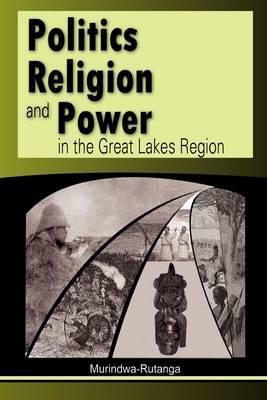
Politics, Religion and Power in the Great Lakes Region
Politics, Religion and Power in the Great Lakes Region covers the political, religious and power relations in the contemporary Great Lakes States: Uganda, Rwanda, Burundi, the Democratic Republic of Congo (DRC), Tanzania, Kenya and the Sudan. The work is important because of the nexus between these countries' shared present and past - their political, socio-economic, cultural and historical aspirations. In terms of regional cooperation, they are the countries, save for the DRC and the Sudan, which form the current East African Community (EAC). The book reflects on the complex dynamics and strategies of the ensuing power struggle, bringing forth a unique set of fascinating revelations of patterns of primitive capital accumulation, resistance, human rights violations and the political compromises between traditional enemies when confronted by a common (foreign) enemy. A critical analysis of the political distortion the region suffered brings to light the relevance of these divisive tools on the current trends in the African countries, drawing inferences from the African Great Lakes Region (GLR). The study highlights how the conflicts were finally resolved to avert a serious war, thus bringing about new reforms. This history is instructive to the contemporary reader because of the frequent skirmishes caused by ethnic and religious differences, political and territorial conflicts as well as resource and leadership disputes in the GLR.
PRP: 458.30 Lei

Acesta este Prețul Recomandat de Producător. Prețul de vânzare al produsului este afișat mai jos.
412.47Lei
412.47Lei
458.30 LeiPrimești 412 puncte

Livrare in 2-4 saptamani
Descrierea produsului
Politics, Religion and Power in the Great Lakes Region covers the political, religious and power relations in the contemporary Great Lakes States: Uganda, Rwanda, Burundi, the Democratic Republic of Congo (DRC), Tanzania, Kenya and the Sudan. The work is important because of the nexus between these countries' shared present and past - their political, socio-economic, cultural and historical aspirations. In terms of regional cooperation, they are the countries, save for the DRC and the Sudan, which form the current East African Community (EAC). The book reflects on the complex dynamics and strategies of the ensuing power struggle, bringing forth a unique set of fascinating revelations of patterns of primitive capital accumulation, resistance, human rights violations and the political compromises between traditional enemies when confronted by a common (foreign) enemy. A critical analysis of the political distortion the region suffered brings to light the relevance of these divisive tools on the current trends in the African countries, drawing inferences from the African Great Lakes Region (GLR). The study highlights how the conflicts were finally resolved to avert a serious war, thus bringing about new reforms. This history is instructive to the contemporary reader because of the frequent skirmishes caused by ethnic and religious differences, political and territorial conflicts as well as resource and leadership disputes in the GLR.
Detaliile produsului




