- /
- Librarie online
- /
- Carti in engleza
- /
- Photography
- /
- Subjects & Themes
- /
- Plants & Animals
- /
- Pop Art - Klaus Honnef
Pop Art
Pop Art
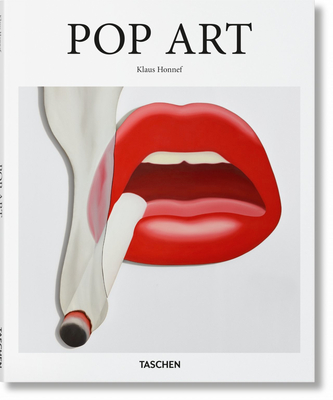
Peaking in the 1960s, Pop Art began as a revolt against mainstream approaches to art and culture and evolved into a wholesale interrogation of modern society, consumer culture, the role of the artist, and of what constituted an artwork.Focusing on issues of materialism, celebrity, and media, Pop Art drew on mass-market sources, from advertising imagery to comic books, from Hollywood's most famous faces to the packaging of consumer products, the latter epitomized by Andy Warhol's Campbell's soup cans. As well as challenging the establishment with the elevation of such popular, banal, and kitschy images, Pop Art also deployed methods of mass-production, reducing the role of the individual artist with mechanized techniques such as screen printing.With featured artists including Andy Warhol, Allen Jones, Ed Ruscha, Robert Indiana, Jasper Johns, Robert Rauschenberg, and Roy Lichtenstein, this book introduces the full reach and influence of a defining modernist movement.
Peaking in the 1960s, Pop Art began as a revolt against mainstream approaches to art and culture and evolved into a wholesale interrogation of modern society, consumer culture, the role of the artist, and of what constituted an artwork.Focusing on issues of materialism, celebrity, and media, Pop Art drew on mass-market sources, from advertising imagery to comic books, from Hollywood's most famous faces to the packaging of consumer products, the latter epitomized by Andy Warhol's Campbell's soup cans. As well as challenging the establishment with the elevation of such popular, banal, and kitschy images, Pop Art also deployed methods of mass-production, reducing the role of the individual artist with mechanized techniques such as screen printing.With featured artists including Andy Warhol, Allen Jones, Ed Ruscha, Robert Indiana, Jasper Johns, Robert Rauschenberg, and Roy Lichtenstein, this book introduces the full reach and influence of a defining modernist movement.About the seriesEach book in TASCHEN's Basic Genre series features: approximately 100 color illustrations with explanatory captionsa detailed, illustrated introductiona selection of the most important works of the epoch, each presented on a two-page spread with a full-page image and accompanying interpretation, as well as a portrait and brief biography of the artist
Peaking in the 1960s, Pop Art began as a revolt against mainstream approaches to art and culture and evolved into a wholesale interrogation of modern society, con
PRP: 140.40 Lei

Acesta este Prețul Recomandat de Producător. Prețul de vânzare al produsului este afișat mai jos.
126.36Lei
126.36Lei
140.40 LeiPrimești 126 puncte

Livrare in 2-4 saptamani
Descrierea produsului
Peaking in the 1960s, Pop Art began as a revolt against mainstream approaches to art and culture and evolved into a wholesale interrogation of modern society, consumer culture, the role of the artist, and of what constituted an artwork.Focusing on issues of materialism, celebrity, and media, Pop Art drew on mass-market sources, from advertising imagery to comic books, from Hollywood's most famous faces to the packaging of consumer products, the latter epitomized by Andy Warhol's Campbell's soup cans. As well as challenging the establishment with the elevation of such popular, banal, and kitschy images, Pop Art also deployed methods of mass-production, reducing the role of the individual artist with mechanized techniques such as screen printing.With featured artists including Andy Warhol, Allen Jones, Ed Ruscha, Robert Indiana, Jasper Johns, Robert Rauschenberg, and Roy Lichtenstein, this book introduces the full reach and influence of a defining modernist movement.
Peaking in the 1960s, Pop Art began as a revolt against mainstream approaches to art and culture and evolved into a wholesale interrogation of modern society, consumer culture, the role of the artist, and of what constituted an artwork.Focusing on issues of materialism, celebrity, and media, Pop Art drew on mass-market sources, from advertising imagery to comic books, from Hollywood's most famous faces to the packaging of consumer products, the latter epitomized by Andy Warhol's Campbell's soup cans. As well as challenging the establishment with the elevation of such popular, banal, and kitschy images, Pop Art also deployed methods of mass-production, reducing the role of the individual artist with mechanized techniques such as screen printing.With featured artists including Andy Warhol, Allen Jones, Ed Ruscha, Robert Indiana, Jasper Johns, Robert Rauschenberg, and Roy Lichtenstein, this book introduces the full reach and influence of a defining modernist movement.About the seriesEach book in TASCHEN's Basic Genre series features: approximately 100 color illustrations with explanatory captionsa detailed, illustrated introductiona selection of the most important works of the epoch, each presented on a two-page spread with a full-page image and accompanying interpretation, as well as a portrait and brief biography of the artist
Peaking in the 1960s, Pop Art began as a revolt against mainstream approaches to art and culture and evolved into a wholesale interrogation of modern society, con
Detaliile produsului