- /
- Librarie online
- /
- Carti in engleza
- /
- History
- /
- United States
- /
- 20th Century
- /
- Redefining the Immigrant South: Indian and Pakistani Immigration to Houston during the Cold War - Uzma Quraishi
Redefining the Immigrant South: Indian and Pakistani Immigration to Houston during the Cold War
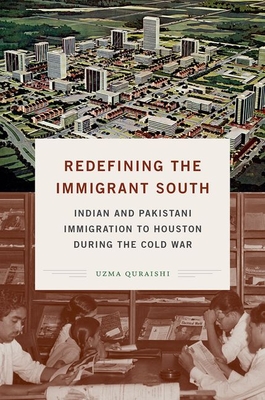
Redefining the Immigrant South: Indian and Pakistani Immigration to Houston during the Cold War
In the early years of the Cold War, the United States mounted expansive public diplomacy programs in the Global South, including initiatives with the recently partitioned states of India and Pakistan. U.S. operations in these two countries became the second- and fourth-largest in the world, creating migration links that resulted in the emergence of American universities, such as the University of Houston, as immigration hubs for the highly selective, student-led South Asian migration stream starting in the 1950s. By the late twentieth century, Houston's South Asian community had become one of the most prosperous in the metropolitan area and one of the largest in the country.
Mining archives and using new oral histories, Uzma Quraishi traces this pioneering community from its midcentury roots to the early twenty-first century, arguing that South Asian immigrants appealed to class conformity and endorsed the model minority myth to navigate the complexities of a shifting Sunbelt South. By examining Indian and Pakistani immigration to a major city transitioning out of Jim Crow, Quraishi reframes our understanding of twentieth-century migration, the changing character of the South, and the tangled politics of race, class, and ethnicity in the United States.
PRP: 334.34 Lei

Acesta este Prețul Recomandat de Producător. Prețul de vânzare al produsului este afișat mai jos.
300.91Lei
300.91Lei
334.34 LeiPrimești 300 puncte

Livrare in 2-4 saptamani
Descrierea produsului
In the early years of the Cold War, the United States mounted expansive public diplomacy programs in the Global South, including initiatives with the recently partitioned states of India and Pakistan. U.S. operations in these two countries became the second- and fourth-largest in the world, creating migration links that resulted in the emergence of American universities, such as the University of Houston, as immigration hubs for the highly selective, student-led South Asian migration stream starting in the 1950s. By the late twentieth century, Houston's South Asian community had become one of the most prosperous in the metropolitan area and one of the largest in the country.
Mining archives and using new oral histories, Uzma Quraishi traces this pioneering community from its midcentury roots to the early twenty-first century, arguing that South Asian immigrants appealed to class conformity and endorsed the model minority myth to navigate the complexities of a shifting Sunbelt South. By examining Indian and Pakistani immigration to a major city transitioning out of Jim Crow, Quraishi reframes our understanding of twentieth-century migration, the changing character of the South, and the tangled politics of race, class, and ethnicity in the United States.
Detaliile produsului