- /
- Librarie online
- /
- Carti in engleza
- /
- Science
- /
- Physics
- /
- Quantum Theory
- /
- Renormalization - Damiano Anselmi
Renormalization
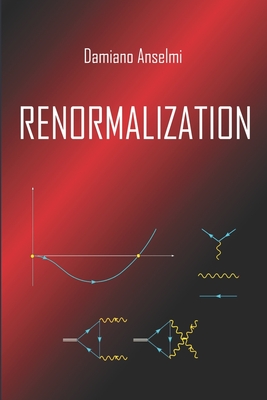
Renormalization
Course on renormalization and advanced quantum field theory Functional integral, Dimensional regularization, Feynman diagrams, Renormalization, Renormalization group, Gauge symmetry, Canonical formalism, Quantum electrodynamics, Non-Abelian gauge field theories Most modern high-energy physics, including the standard model of particle physics, is formulated by means of perturbative quantum field theory. When the perturbative expansion is performed in a naive way, it generates "divergences", that is to say, quantities that appear to be "infinite", instead of being small. Typically, they are due to diverging improper integrals. The presence of divergences suggests that it should be possible to define the perturbative expansion in a smarter way. With the help of a cutoff, divergences become temporarily finite. Then they can be classified and moved around. Clearly, if a divergence disappears by changing the parametrization of the theory, it is not a true divergence, but just a blunder due to an unfortunate choice of variables. If there exists a reparametrization that makes all the divergences disappear, then the theory is actually convergent. The divergences can be relocated by performing all sorts of operations that in normal circumstances leave the physics unchanged, such as changes of field variables, as well as redefinitions of the parameters, in particular the coupling constants. Renormalization is the reparametrization that moves the divergences "to the right places", assuming that such places do exist. In simple theories, the fields and the couplings just get multiplied by constants, whence the name re-normalization. In more complicated situations the redefinitions can even be nonpolynomial. Once the theory is renormalized, the cutoff can be safely removed, and the physical quantities become meaningful. The reparametrization solves the problem of divergences, and allows us to define the correct perturbative expansion. Under certain, rather general, assumptions it is always possible to absorb the divergences into reparametrizations. However, the price can be considerably high: the introduction of infinitely many new independent parameters. If the divergences can be cancelled by keeping the number of independent parameters finite, the theory is called renormalizable. The renormalizable theories acquire a very special status among all theories. Renormalizability provides a way to select the theories. This selection is actually welcome, since it gives us a r
PRP: 178.17 Lei

Acesta este Prețul Recomandat de Producător. Prețul de vânzare al produsului este afișat mai jos.
160.35Lei
160.35Lei
178.17 LeiPrimești 160 puncte

Livrare in 2-4 saptamani
Descrierea produsului
Course on renormalization and advanced quantum field theory Functional integral, Dimensional regularization, Feynman diagrams, Renormalization, Renormalization group, Gauge symmetry, Canonical formalism, Quantum electrodynamics, Non-Abelian gauge field theories Most modern high-energy physics, including the standard model of particle physics, is formulated by means of perturbative quantum field theory. When the perturbative expansion is performed in a naive way, it generates "divergences", that is to say, quantities that appear to be "infinite", instead of being small. Typically, they are due to diverging improper integrals. The presence of divergences suggests that it should be possible to define the perturbative expansion in a smarter way. With the help of a cutoff, divergences become temporarily finite. Then they can be classified and moved around. Clearly, if a divergence disappears by changing the parametrization of the theory, it is not a true divergence, but just a blunder due to an unfortunate choice of variables. If there exists a reparametrization that makes all the divergences disappear, then the theory is actually convergent. The divergences can be relocated by performing all sorts of operations that in normal circumstances leave the physics unchanged, such as changes of field variables, as well as redefinitions of the parameters, in particular the coupling constants. Renormalization is the reparametrization that moves the divergences "to the right places", assuming that such places do exist. In simple theories, the fields and the couplings just get multiplied by constants, whence the name re-normalization. In more complicated situations the redefinitions can even be nonpolynomial. Once the theory is renormalized, the cutoff can be safely removed, and the physical quantities become meaningful. The reparametrization solves the problem of divergences, and allows us to define the correct perturbative expansion. Under certain, rather general, assumptions it is always possible to absorb the divergences into reparametrizations. However, the price can be considerably high: the introduction of infinitely many new independent parameters. If the divergences can be cancelled by keeping the number of independent parameters finite, the theory is called renormalizable. The renormalizable theories acquire a very special status among all theories. Renormalizability provides a way to select the theories. This selection is actually welcome, since it gives us a r
Detaliile produsului