



- /
- Librarie online
- /
- Carti in engleza
- /
- History
- /
- Europe
- /
- Russia & The Former Soviet Union
- /
- Replacing the Dead: The Politics of Reproduction in the Postwar Soviet Union - Mie Nakachi
Replacing the Dead: The Politics of Reproduction in the Postwar Soviet Union
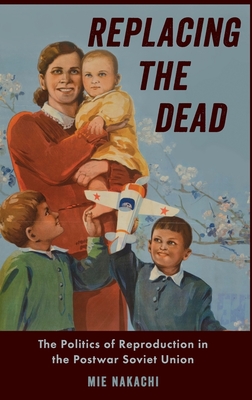
Replacing the Dead: The Politics of Reproduction in the Postwar Soviet Union
Drawing on never before used archival materials, Replacing the Dead exposes the history of Soviet and Russian abortion policy. It is not unusual for nations recovering from wars to incentivize their populations to raise their birthrates. The post-World War II Soviet pronatalism campaign attempted this on an unprecedented scale, aiming to replace a lost population of 27 million. Why, then, did the USSR re-legalize abortion in 1955? Mie Nakachi uses previously hidden archival data to reveal that decisions made by Stalin and Khruschev under the rubric of 'family law' created a society of broken marriages, "fatherless" children, and abortions, each totaling in the tens of millions. The government reversed laws regarding paternal responsibility, thereby encouraging men to impregnate unmarried women and widows, and blocked available contraception, overriding the advice of the medical establishment. Some 8.7 million out-of-wedlock children were born between 1945 and 1955 alone. In the absence of serious commitment to supporting Soviet women who worked full-time, the policy did extensive damage to gender relations and the welfare of women and children. Women, famous cultural figures, and Soviet professionals initiated a movement to improve women's reproductive health and make all children equal. Because Soviet leaders did not allow any major reform, an abortion culture grew among Soviet women and spread throughout
the Soviet sphere, including Eastern Europe and China. Based on groundbreaking research, Replacing the Dead traces how the idea of women's right to an abortion emerged from an authoritarian society decades before it did in the West and why it remains the dominant method of birth control in present-day Russia.
PRP: 706.80 Lei

Acesta este Prețul Recomandat de Producător. Prețul de vânzare al produsului este afișat mai jos.
636.12Lei
636.12Lei
706.80 LeiPrimești 636 puncte

Livrare in 2-4 saptamani
Descrierea produsului
Drawing on never before used archival materials, Replacing the Dead exposes the history of Soviet and Russian abortion policy. It is not unusual for nations recovering from wars to incentivize their populations to raise their birthrates. The post-World War II Soviet pronatalism campaign attempted this on an unprecedented scale, aiming to replace a lost population of 27 million. Why, then, did the USSR re-legalize abortion in 1955? Mie Nakachi uses previously hidden archival data to reveal that decisions made by Stalin and Khruschev under the rubric of 'family law' created a society of broken marriages, "fatherless" children, and abortions, each totaling in the tens of millions. The government reversed laws regarding paternal responsibility, thereby encouraging men to impregnate unmarried women and widows, and blocked available contraception, overriding the advice of the medical establishment. Some 8.7 million out-of-wedlock children were born between 1945 and 1955 alone. In the absence of serious commitment to supporting Soviet women who worked full-time, the policy did extensive damage to gender relations and the welfare of women and children. Women, famous cultural figures, and Soviet professionals initiated a movement to improve women's reproductive health and make all children equal. Because Soviet leaders did not allow any major reform, an abortion culture grew among Soviet women and spread throughout
the Soviet sphere, including Eastern Europe and China. Based on groundbreaking research, Replacing the Dead traces how the idea of women's right to an abortion emerged from an authoritarian society decades before it did in the West and why it remains the dominant method of birth control in present-day Russia.
Detaliile produsului