- /
- Librarie online
- /
- Carti in engleza
- /
- Biography & Autobiography
- /
- General
- /
- Rum Running and the Roaring Twenties: Prohibition on the Michigan-Ontario Waterway - Philip P. Mason
Rum Running and the Roaring Twenties: Prohibition on the Michigan-Ontario Waterway
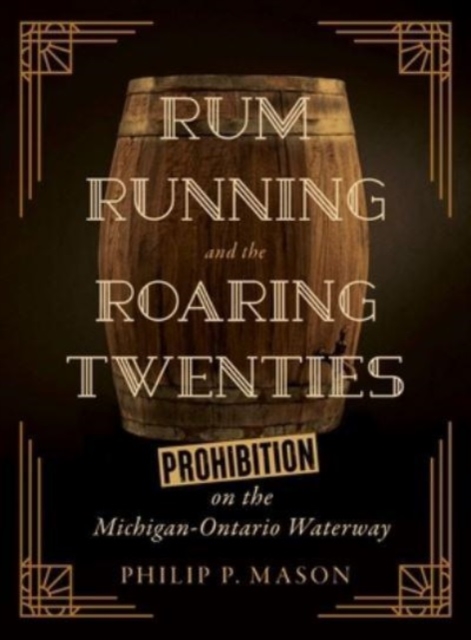
A fascinating look at the excesses and failures of Prohibition in the United States, and specifically in Michigan.
On January 17, 1920, the Eighteenth Amendment took effect in the United States, prohibiting the manufacture, sale, use, or importation of alcoholic beverages. Yet the resulting peace and tranquility predicted never materialized. The Prohibition experiment failed dismally in the United States, and nowhere worse than in Michigan. The state's close proximity to Canada, where large amounts of liquor were manufactured, made it a major center for the smuggling and sale of illegal alcohol. Although federal, state, and local law enforcement agencies attempted to stop the flow of liquor into Michigan, an astounding seventy-five percent of all illegal liquor brought into the United States was transported across the Detroit River from Canada.
Using police and court records, newspaper accounts, and interviews with those who lived during the time, Philip P. Mason has constructed a fascinating history of life in Michigan during Prohibition. He regales readers with stories of the bungled efforts by officials at every level to control the smuggling and sale of illegal alcohol. Most entertaining are the creative smuggling efforts undertaken by citizens of all walks of life-the poor, middle class, and affluent, upstanding citizens and organized criminals and gang members.
By 1928 Prohibition was a major issue in the presidential campaign. In 1933, with the support of President Franklin Roosevelt, Michigan's governor William Comstock, and other leaders, the Twenty-first Amendment was passed, repealing Prohibition. Michigan was the first state to ratify the amendment on April 10, 1933, and soon the Detroit River was returned to pleasure boats and fishing and commercial vessels whose holds no longer carried illegal liquor.
PRP: 233.55 Lei

Acesta este Prețul Recomandat de Producător. Prețul de vânzare al produsului este afișat mai jos.
210.19Lei
210.19Lei
233.55 LeiPrimești 210 puncte

Livrare in 2-4 saptamani
Descrierea produsului
A fascinating look at the excesses and failures of Prohibition in the United States, and specifically in Michigan.
On January 17, 1920, the Eighteenth Amendment took effect in the United States, prohibiting the manufacture, sale, use, or importation of alcoholic beverages. Yet the resulting peace and tranquility predicted never materialized. The Prohibition experiment failed dismally in the United States, and nowhere worse than in Michigan. The state's close proximity to Canada, where large amounts of liquor were manufactured, made it a major center for the smuggling and sale of illegal alcohol. Although federal, state, and local law enforcement agencies attempted to stop the flow of liquor into Michigan, an astounding seventy-five percent of all illegal liquor brought into the United States was transported across the Detroit River from Canada.
Using police and court records, newspaper accounts, and interviews with those who lived during the time, Philip P. Mason has constructed a fascinating history of life in Michigan during Prohibition. He regales readers with stories of the bungled efforts by officials at every level to control the smuggling and sale of illegal alcohol. Most entertaining are the creative smuggling efforts undertaken by citizens of all walks of life-the poor, middle class, and affluent, upstanding citizens and organized criminals and gang members.
By 1928 Prohibition was a major issue in the presidential campaign. In 1933, with the support of President Franklin Roosevelt, Michigan's governor William Comstock, and other leaders, the Twenty-first Amendment was passed, repealing Prohibition. Michigan was the first state to ratify the amendment on April 10, 1933, and soon the Detroit River was returned to pleasure boats and fishing and commercial vessels whose holds no longer carried illegal liquor.
Detaliile produsului