- /
- Librarie online
- /
- Carti in engleza
- /
- Religion
- /
- Biblical Meditations
- /
- General
- /
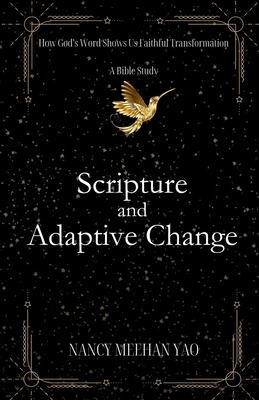
- Scripture and Adaptive Change - Nancy M. Yao
Scripture and Adaptive Change
Scripture and Adaptive Change
I will begin with a confession...
I don't like change. I have clothes that I bought 3 decades ago, and still wear...because, well, why would I buy a new garment when I still have one that functions as a perfectly good T-shirt? I don't like it when the store rearranges the bread aisle, and I can't find the one item I went in to buy. I create a room arrangement of furniture I like and keep it that way for years.
I don't like change.
But like it or not, we know that change happens. And we know as faith communities that the world outside our doors, our ministry context, has changed...even as we have kept on doing what we've always been doing.
The PC(USA) declined in members from 1,302,043 in 2019, to 1,140,665 in 2022, a loss of 53,105 members in three years.1 Many of us have seen similar declines in our own congregations.
The old ways of functioning as a congregation are no longer working for many of us. If nothing else, Covid-19 made this plain. But if we are honest, our ways of being church hadn't been working for some time, even before Covid. We have seen empty pews and even emptier Sunday School rooms. The old "build it and they will come" is no longer effective. More than merely numerical decline, or a temporary blip, we face a world of vast change outside our door. The decline in numbers is only a symptom. It is not simply that membership numbers are down, and thus so is giving to the church. It is not only that the church holds less sway in the world than it used to. It is that we don't know how to be a relevant body of Christ in and for the changing world.
Why, though, has the church not kept pace with change outside our doors? Urgency drives change, yet for the most part we have not felt any urgency to change, despite a multiple decades long decline.2 There is resistance to change, for change always involves risk and loss. Change requires energy many of us simply do not have.
Seeing the need for change in business more than twenty years ago, Ronald Heifetz and others at Harvard Business School began to use the terms "adaptive change" and "adaptive challenges." Adaptive challenges are those problems which require new learning. They require tools, skills, and wisdom we do not yet have. The church is facing adaptive challenges all the time, on every front. Change is disruptive and difficult. This is true on a communal, personal, and on a neurobiological level. When we are learning new things, doing new things, we are l
I don't like change. I have clothes that I bought 3 decades ago, and still wear...because, well, why would I buy a new garment when I still have one that functions as a perfectly good T-shirt? I don't like it when the store rearranges the bread aisle, and I can't find the one item I went in to buy. I create a room arrangement of furniture I like and keep it that way for years.
I don't like change.
But like it or not, we know that change happens. And we know as faith communities that the world outside our doors, our ministry context, has changed...even as we have kept on doing what we've always been doing.
The PC(USA) declined in members from 1,302,043 in 2019, to 1,140,665 in 2022, a loss of 53,105 members in three years.1 Many of us have seen similar declines in our own congregations.
The old ways of functioning as a congregation are no longer working for many of us. If nothing else, Covid-19 made this plain. But if we are honest, our ways of being church hadn't been working for some time, even before Covid. We have seen empty pews and even emptier Sunday School rooms. The old "build it and they will come" is no longer effective. More than merely numerical decline, or a temporary blip, we face a world of vast change outside our door. The decline in numbers is only a symptom. It is not simply that membership numbers are down, and thus so is giving to the church. It is not only that the church holds less sway in the world than it used to. It is that we don't know how to be a relevant body of Christ in and for the changing world.
Why, though, has the church not kept pace with change outside our doors? Urgency drives change, yet for the most part we have not felt any urgency to change, despite a multiple decades long decline.2 There is resistance to change, for change always involves risk and loss. Change requires energy many of us simply do not have.
Seeing the need for change in business more than twenty years ago, Ronald Heifetz and others at Harvard Business School began to use the terms "adaptive change" and "adaptive challenges." Adaptive challenges are those problems which require new learning. They require tools, skills, and wisdom we do not yet have. The church is facing adaptive challenges all the time, on every front. Change is disruptive and difficult. This is true on a communal, personal, and on a neurobiological level. When we are learning new things, doing new things, we are l
PRP: 164.92 Lei

Acesta este Prețul Recomandat de Producător. Prețul de vânzare al produsului este afișat mai jos.
148.43Lei
148.43Lei
164.92 LeiPrimești 148 puncte

Livrare in 2-4 saptamani
Descrierea produsului
I will begin with a confession...
I don't like change. I have clothes that I bought 3 decades ago, and still wear...because, well, why would I buy a new garment when I still have one that functions as a perfectly good T-shirt? I don't like it when the store rearranges the bread aisle, and I can't find the one item I went in to buy. I create a room arrangement of furniture I like and keep it that way for years.
I don't like change.
But like it or not, we know that change happens. And we know as faith communities that the world outside our doors, our ministry context, has changed...even as we have kept on doing what we've always been doing.
The PC(USA) declined in members from 1,302,043 in 2019, to 1,140,665 in 2022, a loss of 53,105 members in three years.1 Many of us have seen similar declines in our own congregations.
The old ways of functioning as a congregation are no longer working for many of us. If nothing else, Covid-19 made this plain. But if we are honest, our ways of being church hadn't been working for some time, even before Covid. We have seen empty pews and even emptier Sunday School rooms. The old "build it and they will come" is no longer effective. More than merely numerical decline, or a temporary blip, we face a world of vast change outside our door. The decline in numbers is only a symptom. It is not simply that membership numbers are down, and thus so is giving to the church. It is not only that the church holds less sway in the world than it used to. It is that we don't know how to be a relevant body of Christ in and for the changing world.
Why, though, has the church not kept pace with change outside our doors? Urgency drives change, yet for the most part we have not felt any urgency to change, despite a multiple decades long decline.2 There is resistance to change, for change always involves risk and loss. Change requires energy many of us simply do not have.
Seeing the need for change in business more than twenty years ago, Ronald Heifetz and others at Harvard Business School began to use the terms "adaptive change" and "adaptive challenges." Adaptive challenges are those problems which require new learning. They require tools, skills, and wisdom we do not yet have. The church is facing adaptive challenges all the time, on every front. Change is disruptive and difficult. This is true on a communal, personal, and on a neurobiological level. When we are learning new things, doing new things, we are l
I don't like change. I have clothes that I bought 3 decades ago, and still wear...because, well, why would I buy a new garment when I still have one that functions as a perfectly good T-shirt? I don't like it when the store rearranges the bread aisle, and I can't find the one item I went in to buy. I create a room arrangement of furniture I like and keep it that way for years.
I don't like change.
But like it or not, we know that change happens. And we know as faith communities that the world outside our doors, our ministry context, has changed...even as we have kept on doing what we've always been doing.
The PC(USA) declined in members from 1,302,043 in 2019, to 1,140,665 in 2022, a loss of 53,105 members in three years.1 Many of us have seen similar declines in our own congregations.
The old ways of functioning as a congregation are no longer working for many of us. If nothing else, Covid-19 made this plain. But if we are honest, our ways of being church hadn't been working for some time, even before Covid. We have seen empty pews and even emptier Sunday School rooms. The old "build it and they will come" is no longer effective. More than merely numerical decline, or a temporary blip, we face a world of vast change outside our door. The decline in numbers is only a symptom. It is not simply that membership numbers are down, and thus so is giving to the church. It is not only that the church holds less sway in the world than it used to. It is that we don't know how to be a relevant body of Christ in and for the changing world.
Why, though, has the church not kept pace with change outside our doors? Urgency drives change, yet for the most part we have not felt any urgency to change, despite a multiple decades long decline.2 There is resistance to change, for change always involves risk and loss. Change requires energy many of us simply do not have.
Seeing the need for change in business more than twenty years ago, Ronald Heifetz and others at Harvard Business School began to use the terms "adaptive change" and "adaptive challenges." Adaptive challenges are those problems which require new learning. They require tools, skills, and wisdom we do not yet have. The church is facing adaptive challenges all the time, on every front. Change is disruptive and difficult. This is true on a communal, personal, and on a neurobiological level. When we are learning new things, doing new things, we are l
Detaliile produsului