



- /
- Librarie online
- /
- Carti in engleza
- /
- Religion
- /
- Christianity
- /
- Catholic
- /
- St. Benedict's Rule for Monasteries: Spiritual Classics - Leonard J. Doyle
St. Benedict's Rule for Monasteries: Spiritual Classics
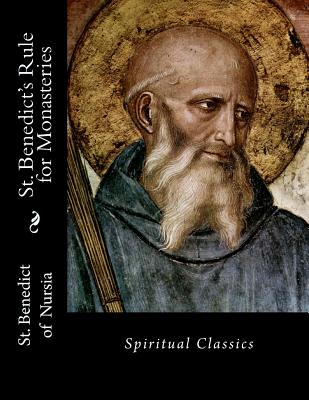
St. Benedict's Rule for Monasteries: Spiritual Classics
Seventy-three short chapters comprise the Rule. Its wisdom is of two kinds: spiritual (how to live a Christocentric life on earth) and administrative (how to run a monastery efficiently). More than half the chapters describe how to be obedient and humble, and what to do when a member of the community is not. About one-fourth regulate the work of God (the Opus Dei). One-tenth outline how, and by whom, the monastery should be managed. Following the golden rule of Ora et Labora - pray and work, the monks each day devoted eight hours to prayer, eight hours to sleep, and eight hours to manual work, sacred reading, or works of charity The early Middle Ages have been called "the Benedictine centuries." In April 2008, Pope Benedict XVI discussed the influence St Benedict had on Western Europe. The pope said that "with his life and work St Benedict exercised a fundamental influence on the development of European civilization and culture" and helped Europe to emerge from the "dark night of history" that followed the fall of the Roman empire. St. Benedict contributed more than anyone else to the rise of monasticism in the West. His Rule was the foundational document for thousands of religious communities in the Middle Ages. To this day, The Rule of St. Benedict is the most common and influential Rule used by monasteries and monks, more than 1,400 years after its writing. Today the Benedictine family is represented by two branches: the Benedictine Federation and the Cistercians. The influence of St Benedict produced "a true spiritual ferment" in Europe, and over the coming decades his followers spread across the continent to establish a new cultural unity based on Christian faith.
PRP: 61.92 Lei

Acesta este Prețul Recomandat de Producător. Prețul de vânzare al produsului este afișat mai jos.
55.73Lei
55.73Lei
61.92 LeiPrimești 55 puncte

Livrare in 2-4 saptamani
Descrierea produsului
Seventy-three short chapters comprise the Rule. Its wisdom is of two kinds: spiritual (how to live a Christocentric life on earth) and administrative (how to run a monastery efficiently). More than half the chapters describe how to be obedient and humble, and what to do when a member of the community is not. About one-fourth regulate the work of God (the Opus Dei). One-tenth outline how, and by whom, the monastery should be managed. Following the golden rule of Ora et Labora - pray and work, the monks each day devoted eight hours to prayer, eight hours to sleep, and eight hours to manual work, sacred reading, or works of charity The early Middle Ages have been called "the Benedictine centuries." In April 2008, Pope Benedict XVI discussed the influence St Benedict had on Western Europe. The pope said that "with his life and work St Benedict exercised a fundamental influence on the development of European civilization and culture" and helped Europe to emerge from the "dark night of history" that followed the fall of the Roman empire. St. Benedict contributed more than anyone else to the rise of monasticism in the West. His Rule was the foundational document for thousands of religious communities in the Middle Ages. To this day, The Rule of St. Benedict is the most common and influential Rule used by monasteries and monks, more than 1,400 years after its writing. Today the Benedictine family is represented by two branches: the Benedictine Federation and the Cistercians. The influence of St Benedict produced "a true spiritual ferment" in Europe, and over the coming decades his followers spread across the continent to establish a new cultural unity based on Christian faith.
Detaliile produsului