- /
- Librarie online
- /
- Carti in engleza
- /
- Social Science
- /
- Sociology
- /
- General
- /
- Starving the Beast: Ronald Reagan and the Tax Cut Revolution - Monica Prasad
Starving the Beast: Ronald Reagan and the Tax Cut Revolution
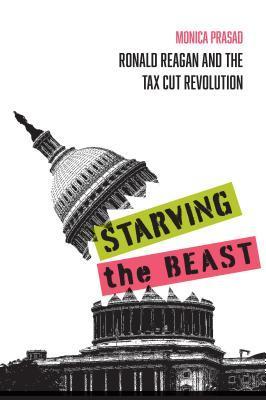
Starving the Beast: Ronald Reagan and the Tax Cut Revolution
Since the Reagan Revolution of the early 1980s, Republicans have consistently championed tax cuts for individuals and businesses, regardless of whether the economy is booming or in recession or whether the federal budget is in surplus or deficit. In Starving the Beast, sociologist Monica Prasad uncovers the origins of the GOP's relentless focus on tax cuts and shows how this is a uniquely American phenomenon. Drawing on never-before seen archival documents, Prasad traces the history of the 1981 tax cut-the famous "supply side" tax cut, which became the cornerstone for the next several decades of Republican domestic economic policy. She demonstrates that the main impetus behind this tax cut was not business group pressure, racial animus, or a belief that tax cuts would pay for themselves. Rather, the tax cut emerged because in America--unlike in the rest of the advanced industrial world-progressive policies are not embedded within a larger political economy that is favorable to business. Since the end of World War II, many European nations have combined strong social protections with policies to stimulate economic growth such as lower taxes on capital and less regulation on businesses than in the United State. Meanwhile, the United States emerged from World War II with high taxes on capital and some of the strongest regulations on business in the advanced industrial world. This adversarial political economy could not survive the economic crisis of the 1970s. Starving the Beast suggests that taking inspiration from the European model of progressive policies embedded in market-promoting political economy could serve to build an American economy that works better for all.
PRP: 343.58 Lei

Acesta este Prețul Recomandat de Producător. Prețul de vânzare al produsului este afișat mai jos.
309.22Lei
309.22Lei
343.58 LeiPrimești 309 puncte

Livrare in 2-4 saptamani
Descrierea produsului
Since the Reagan Revolution of the early 1980s, Republicans have consistently championed tax cuts for individuals and businesses, regardless of whether the economy is booming or in recession or whether the federal budget is in surplus or deficit. In Starving the Beast, sociologist Monica Prasad uncovers the origins of the GOP's relentless focus on tax cuts and shows how this is a uniquely American phenomenon. Drawing on never-before seen archival documents, Prasad traces the history of the 1981 tax cut-the famous "supply side" tax cut, which became the cornerstone for the next several decades of Republican domestic economic policy. She demonstrates that the main impetus behind this tax cut was not business group pressure, racial animus, or a belief that tax cuts would pay for themselves. Rather, the tax cut emerged because in America--unlike in the rest of the advanced industrial world-progressive policies are not embedded within a larger political economy that is favorable to business. Since the end of World War II, many European nations have combined strong social protections with policies to stimulate economic growth such as lower taxes on capital and less regulation on businesses than in the United State. Meanwhile, the United States emerged from World War II with high taxes on capital and some of the strongest regulations on business in the advanced industrial world. This adversarial political economy could not survive the economic crisis of the 1970s. Starving the Beast suggests that taking inspiration from the European model of progressive policies embedded in market-promoting political economy could serve to build an American economy that works better for all.
Detaliile produsului