






- /
- Librarie online
- /
- Carti in engleza
- /
- Science
- /
- Earth Sciences
- /
- Geology
- /
- Supercontinent: Ten Billion Years in the Life of Our Planet - Ted Nield
Supercontinent: Ten Billion Years in the Life of Our Planet
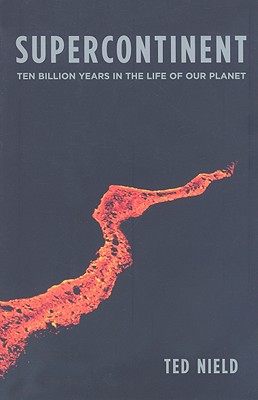
To understand continental drift and plate tectonics, the shifting and collisions that make and unmake continents, requires a long view. The Earth, after all, is 4.6 billion years old. This book extends our vision to take in the greatest geological cycle of all--one so vast that our species will probably be extinct long before the current one ends in about 250 million years. And yet this cycle, the grandest pattern in Nature, may well be the fundamental reason our species--or any complex life at all--exists.
This book explores the Supercontinent Cycle from scientists' earliest inkling of the phenomenon to the geological discoveries of today--and from the most recent fusing of all of Earth's landmasses, Pangaea, on which dinosaurs evolved, to the next. Chronicling a 500-million-year cycle, Ted Nield introduces readers to some of the most exciting science of our time. He describes how, long before plate tectonics were understood, geologists first guessed at these vanishing landmasses and came to appreciate the significance of the fusing and fragmenting of supercontinents.
He also uses the story of the supercontinents to consider how scientific ideas develop, and how they sometimes escape the confines of science. Nield takes the example of the recent Indian Ocean tsunami to explain how the whole endeavor of science is itself a supercontinent, whose usefulness in saving human lives, and life on Earth, depends crucially on a freedom to explore the unknown.
PRP: 289.33 Lei

Acesta este Prețul Recomandat de Producător. Prețul de vânzare al produsului este afișat mai jos.
260.40Lei
260.40Lei
289.33 LeiPrimești 260 puncte

Livrare in 2-4 saptamani
Descrierea produsului
To understand continental drift and plate tectonics, the shifting and collisions that make and unmake continents, requires a long view. The Earth, after all, is 4.6 billion years old. This book extends our vision to take in the greatest geological cycle of all--one so vast that our species will probably be extinct long before the current one ends in about 250 million years. And yet this cycle, the grandest pattern in Nature, may well be the fundamental reason our species--or any complex life at all--exists.
This book explores the Supercontinent Cycle from scientists' earliest inkling of the phenomenon to the geological discoveries of today--and from the most recent fusing of all of Earth's landmasses, Pangaea, on which dinosaurs evolved, to the next. Chronicling a 500-million-year cycle, Ted Nield introduces readers to some of the most exciting science of our time. He describes how, long before plate tectonics were understood, geologists first guessed at these vanishing landmasses and came to appreciate the significance of the fusing and fragmenting of supercontinents.
He also uses the story of the supercontinents to consider how scientific ideas develop, and how they sometimes escape the confines of science. Nield takes the example of the recent Indian Ocean tsunami to explain how the whole endeavor of science is itself a supercontinent, whose usefulness in saving human lives, and life on Earth, depends crucially on a freedom to explore the unknown.
Detaliile produsului