



- /
- Librarie online
- /
- Carti in engleza
- /
- History
- /
- Asia
- /
- China
- /
- Taiwan Straits Standoff: 70 Years of Prc-Taiwan Cross-Strait Tensions - Bruce A. Elleman
Taiwan Straits Standoff: 70 Years of Prc-Taiwan Cross-Strait Tensions
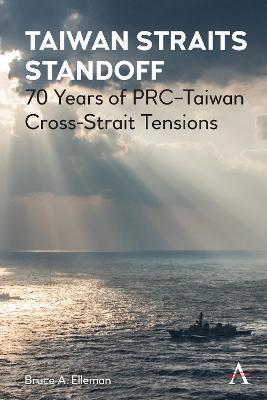
Following the Nationalist defeat on the mainland in 1949, Chiang Kai-shek and his followers retreated to Taiwan, forming the Republic of China (ROC). To many it seemed almost certain that the People's Republic of China (PRC) would attack and take Taiwan, perhaps as early as summer 1950. Control over a number of offshore islands, especially Quemoy (Jinmen) and Matsu (Mazu) became a deciding factor in whether the PRC could invade Taiwan or, conversely, the ROC could invade the mainland. Twice in the 1950s tensions peaked, during the first (1954-55) and second (1958) Taiwan Strait crises. During both these events the U.S. government intervened diplomatically and militarily.
This work provides a short, but highly relevant, history of the Taiwan Strait, and its significance today. This small body of water--often compared to the English Channel--separates the PRC and Taiwan and has been the location for periodic military tensions, some threatening to end in war. During the 1950s, the two outbreaks appeared like they might result in a global war. During the evacuation of the Dachen Islands, for example, the U.S.Navy sent seven aircraft carriers and was authorized to nuke three Chinese coastal cities if the PLA tried to interfere.
In the modern era, the Taiwan Strait separates democratic Taiwan from the authoritarian PRC. This study will discuss the origins of these conflicts, the military aspects of the confrontations, and, in particular, the complicated and largely secret diplomatic negotiations--including two previously unknown Eisenhower-Chiang secret agreements--going on behind the scenes between the U.S. government and the nationalist government in Taiwan. This book ends with a short discussion of the ongoing Covid crisis, and how the PRC might take advantage of this crisis to extend its political and, eventually, military control over Taiwan.
PRP: 289.33 Lei

Acesta este Prețul Recomandat de Producător. Prețul de vânzare al produsului este afișat mai jos.
260.40Lei
260.40Lei
289.33 LeiPrimești 260 puncte

Indisponibil
Descrierea produsului
Following the Nationalist defeat on the mainland in 1949, Chiang Kai-shek and his followers retreated to Taiwan, forming the Republic of China (ROC). To many it seemed almost certain that the People's Republic of China (PRC) would attack and take Taiwan, perhaps as early as summer 1950. Control over a number of offshore islands, especially Quemoy (Jinmen) and Matsu (Mazu) became a deciding factor in whether the PRC could invade Taiwan or, conversely, the ROC could invade the mainland. Twice in the 1950s tensions peaked, during the first (1954-55) and second (1958) Taiwan Strait crises. During both these events the U.S. government intervened diplomatically and militarily.
This work provides a short, but highly relevant, history of the Taiwan Strait, and its significance today. This small body of water--often compared to the English Channel--separates the PRC and Taiwan and has been the location for periodic military tensions, some threatening to end in war. During the 1950s, the two outbreaks appeared like they might result in a global war. During the evacuation of the Dachen Islands, for example, the U.S.Navy sent seven aircraft carriers and was authorized to nuke three Chinese coastal cities if the PLA tried to interfere.
In the modern era, the Taiwan Strait separates democratic Taiwan from the authoritarian PRC. This study will discuss the origins of these conflicts, the military aspects of the confrontations, and, in particular, the complicated and largely secret diplomatic negotiations--including two previously unknown Eisenhower-Chiang secret agreements--going on behind the scenes between the U.S. government and the nationalist government in Taiwan. This book ends with a short discussion of the ongoing Covid crisis, and how the PRC might take advantage of this crisis to extend its political and, eventually, military control over Taiwan.
Detaliile produsului