



- /
- Librarie online
- /
- Carti in engleza
- /
- History
- /
- United States
- /
- State & Local
- /
- General
- /
- Takhoma: Ethnography of Mount Rainier National Park - Allan H. Smith
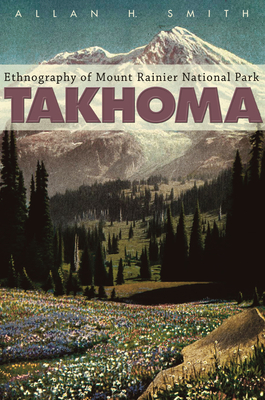
Takhoma: Ethnography of Mount Rainier National Park
"Sooty Grouse were drawn in large numbers to the huckleberry patches in the fruiting season...[feasting] until, their crops distended, they hate even to fly. Moreover, the fermenting juices of the overripe berries have a decided alcoholic effect on many of the birds...the larger children and more active women might well have experienced little difficulty in capturing them."
An imposing geologic feature that once provided a variety of natural resources to the indigenous people who lived nearby, the sheer size of Mount Rainier prompted many to call it simply The Mountain or "Takhoma." The volcanic cone towers to a height of 14,408 feet and comprises about one-fourth of the total 377 square-mile park. The area's formidable physical characteristics had long impeded modern researchers. As a result, in 1963, when faculty at Washington State University decided to investigate the region's prehistory under contract with the National Park Service, its archaeological past was virtually unknown. Combining an exhaustive search of the pre-existing data and literature with a field study comprised of interviewing elderly Native Americans, the researchers sought to ascertain the locations of possible archaeological sites in Mount Rainier National Park, and secure data to assist in their interpretation. Takhoma: Ethnography of Mount Rainier National Park presents the analysis of the collected and recovered material addressing native toponymy, tribal identities and boundaries, village sites and structures, aboriginal economic and other uses of the region, and native trails, travel, and trade. This informative investigation served as a valuable first step toward unraveling the cultural past of Mount Rainier National Park.
PRP: 142.29 Lei

Acesta este Prețul Recomandat de Producător. Prețul de vânzare al produsului este afișat mai jos.
128.06Lei
128.06Lei
142.29 LeiPrimești 128 puncte

Livrare in 2-4 saptamani
Descrierea produsului
"Sooty Grouse were drawn in large numbers to the huckleberry patches in the fruiting season...[feasting] until, their crops distended, they hate even to fly. Moreover, the fermenting juices of the overripe berries have a decided alcoholic effect on many of the birds...the larger children and more active women might well have experienced little difficulty in capturing them."
An imposing geologic feature that once provided a variety of natural resources to the indigenous people who lived nearby, the sheer size of Mount Rainier prompted many to call it simply The Mountain or "Takhoma." The volcanic cone towers to a height of 14,408 feet and comprises about one-fourth of the total 377 square-mile park. The area's formidable physical characteristics had long impeded modern researchers. As a result, in 1963, when faculty at Washington State University decided to investigate the region's prehistory under contract with the National Park Service, its archaeological past was virtually unknown. Combining an exhaustive search of the pre-existing data and literature with a field study comprised of interviewing elderly Native Americans, the researchers sought to ascertain the locations of possible archaeological sites in Mount Rainier National Park, and secure data to assist in their interpretation. Takhoma: Ethnography of Mount Rainier National Park presents the analysis of the collected and recovered material addressing native toponymy, tribal identities and boundaries, village sites and structures, aboriginal economic and other uses of the region, and native trails, travel, and trade. This informative investigation served as a valuable first step toward unraveling the cultural past of Mount Rainier National Park.
Detaliile produsului