



- /
- Librarie online
- /
- Carti in engleza
- /
- Political Science
- /
- International Relations
- /
- General
- /
- Taking Stock of Shock: Social Consequences of the 1989 Revolutions - Kristen Ghodsee
Taking Stock of Shock: Social Consequences of the 1989 Revolutions
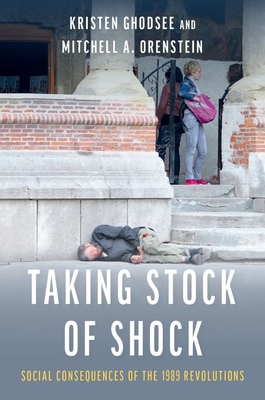
Taking Stock of Shock: Social Consequences of the 1989 Revolutions
Kristen Ghodsee and Mitchell A. Orenstein blend empirical data with lived experiences to produce a robust picture of who won and who lost in post-communist transition, contextualizing the rise of populism in Eastern Europe. After the fall of the Berlin Wall in 1989, more than 400 million people suddenly found themselves in a new reality, a dramatic transition from state socialist and centrally planned workers' states to liberal democracy (in most cases) and free markets. Thirty years later, postsocialist citizens remain sharply divided on the legacies of transition. Was it a success that produced great progress after a short recession, or a socio-economic catastrophe foisted on the East by Western capitalists? Taking Stock of Shock aims to uncover the truth using a unique, interdisciplinary investigation into the social consequences of transition--including the rise of authoritarian populism and xenophobia. Showing that economic, demographic, sociological, political scientific, and ethnographic research produce contradictory results based on different disciplinary methods and data, Kristen Ghodsee and Mitchell Orenstein triangulate the results. They find that both the J-curve model, which anticipates
sustained growth after a sharp downturn, and the "disaster capitalism" perspective, which posits that neoliberalism led to devastating outcomes, have significant basis in fact. While substantial percentages of the populations across a variety of postsocialist countries enjoyed remarkable success, prosperity, and progress, many others suffered an unprecedented socio-economic catastrophe. Ghodsee and Orenstein conclude that the promise of transition still remains elusive for many and offer policy ideas for overcoming negative social and political consequences.
PRP: 249.50 Lei

Acesta este Prețul Recomandat de Producător. Prețul de vânzare al produsului este afișat mai jos.
224.55Lei
224.55Lei
249.50 LeiPrimești 224 puncte

Livrare in 2-4 saptamani
Descrierea produsului
Kristen Ghodsee and Mitchell A. Orenstein blend empirical data with lived experiences to produce a robust picture of who won and who lost in post-communist transition, contextualizing the rise of populism in Eastern Europe. After the fall of the Berlin Wall in 1989, more than 400 million people suddenly found themselves in a new reality, a dramatic transition from state socialist and centrally planned workers' states to liberal democracy (in most cases) and free markets. Thirty years later, postsocialist citizens remain sharply divided on the legacies of transition. Was it a success that produced great progress after a short recession, or a socio-economic catastrophe foisted on the East by Western capitalists? Taking Stock of Shock aims to uncover the truth using a unique, interdisciplinary investigation into the social consequences of transition--including the rise of authoritarian populism and xenophobia. Showing that economic, demographic, sociological, political scientific, and ethnographic research produce contradictory results based on different disciplinary methods and data, Kristen Ghodsee and Mitchell Orenstein triangulate the results. They find that both the J-curve model, which anticipates
sustained growth after a sharp downturn, and the "disaster capitalism" perspective, which posits that neoliberalism led to devastating outcomes, have significant basis in fact. While substantial percentages of the populations across a variety of postsocialist countries enjoyed remarkable success, prosperity, and progress, many others suffered an unprecedented socio-economic catastrophe. Ghodsee and Orenstein conclude that the promise of transition still remains elusive for many and offer policy ideas for overcoming negative social and political consequences.
Detaliile produsului