



- /
- Librarie online
- /
- Carti in engleza
- /
- History
- /
- United States
- /
- 19th Century
- /
- The Battle of Tippecanoe and the Battle of New Orleans: The History of the Battles that Led William Henry Harrison and Andrew Jackson to the Presidenc - Charles River Editors
The Battle of Tippecanoe and the Battle of New Orleans: The History of the Battles that Led William Henry Harrison and Andrew Jackson to the Presidenc
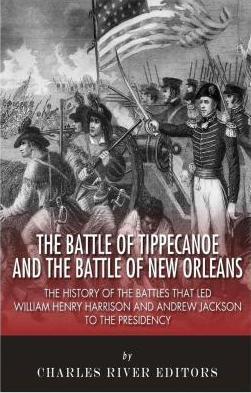
The Battle of Tippecanoe and the Battle of New Orleans: The History of the Battles that Led William Henry Harrison and Andrew Jackson to the Presidenc
*Includes pictures *Includes accounts of the battles written by participants *Includes bibliographies for further reading *Includes a table of contents The Battle of Tippecanoe, fought on November 7, 1811 near present-day Lafayette, Indiana, involved forces of fewer than 2,000 Native American warriors and white soldiers, and only about 300 men were killed or wounded on both sides. Given those numbers, it's apparent that the battle was far from being a Saratoga or a Gettysburg in terms of its scale or significance as an historical turning point, yet it was one of the most important battles in shaping American history during the early 19th century. The battle also involved an epic confrontation between two important American figures: William Henry Harrison, who would become the 9th president of the United States by running on his success in the battle, and the Shawnee war chief Tecumseh, arguably the most famous Native American leader in American history. The initial Native American attack struck the southern point of Harrison's defensive perimeter around 4:30 a.m. on November 7, 1811, and almost immediately the warriors rushed in among the American defenders manning that sector. Soldiers defending the southern side of the perimeter suffered the highest casualties, with the Yellow Jackets suffering a 30% casualty rate, but in fighting lasting about two hours Harrison's force of roughly 1,000, suffered only 62 dead and about 120 wounded. As the sun rose, the warriors began running low on ammunition, and the light revealed their small numbers, leading them to break off the attack and retreat towards Prophetstown. The battle was hardly a decisive victory, but at the end of the fighting the Americans still held their perimeter, allowing them to claim victory. While Tippecanoe was clearly not a total victory, and Native American resistance would continue through the War of 1812, the battle is widely considered the end of Tecumseh's War and did help bring about the decline of Native American ascendance in the region. There are countless examples of battles that take place in wars after a peace treaty is signed. The last battle of the Civil War was a skirmish in Texas that Confederate forces won, nearly a month after Lee's surrender at Appomattox. But it's certainly rare for the most famous battle of a war to take place after the peace treaty is signed. Luckily for Andrew Jackson, the War of 1812 was that unique exception. Less than a year after his victory in
PRP: 71.61 Lei

Acesta este Prețul Recomandat de Producător. Prețul de vânzare al produsului este afișat mai jos.
64.45Lei
64.45Lei
71.61 LeiPrimești 64 puncte

Livrare in 2-4 saptamani
Descrierea produsului
*Includes pictures *Includes accounts of the battles written by participants *Includes bibliographies for further reading *Includes a table of contents The Battle of Tippecanoe, fought on November 7, 1811 near present-day Lafayette, Indiana, involved forces of fewer than 2,000 Native American warriors and white soldiers, and only about 300 men were killed or wounded on both sides. Given those numbers, it's apparent that the battle was far from being a Saratoga or a Gettysburg in terms of its scale or significance as an historical turning point, yet it was one of the most important battles in shaping American history during the early 19th century. The battle also involved an epic confrontation between two important American figures: William Henry Harrison, who would become the 9th president of the United States by running on his success in the battle, and the Shawnee war chief Tecumseh, arguably the most famous Native American leader in American history. The initial Native American attack struck the southern point of Harrison's defensive perimeter around 4:30 a.m. on November 7, 1811, and almost immediately the warriors rushed in among the American defenders manning that sector. Soldiers defending the southern side of the perimeter suffered the highest casualties, with the Yellow Jackets suffering a 30% casualty rate, but in fighting lasting about two hours Harrison's force of roughly 1,000, suffered only 62 dead and about 120 wounded. As the sun rose, the warriors began running low on ammunition, and the light revealed their small numbers, leading them to break off the attack and retreat towards Prophetstown. The battle was hardly a decisive victory, but at the end of the fighting the Americans still held their perimeter, allowing them to claim victory. While Tippecanoe was clearly not a total victory, and Native American resistance would continue through the War of 1812, the battle is widely considered the end of Tecumseh's War and did help bring about the decline of Native American ascendance in the region. There are countless examples of battles that take place in wars after a peace treaty is signed. The last battle of the Civil War was a skirmish in Texas that Confederate forces won, nearly a month after Lee's surrender at Appomattox. But it's certainly rare for the most famous battle of a war to take place after the peace treaty is signed. Luckily for Andrew Jackson, the War of 1812 was that unique exception. Less than a year after his victory in
Detaliile produsului