








- /
- Librarie online
- /
- Carti in engleza
- /
- Fiction
- /
- Literary
- /
- The Country Doctor - Honoré De Balzac
The Country Doctor
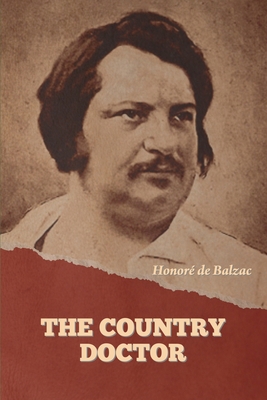
The Country Doctor
Le Médecin de campagne (The Country Doctor) is an 1833 novel by Honoré de Balzac. The second in his Scène de la vie de campagne series, it addresses the author's preoccupations with social organisation, political power and religion, though Balzac's own political principles were not those of the character Dr Benassis. None of the characters appear elsewhere in La Comédie humaine.
The heart of the third part of the book is made up of tales told during a vigil in a barn by Goguelat, a former soldier in the armies of Napoleon. This section uses material that Balzac had gathered for a planned work, Les Batailles napoléoniennes, which he began but never finished.
In 1829 Commander Genestas arrives in a village in the Dauphiné, where he meets Dr Benassis, who has transformed the miserable settlement into a small but prosperous town in only ten years. Each of the two men has a secret, which is revealed only at the end of the book.
In this Scene from Country Life, Balzac touches on several themes. In a minor key, it evokes the unhappy love affairs of its two main characters, Doctor Benassis and Genestas. But, for them, these disappointments in love had the effect of developing their sense of devotion, one to the development of an entire community, the other to the care of the child that a woman he loved had another man. The theme of a child's suffering comes up several times, like an intolerable reality: "Hey! well, if it is impossible for me to see a child without thinking of the angel I have lost, judge of my pains in laying down a child condemned to die? I don't know how to see a child coldly". (wikipedia.org)
About the author: Honoré de Balzac born Honoré Balzac; (20 May 1799 - 18 August 1850) was a French novelist and playwright. The novel sequence La Comédie humaine, which presents a panorama of post-Napoleonic French life, is generally viewed as his magnum opus.
Owing to his keen observation of detail and unfiltered representation of society, Balzac is regarded as one of the founders of realism in European literature. He is renowned for his multi-faceted characters; even his lesser characters are complex, morally ambiguous and fully human. Inanimate objects are imbued with character as well; the city of Paris, a backdrop for much of his writing, takes on many human qualities. His writing influenced many famous writers, including the novelists Émile Zola, Charles Dickens, Marcel Proust, Gustave Flaubert, and Henry James, and filmmaker
The heart of the third part of the book is made up of tales told during a vigil in a barn by Goguelat, a former soldier in the armies of Napoleon. This section uses material that Balzac had gathered for a planned work, Les Batailles napoléoniennes, which he began but never finished.
In 1829 Commander Genestas arrives in a village in the Dauphiné, where he meets Dr Benassis, who has transformed the miserable settlement into a small but prosperous town in only ten years. Each of the two men has a secret, which is revealed only at the end of the book.
In this Scene from Country Life, Balzac touches on several themes. In a minor key, it evokes the unhappy love affairs of its two main characters, Doctor Benassis and Genestas. But, for them, these disappointments in love had the effect of developing their sense of devotion, one to the development of an entire community, the other to the care of the child that a woman he loved had another man. The theme of a child's suffering comes up several times, like an intolerable reality: "Hey! well, if it is impossible for me to see a child without thinking of the angel I have lost, judge of my pains in laying down a child condemned to die? I don't know how to see a child coldly". (wikipedia.org)
About the author: Honoré de Balzac born Honoré Balzac; (20 May 1799 - 18 August 1850) was a French novelist and playwright. The novel sequence La Comédie humaine, which presents a panorama of post-Napoleonic French life, is generally viewed as his magnum opus.
Owing to his keen observation of detail and unfiltered representation of society, Balzac is regarded as one of the founders of realism in European literature. He is renowned for his multi-faceted characters; even his lesser characters are complex, morally ambiguous and fully human. Inanimate objects are imbued with character as well; the city of Paris, a backdrop for much of his writing, takes on many human qualities. His writing influenced many famous writers, including the novelists Émile Zola, Charles Dickens, Marcel Proust, Gustave Flaubert, and Henry James, and filmmaker
PRP: 136.94 Lei

Acesta este Prețul Recomandat de Producător. Prețul de vânzare al produsului este afișat mai jos.
123.25Lei
123.25Lei
136.94 LeiPrimești 123 puncte

Livrare in 2-4 saptamani
Descrierea produsului
Le Médecin de campagne (The Country Doctor) is an 1833 novel by Honoré de Balzac. The second in his Scène de la vie de campagne series, it addresses the author's preoccupations with social organisation, political power and religion, though Balzac's own political principles were not those of the character Dr Benassis. None of the characters appear elsewhere in La Comédie humaine.
The heart of the third part of the book is made up of tales told during a vigil in a barn by Goguelat, a former soldier in the armies of Napoleon. This section uses material that Balzac had gathered for a planned work, Les Batailles napoléoniennes, which he began but never finished.
In 1829 Commander Genestas arrives in a village in the Dauphiné, where he meets Dr Benassis, who has transformed the miserable settlement into a small but prosperous town in only ten years. Each of the two men has a secret, which is revealed only at the end of the book.
In this Scene from Country Life, Balzac touches on several themes. In a minor key, it evokes the unhappy love affairs of its two main characters, Doctor Benassis and Genestas. But, for them, these disappointments in love had the effect of developing their sense of devotion, one to the development of an entire community, the other to the care of the child that a woman he loved had another man. The theme of a child's suffering comes up several times, like an intolerable reality: "Hey! well, if it is impossible for me to see a child without thinking of the angel I have lost, judge of my pains in laying down a child condemned to die? I don't know how to see a child coldly". (wikipedia.org)
About the author: Honoré de Balzac born Honoré Balzac; (20 May 1799 - 18 August 1850) was a French novelist and playwright. The novel sequence La Comédie humaine, which presents a panorama of post-Napoleonic French life, is generally viewed as his magnum opus.
Owing to his keen observation of detail and unfiltered representation of society, Balzac is regarded as one of the founders of realism in European literature. He is renowned for his multi-faceted characters; even his lesser characters are complex, morally ambiguous and fully human. Inanimate objects are imbued with character as well; the city of Paris, a backdrop for much of his writing, takes on many human qualities. His writing influenced many famous writers, including the novelists Émile Zola, Charles Dickens, Marcel Proust, Gustave Flaubert, and Henry James, and filmmaker
The heart of the third part of the book is made up of tales told during a vigil in a barn by Goguelat, a former soldier in the armies of Napoleon. This section uses material that Balzac had gathered for a planned work, Les Batailles napoléoniennes, which he began but never finished.
In 1829 Commander Genestas arrives in a village in the Dauphiné, where he meets Dr Benassis, who has transformed the miserable settlement into a small but prosperous town in only ten years. Each of the two men has a secret, which is revealed only at the end of the book.
In this Scene from Country Life, Balzac touches on several themes. In a minor key, it evokes the unhappy love affairs of its two main characters, Doctor Benassis and Genestas. But, for them, these disappointments in love had the effect of developing their sense of devotion, one to the development of an entire community, the other to the care of the child that a woman he loved had another man. The theme of a child's suffering comes up several times, like an intolerable reality: "Hey! well, if it is impossible for me to see a child without thinking of the angel I have lost, judge of my pains in laying down a child condemned to die? I don't know how to see a child coldly". (wikipedia.org)
About the author: Honoré de Balzac born Honoré Balzac; (20 May 1799 - 18 August 1850) was a French novelist and playwright. The novel sequence La Comédie humaine, which presents a panorama of post-Napoleonic French life, is generally viewed as his magnum opus.
Owing to his keen observation of detail and unfiltered representation of society, Balzac is regarded as one of the founders of realism in European literature. He is renowned for his multi-faceted characters; even his lesser characters are complex, morally ambiguous and fully human. Inanimate objects are imbued with character as well; the city of Paris, a backdrop for much of his writing, takes on many human qualities. His writing influenced many famous writers, including the novelists Émile Zola, Charles Dickens, Marcel Proust, Gustave Flaubert, and Henry James, and filmmaker
Detaliile produsului




