



- /
- Librarie online
- /
- Carti in engleza
- /
- Religion
- /
- Biblical Commentary
- /
- New Testament
- /
- The End of the Old and the Beginning of the New, Comments on Revelation - Jonathan Paul Mitchell
The End of the Old and the Beginning of the New, Comments on Revelation
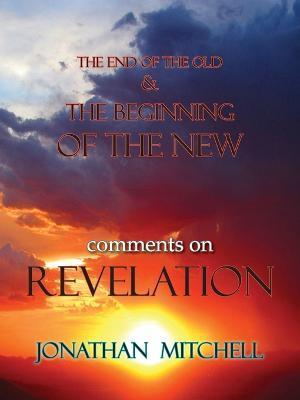
The End of the Old and the Beginning of the New, Comments on Revelation
This is a commentary on Revelation, an apocalyptic book given for the called-out communities in 1st century AD Asia Minor. It is based upon the author's translation of the Greek text. Its purpose is to reveal light that this expanded translation (with multiple renderings) will shed upon our understanding of what John was telling his listeners. In this work we consider the views of a variety of scholars, but this endeavor is to provide a fresh interpretation of the text. It is intended to reveal both immediate and underlying messages, as we currently perceive them. With an approach to the text in its historical context, a non-literal, metaphorical methodology is followed that allows the Scriptures that the first century author would have drawn upon (the Hebrew Bible, or OT) to supply the meanings of the apocalyptic symbolism. We have turned to the writings of other 1st century authors to inform our understanding of the text. Apocalyptic literature was popular in Second Temple Judaism from around 200 BC to approximately AD 100. About a third of the verses in Revelation reflect passages from the Hebrew Bible. We will present a primarily preterist, or, "already fulfilled," interpretation which views the text as speaking of events that were fulfilled, or inaugurated, in the generation in which John lived. Added to this are comments on what this means to us in our day. We see this book as an apocalyptic Gospel. It is filled with good news. It begins with a vision of the resurrected Christ and an introduction to the entire book. In chapters 2-3, John is given letters for the called-out communities in Asia Minor. Next is a series of visions concerning which, in 1:19, he is told to write of "the things you see, and the things presently existing, as well as which things are progressively about to occur after these things." The structure of the following visions are presented as different symbolic pictures of scenarios that presently existed in God's new creation, and of things that would culminate in the destruction of AD 70 Jerusalem. The relationship between Jerusalem and the Roman Empire is addressed, and then we see a picture of Christ's body as the New, Heavenly Jerusalem. The story echoes Israel's Exodus and later cultus that the NT writers present as pointers to the work of the Messiah. Like the figures and prophecies in the OT, here their counterparts spoke of literal, existing and soon-coming realities of 1st century AD Judea, yet also pointed to the realit
PRP: 309.94 Lei

Acesta este Prețul Recomandat de Producător. Prețul de vânzare al produsului este afișat mai jos.
247.95Lei
247.95Lei
309.94 LeiPrimești 247 puncte

Livrare in 2-4 saptamani
Descrierea produsului
This is a commentary on Revelation, an apocalyptic book given for the called-out communities in 1st century AD Asia Minor. It is based upon the author's translation of the Greek text. Its purpose is to reveal light that this expanded translation (with multiple renderings) will shed upon our understanding of what John was telling his listeners. In this work we consider the views of a variety of scholars, but this endeavor is to provide a fresh interpretation of the text. It is intended to reveal both immediate and underlying messages, as we currently perceive them. With an approach to the text in its historical context, a non-literal, metaphorical methodology is followed that allows the Scriptures that the first century author would have drawn upon (the Hebrew Bible, or OT) to supply the meanings of the apocalyptic symbolism. We have turned to the writings of other 1st century authors to inform our understanding of the text. Apocalyptic literature was popular in Second Temple Judaism from around 200 BC to approximately AD 100. About a third of the verses in Revelation reflect passages from the Hebrew Bible. We will present a primarily preterist, or, "already fulfilled," interpretation which views the text as speaking of events that were fulfilled, or inaugurated, in the generation in which John lived. Added to this are comments on what this means to us in our day. We see this book as an apocalyptic Gospel. It is filled with good news. It begins with a vision of the resurrected Christ and an introduction to the entire book. In chapters 2-3, John is given letters for the called-out communities in Asia Minor. Next is a series of visions concerning which, in 1:19, he is told to write of "the things you see, and the things presently existing, as well as which things are progressively about to occur after these things." The structure of the following visions are presented as different symbolic pictures of scenarios that presently existed in God's new creation, and of things that would culminate in the destruction of AD 70 Jerusalem. The relationship between Jerusalem and the Roman Empire is addressed, and then we see a picture of Christ's body as the New, Heavenly Jerusalem. The story echoes Israel's Exodus and later cultus that the NT writers present as pointers to the work of the Messiah. Like the figures and prophecies in the OT, here their counterparts spoke of literal, existing and soon-coming realities of 1st century AD Judea, yet also pointed to the realit
Detaliile produsului