- /
- Librarie online
- /
- Carti in engleza
- /
- Music
- /
- Instruction & Study
- /
- Voice
- /
- The Essential Bach Choir - Andrew Parrott
The Essential Bach Choir
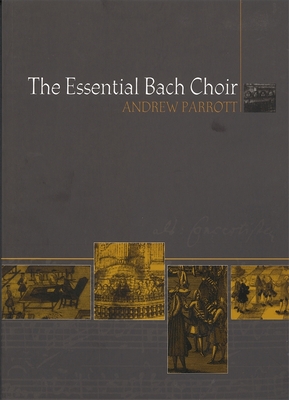
The Essential Bach Choir
Discussion of original performance conventions of Bach's sacred works - cantatas, Passions, masses - by practising musician and director of Taverner choir. What type of choir did Bach have in mind as he created his cantatas, Passions and Masses? How many singers were at his disposal in Leipzig, and in what ways did he deploy them in his own music?
Seeking to understand the verymedium of Bach's incomparable choral output, Andrew Parrott investigates a wide range of sources: Bach's own writings, and the scores and parts he used in performance, but also a variety of theoretical, pictorial and archival documents, together with the musical testimony of the composer's forerunners and contemporaries.
Many of the findings shed a surprising, even disturbing, light on conventions we have long taken for granted. A whole world away from, say, the typical oratorio choir of Handel's London with which we are reasonably familiar, the essential Bach choir was in fact an expert vocal quartet (or quintet), whose members were also responsible for all solos and duets. (In a mere handful of Bach's works, this solo team was selectively supported by a second rank of singers - also one per part - whose contribution was all but optional).
Parrott shows that this use of aone-per-part choir was mainstream practice in the Lutheran Germany of Bach's time: Bach chose to use single voices not because a larger group was unavailable, but because they were the natural vehicle of elaborate concerted music.
As one of several valuable appendices, this book includes the text of Joshua Rifkin's explosive 1981 lecture, never before published, which first set out this line of thinking and launched a controversy that is long overduefor resolution.
ANDREW PARROTT has made a close study of historical performing practices in the music of six centuries, and for over twenty-five years he has been putting research into practice with his own professional ensembles, the Taverner Consort, Taverner Players and Taverner Choir.
What type of choir did Bach have in mind as he created his cantatas, Passions and Masses? How many singers were at his disposal in Leipzig, and in what ways did he deploy them in his own music? Seeking to understand the medium of Bach's choral output, Andrew Parrott investigates a wide range of sources: Bach's own writings, and the scores and parts he used in performance, but also a variety of theoretical, pictorial and archival documents, together with th
216.93Lei
216.93Lei
Primești 216 puncte

Livrare in 2-4 saptamani
Descrierea produsului
Discussion of original performance conventions of Bach's sacred works - cantatas, Passions, masses - by practising musician and director of Taverner choir. What type of choir did Bach have in mind as he created his cantatas, Passions and Masses? How many singers were at his disposal in Leipzig, and in what ways did he deploy them in his own music?
Seeking to understand the verymedium of Bach's incomparable choral output, Andrew Parrott investigates a wide range of sources: Bach's own writings, and the scores and parts he used in performance, but also a variety of theoretical, pictorial and archival documents, together with the musical testimony of the composer's forerunners and contemporaries.
Many of the findings shed a surprising, even disturbing, light on conventions we have long taken for granted. A whole world away from, say, the typical oratorio choir of Handel's London with which we are reasonably familiar, the essential Bach choir was in fact an expert vocal quartet (or quintet), whose members were also responsible for all solos and duets. (In a mere handful of Bach's works, this solo team was selectively supported by a second rank of singers - also one per part - whose contribution was all but optional).
Parrott shows that this use of aone-per-part choir was mainstream practice in the Lutheran Germany of Bach's time: Bach chose to use single voices not because a larger group was unavailable, but because they were the natural vehicle of elaborate concerted music.
As one of several valuable appendices, this book includes the text of Joshua Rifkin's explosive 1981 lecture, never before published, which first set out this line of thinking and launched a controversy that is long overduefor resolution.
ANDREW PARROTT has made a close study of historical performing practices in the music of six centuries, and for over twenty-five years he has been putting research into practice with his own professional ensembles, the Taverner Consort, Taverner Players and Taverner Choir.
What type of choir did Bach have in mind as he created his cantatas, Passions and Masses? How many singers were at his disposal in Leipzig, and in what ways did he deploy them in his own music? Seeking to understand the medium of Bach's choral output, Andrew Parrott investigates a wide range of sources: Bach's own writings, and the scores and parts he used in performance, but also a variety of theoretical, pictorial and archival documents, together with th
Detaliile produsului