








The Hebrew Pharaohs of Egypt: The Secret Lineage of the Patriarch Joseph
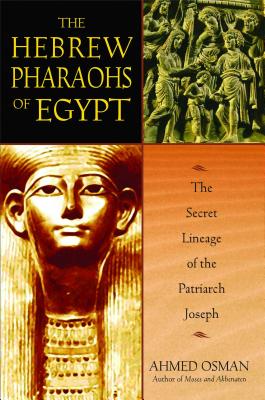
The Hebrew Pharaohs of Egypt: The Secret Lineage of the Patriarch Joseph
Drawing on a wealth of detailed evidence from Egyptian, biblical, and Koranic sources, Osman proposes that Joseph in the Bible might in reality also be Yuya, "a father of pharaoh."
A reinterpretation of Egyptian and biblical history that shows the Patriarch Joseph and Yuya, a vizier of the eighteenth dynasty king Tuthmosis IV, to be the same person - Uses detailed evidence from Egyptian, biblical, and Koranic sources to place Exodus in the time of Ramses I - Sheds new light on the mysterious and sudden rise of monotheism under Yuya's daughter, Queen Tiye, and her son Akhnaten When Joseph revealed his identity to his kinsmen who had sold him into slavery, he told them that God had made him "a father to Pharaoh." Throughout the long history of ancient Egypt, only one man is known to have been given the title "a father to Pharaoh"--Yuya, a vizier of the eighteenth dynasty king Tuthmosis IV. Yuya has long intrigued Egyptologists because he was buried in the Valley of Kings even though he was not a member of the Royal House. His extraordinarily well-preserved mummy has a strong Semitic appearance, which suggests he was not of Egyptian blood, and many aspects of his burial have been shown to be contrary to Egyptian custom. As The Hebrew Pharohs of Egypt shows, the idea that Joseph and Yuya may be one and the same person sheds a whole new light on the sudden rise of monotheism in Egypt, spearheaded by Queen Tiye and her son Akhnaten. It would clearly explain the deliberate obliteration of references to the "heretic" king and his successors by the last eighteenth dynasty pharaoh, Horemheb, whom the author believes was the oppressor king in the Book of Exodus. The author also draws on a wealth of detailed evidence from Egyptian, biblical, and Koranic sources to place the time of the departure of the Hebrews from Egypt during the short reign of Ramses I, the first king of the nineteenth dynasty.
A reinterpretation of Egyptian and biblical history that shows the Patriarch Joseph and Yuya, a vizier of the eighteenth dynasty king Tuthmosis IV, to be the same person - Uses detailed evidence from Egyptian, biblical, and Koranic sources to place Exodus in the time of Ramses I - Sheds new light on the mysterious and sudden rise of monotheism under Yuya's daughter, Queen Tiye, and her son Akhnaten When Joseph revealed his identity to his kinsmen who had sold him into slavery, he told them that God had made him "a father to Pharaoh." Throughout the long history of ancient Egypt, only one man is known to have been given the title "a father to Pharaoh"--Yuya, a vizier of the eighteenth dynasty king Tuthmosis IV. Yuya has long intrigued Egyptologists because he was buried in the Valley of Kings even though he was not a member of the Royal House. His extraordinarily well-preserved mummy has a strong Semitic appearance, which suggests he was not of Egyptian blood, and many aspects of his burial have been shown to be contrary to Egyptian custom. As The Hebrew Pharohs of Egypt shows, the idea that Joseph and Yuya may be one and the same person sheds a whole new light on the sudden rise of monotheism in Egypt, spearheaded by Queen Tiye and her son Akhnaten. It would clearly explain the deliberate obliteration of references to the "heretic" king and his successors by the last eighteenth dynasty pharaoh, Horemheb, whom the author believes was the oppressor king in the Book of Exodus. The author also draws on a wealth of detailed evidence from Egyptian, biblical, and Koranic sources to place the time of the departure of the Hebrews from Egypt during the short reign of Ramses I, the first king of the nineteenth dynasty.
PRP: 99.20 Lei

Acesta este Prețul Recomandat de Producător. Prețul de vânzare al produsului este afișat mai jos.
89.28Lei
89.28Lei
99.20 LeiPrimești 89 puncte

Indisponibil
Descrierea produsului
Drawing on a wealth of detailed evidence from Egyptian, biblical, and Koranic sources, Osman proposes that Joseph in the Bible might in reality also be Yuya, "a father of pharaoh."
A reinterpretation of Egyptian and biblical history that shows the Patriarch Joseph and Yuya, a vizier of the eighteenth dynasty king Tuthmosis IV, to be the same person - Uses detailed evidence from Egyptian, biblical, and Koranic sources to place Exodus in the time of Ramses I - Sheds new light on the mysterious and sudden rise of monotheism under Yuya's daughter, Queen Tiye, and her son Akhnaten When Joseph revealed his identity to his kinsmen who had sold him into slavery, he told them that God had made him "a father to Pharaoh." Throughout the long history of ancient Egypt, only one man is known to have been given the title "a father to Pharaoh"--Yuya, a vizier of the eighteenth dynasty king Tuthmosis IV. Yuya has long intrigued Egyptologists because he was buried in the Valley of Kings even though he was not a member of the Royal House. His extraordinarily well-preserved mummy has a strong Semitic appearance, which suggests he was not of Egyptian blood, and many aspects of his burial have been shown to be contrary to Egyptian custom. As The Hebrew Pharohs of Egypt shows, the idea that Joseph and Yuya may be one and the same person sheds a whole new light on the sudden rise of monotheism in Egypt, spearheaded by Queen Tiye and her son Akhnaten. It would clearly explain the deliberate obliteration of references to the "heretic" king and his successors by the last eighteenth dynasty pharaoh, Horemheb, whom the author believes was the oppressor king in the Book of Exodus. The author also draws on a wealth of detailed evidence from Egyptian, biblical, and Koranic sources to place the time of the departure of the Hebrews from Egypt during the short reign of Ramses I, the first king of the nineteenth dynasty.
A reinterpretation of Egyptian and biblical history that shows the Patriarch Joseph and Yuya, a vizier of the eighteenth dynasty king Tuthmosis IV, to be the same person - Uses detailed evidence from Egyptian, biblical, and Koranic sources to place Exodus in the time of Ramses I - Sheds new light on the mysterious and sudden rise of monotheism under Yuya's daughter, Queen Tiye, and her son Akhnaten When Joseph revealed his identity to his kinsmen who had sold him into slavery, he told them that God had made him "a father to Pharaoh." Throughout the long history of ancient Egypt, only one man is known to have been given the title "a father to Pharaoh"--Yuya, a vizier of the eighteenth dynasty king Tuthmosis IV. Yuya has long intrigued Egyptologists because he was buried in the Valley of Kings even though he was not a member of the Royal House. His extraordinarily well-preserved mummy has a strong Semitic appearance, which suggests he was not of Egyptian blood, and many aspects of his burial have been shown to be contrary to Egyptian custom. As The Hebrew Pharohs of Egypt shows, the idea that Joseph and Yuya may be one and the same person sheds a whole new light on the sudden rise of monotheism in Egypt, spearheaded by Queen Tiye and her son Akhnaten. It would clearly explain the deliberate obliteration of references to the "heretic" king and his successors by the last eighteenth dynasty pharaoh, Horemheb, whom the author believes was the oppressor king in the Book of Exodus. The author also draws on a wealth of detailed evidence from Egyptian, biblical, and Koranic sources to place the time of the departure of the Hebrews from Egypt during the short reign of Ramses I, the first king of the nineteenth dynasty.
Detaliile produsului