



- /
- Librarie online
- /
- Carti in engleza
- /
- History
- /
- Europe
- /
- France
- /
- The Huguenots: The History and Legacy of the French Protestants and Their Religious Conflicts with the Catholics - Charles River Editors
The Huguenots: The History and Legacy of the French Protestants and Their Religious Conflicts with the Catholics
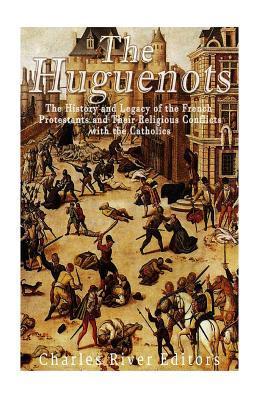
The Huguenots: The History and Legacy of the French Protestants and Their Religious Conflicts with the Catholics
*Includes pictures
*Includes online resources and a bibliography for further reading
In the 16th century, corruption, debauchery, and the general perversion of ethics were running rampant within the Roman Catholic Church. The public began to grow leery of the crooked church, and soon, they could no longer bite their tongues. Among the church's most vocal opponents was Martin Luther, whose publication of the 95 Theses gave rise to the Protestant movement. This reformed brand of Christianity gradually spread throughout Europe, planting flags across the continent. France was among the first to latch onto the movement, and these new-wave Protestants became known as the "Huguenots." The exact origins of the Huguenot name is still disputed to this day, but most historians have agreed it is a French and German translation of the Swiss-German term, "eidgenossen," meaning "oath-fellowship." The Huguenots mostly resided in the southern regions of France, along with the northern regions of Normandy and Picardy. They shared quite a few similarities with the Protestant Walloons, who lived in what is now Belgium, but the two groups were unique communities. Even so, both groups frequently convened to worship together as refugees.
The Huguenots, whose belief system incorporated a blend of unorthodox Waldensian and Calvinist teachings, continued to bloom, which did not sit well with the authorities. Critics attributed the rise of Protestant-led riots to the no-good Huguenots. The Huguenots were known iconoclasts who rejected statues, paintings, idols, and other religious images, as often seen in the numerous statues and stained glass artwork in Catholic churches. Across Europe, rebellious Protestants seized Catholic churches and swiped all heretical images, destroying them with axes and hurling them into roaring bonfires. The string of ambushes included the 1562 Looting of the Churches in Lyon, which were followed by similar attacks in Zurich, Copenhagen, Geneva, and many more.
Even in the face of persecution, the Huguenot influence gained momentum in France. A year before the looting, 2,500 Protestant congregations had already been established across the nation. The Huguenots held their services behind the curtains of secrecy, most commonly in the dead of the night. Some historians believe this clandestine operation could be related to the origin of their name. "Le roi Huguet," meaning "King Huguet," referred to purgatory spirits who haunted the liv
PRP: 79.36 Lei

Acesta este Prețul Recomandat de Producător. Prețul de vânzare al produsului este afișat mai jos.
63.49Lei
63.49Lei
79.36 LeiPrimești 63 puncte

Livrare in 2-4 saptamani
Descrierea produsului
*Includes pictures
*Includes online resources and a bibliography for further reading
In the 16th century, corruption, debauchery, and the general perversion of ethics were running rampant within the Roman Catholic Church. The public began to grow leery of the crooked church, and soon, they could no longer bite their tongues. Among the church's most vocal opponents was Martin Luther, whose publication of the 95 Theses gave rise to the Protestant movement. This reformed brand of Christianity gradually spread throughout Europe, planting flags across the continent. France was among the first to latch onto the movement, and these new-wave Protestants became known as the "Huguenots." The exact origins of the Huguenot name is still disputed to this day, but most historians have agreed it is a French and German translation of the Swiss-German term, "eidgenossen," meaning "oath-fellowship." The Huguenots mostly resided in the southern regions of France, along with the northern regions of Normandy and Picardy. They shared quite a few similarities with the Protestant Walloons, who lived in what is now Belgium, but the two groups were unique communities. Even so, both groups frequently convened to worship together as refugees.
The Huguenots, whose belief system incorporated a blend of unorthodox Waldensian and Calvinist teachings, continued to bloom, which did not sit well with the authorities. Critics attributed the rise of Protestant-led riots to the no-good Huguenots. The Huguenots were known iconoclasts who rejected statues, paintings, idols, and other religious images, as often seen in the numerous statues and stained glass artwork in Catholic churches. Across Europe, rebellious Protestants seized Catholic churches and swiped all heretical images, destroying them with axes and hurling them into roaring bonfires. The string of ambushes included the 1562 Looting of the Churches in Lyon, which were followed by similar attacks in Zurich, Copenhagen, Geneva, and many more.
Even in the face of persecution, the Huguenot influence gained momentum in France. A year before the looting, 2,500 Protestant congregations had already been established across the nation. The Huguenots held their services behind the curtains of secrecy, most commonly in the dead of the night. Some historians believe this clandestine operation could be related to the origin of their name. "Le roi Huguet," meaning "King Huguet," referred to purgatory spirits who haunted the liv
Detaliile produsului