- /
- Librarie online
- /
- Carti in engleza
- /
- Literary Collections
- /
- European
- /
- French
- /
- The Last Day of a Condemned Man: A New Translation - David Petault
The Last Day of a Condemned Man: A New Translation
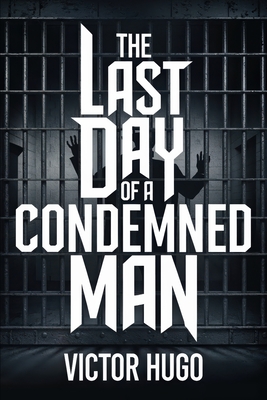
The Last Day of a Condemned Man: A New Translation
Six weeks to live. A mind disintegrating under unbearable pressure. And Victor Hugo's devastating argument against the death penalty. An unnamed man awaits execution in a Paris prison. In the final weeks before the guillotine, he records his thoughts-memories of his daughter, observations of fellow prisoners, desperate hopes for reprieve, and the gradually fragmenting consciousness of someone facing certain death. Victor Hugo wrote this brief, intense novel in 1829 when he was twenty-seven, making a radical choice: he never reveals the man's crime or his name, preventing readers from distancing themselves through judgment. The condemned man could be anyone. His suffering is rendered with such psychological precision that readers cannot dismiss him as deserving monster. His impending execution becomes not punishment of criminal but destruction of conscious human being capable of thought, feeling, memory, and love. The narrative technique was revolutionary for 1829-stream-of-consciousness passages rendering psychological states with immediacy that anticipates modernist literature. The condemned man's thoughts fragment as execution approaches: he obsesses over trivial details, recalls childhood with painful vividness, swings between hope and despair, bargains desperately, and gradually loses coherent sense of self. Hugo's strategy is brilliant and brutal: by forcing identification with the condemned, he makes readers experience capital punishment not as abstract legal question but as concrete reality of destroying a human being. The novel shows execution as extended psychological torture-not merely the final moment but weeks of unbearable waiting, every day a death, every moment containing knowledge of impending annihilation. Published initially without Hugo's name, it shocked readers with its unflinching psychological realism. When Hugo added an explicit abolitionist preface in 1832, the work's political purpose became undeniable. It became central text for French abolition movement, cited in legislative debates, helping shift public opinion even if immediate success proved elusive. For modern readers, the novel retains extraordinary power. Under 100 pages, readable in one sitting, yet its impact far exceeds its length. The moral questions remain urgent wherever capital punishment persists. Victor Hugo's masterpiece-a devastating psychological portrait and an unanswerable moral challenge that remains as urgent today as in 1829.
PRP: 77.42 Lei

Acesta este Prețul Recomandat de Producător. Prețul de vânzare al produsului este afișat mai jos.
69.68Lei
69.68Lei
77.42 LeiPrimești 69 puncte

Livrare in 2-4 saptamani
Descrierea produsului
Six weeks to live. A mind disintegrating under unbearable pressure. And Victor Hugo's devastating argument against the death penalty. An unnamed man awaits execution in a Paris prison. In the final weeks before the guillotine, he records his thoughts-memories of his daughter, observations of fellow prisoners, desperate hopes for reprieve, and the gradually fragmenting consciousness of someone facing certain death. Victor Hugo wrote this brief, intense novel in 1829 when he was twenty-seven, making a radical choice: he never reveals the man's crime or his name, preventing readers from distancing themselves through judgment. The condemned man could be anyone. His suffering is rendered with such psychological precision that readers cannot dismiss him as deserving monster. His impending execution becomes not punishment of criminal but destruction of conscious human being capable of thought, feeling, memory, and love. The narrative technique was revolutionary for 1829-stream-of-consciousness passages rendering psychological states with immediacy that anticipates modernist literature. The condemned man's thoughts fragment as execution approaches: he obsesses over trivial details, recalls childhood with painful vividness, swings between hope and despair, bargains desperately, and gradually loses coherent sense of self. Hugo's strategy is brilliant and brutal: by forcing identification with the condemned, he makes readers experience capital punishment not as abstract legal question but as concrete reality of destroying a human being. The novel shows execution as extended psychological torture-not merely the final moment but weeks of unbearable waiting, every day a death, every moment containing knowledge of impending annihilation. Published initially without Hugo's name, it shocked readers with its unflinching psychological realism. When Hugo added an explicit abolitionist preface in 1832, the work's political purpose became undeniable. It became central text for French abolition movement, cited in legislative debates, helping shift public opinion even if immediate success proved elusive. For modern readers, the novel retains extraordinary power. Under 100 pages, readable in one sitting, yet its impact far exceeds its length. The moral questions remain urgent wherever capital punishment persists. Victor Hugo's masterpiece-a devastating psychological portrait and an unanswerable moral challenge that remains as urgent today as in 1829.
Detaliile produsului