







- /
- Librarie online
- /
- Carti in engleza
- /
- Science
- /
- Physics
- /
- Condensed Matter
- /
- The Least Action Nuclear Process Theory of Cold Fusion: A Theory of Heat - Daniel S. Szumski
The Least Action Nuclear Process Theory of Cold Fusion: A Theory of Heat
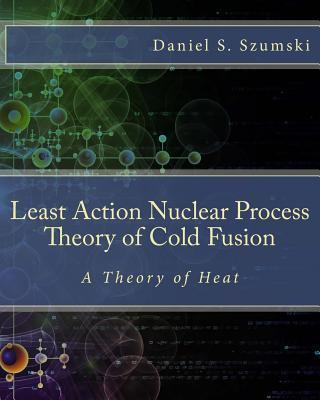
The Least Action Nuclear Process Theory of Cold Fusion: A Theory of Heat
Twenty five year after Fleischmann and Pons remarkable discovery of what they described as a room temperature nuclear fusion process, no one can tell you how the observed excess heat and the accompanying nuclear reactions occur. The known limits of physics and chemistry have been exhausted in the search for an answer. And yet, successful experiments take place daily, with no hint of where the ignition energy comes from. This is a collection of published and unpublished papers and essays about the Least Action Nuclear Process theory of cold fusion. It takes the bold step of treating the energy accumulation and energy storage sub-models as reversible thermodynamic processes. But, we know that reversible processes cannot occur in nature. There are no perpetual motion devices. Or...are there? When the author treats the energy accumulation sub-model as an imperfect reversible process, everything changes. Kinetic energy, which is always excluded from the reversible process space, can occur in infinitesimal amounts that fall below the physical processes event horizon, albeit with continuous energy renewal from the most unexpected source. In this way cold fusion's anomalous behavior falls into place the way that light theory needed only Maxwell's six equations. Did you know that papers describing biological transmutation of the elements are common at cold fusion conferences? This proximity is not accidental. The author believes that we will find that both processes involve extraordinarily high internal temperatures that are capable of sponsoring nuclear transmutations, and both will be found to be imperfect reversible thermodynamic processes.
PRP: 46.50 Lei

Acesta este Prețul Recomandat de Producător. Prețul de vânzare al produsului este afișat mai jos.
37.20Lei
37.20Lei
46.50 LeiPrimești 37 puncte

Livrare in 2-4 saptamani
Descrierea produsului
Twenty five year after Fleischmann and Pons remarkable discovery of what they described as a room temperature nuclear fusion process, no one can tell you how the observed excess heat and the accompanying nuclear reactions occur. The known limits of physics and chemistry have been exhausted in the search for an answer. And yet, successful experiments take place daily, with no hint of where the ignition energy comes from. This is a collection of published and unpublished papers and essays about the Least Action Nuclear Process theory of cold fusion. It takes the bold step of treating the energy accumulation and energy storage sub-models as reversible thermodynamic processes. But, we know that reversible processes cannot occur in nature. There are no perpetual motion devices. Or...are there? When the author treats the energy accumulation sub-model as an imperfect reversible process, everything changes. Kinetic energy, which is always excluded from the reversible process space, can occur in infinitesimal amounts that fall below the physical processes event horizon, albeit with continuous energy renewal from the most unexpected source. In this way cold fusion's anomalous behavior falls into place the way that light theory needed only Maxwell's six equations. Did you know that papers describing biological transmutation of the elements are common at cold fusion conferences? This proximity is not accidental. The author believes that we will find that both processes involve extraordinarily high internal temperatures that are capable of sponsoring nuclear transmutations, and both will be found to be imperfect reversible thermodynamic processes.
Detaliile produsului




