








The Making of the Sikh Empire: The role of Banda Bahadur and the Misls
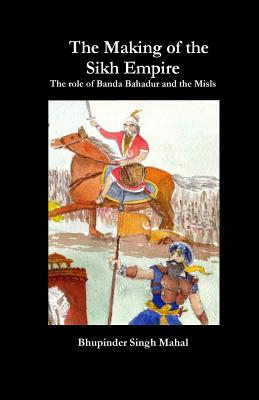
The Making of the Sikh Empire: The role of Banda Bahadur and the Misls
This study is based primarily on secondary sources in English language and takes issue with Sikh historians to offer novel perspectives on the nature and function of Sikh misls. It covers the period beginning in the fall of 1709 when Banda Bahadur and his small band of Khalsa warriors stormed into Punjab and the Baisakhi day in 1801 when Ranjit Singh was proclaimed Maharaja of the Punjab. During this period Punjab was buffeted by political turbulence and confusion. Mogul empire was losing its majesty and luster and embroiled with an endless spiral of wars of succession that weakened the imperial grip over Punjab. The Moguls confronted a two-front war on two geographically separate fronts. In the north, primarily in Punjab, the repeated forays of Afghan invader Abdali so emasculated Mogul hold over Punjab that the Mogul emperor Ahmad Shah Bahadur ceded Lahore and Multan to Abdali. In the south the Marathas read the winds of change then blowing through imperial Mogul indicating an empire on the wane and in 1757 captured Delhi and vast swathes of countryside up to Saharanpur. With overpowering presence in the imperial city the Marathas now turned their eye on Punjab to drive the Afghan invader and occupier from the country. The Afghans and Marathas faced one another at Panipat. They fought three battles and in the final clash in January 1761 the Maratha army suffered a catastrophic defeat, ending Maratha hegemony over Punjab. Although Abdali managed to crush the Marathas once and for all, his ambition of hegemony over Punjab was quashed by his nemesis, the Sikh misls. And in this crucible of turbulence the Sikhs were to forge their destiny. Following the death of Banda Bahadur some of his followers for whom marauding had become a way of life formed their own jathas (gangs) and lived off plunder. On Baisakhi 1748 these bands or jathas were finally merged into one army, the Dal Khalsa divided into eleven misls with own name, leader and flag, under the supreme command of Jassa Singh Ahluwalia. The twelfth misl was the Phulkian misl but it was not an integral part of the Dal Khalsa. Pillaging skills that the jathas honed over the years were employed to pounce on Abdali's booty-laden caravan, hit and grab as much of loot and make a getaway to their strongholds and bulwarks in the hills and jungles; redoubts built for the purpose of better securing their persons and property against Afghan and Mogul search parties. The misls pillaged villages, merchants and traders
PRP: 75.56 Lei

Acesta este Prețul Recomandat de Producător. Prețul de vânzare al produsului este afișat mai jos.
68.00Lei
68.00Lei
75.56 LeiPrimești 68 puncte

Livrare in 2-4 saptamani
Descrierea produsului
This study is based primarily on secondary sources in English language and takes issue with Sikh historians to offer novel perspectives on the nature and function of Sikh misls. It covers the period beginning in the fall of 1709 when Banda Bahadur and his small band of Khalsa warriors stormed into Punjab and the Baisakhi day in 1801 when Ranjit Singh was proclaimed Maharaja of the Punjab. During this period Punjab was buffeted by political turbulence and confusion. Mogul empire was losing its majesty and luster and embroiled with an endless spiral of wars of succession that weakened the imperial grip over Punjab. The Moguls confronted a two-front war on two geographically separate fronts. In the north, primarily in Punjab, the repeated forays of Afghan invader Abdali so emasculated Mogul hold over Punjab that the Mogul emperor Ahmad Shah Bahadur ceded Lahore and Multan to Abdali. In the south the Marathas read the winds of change then blowing through imperial Mogul indicating an empire on the wane and in 1757 captured Delhi and vast swathes of countryside up to Saharanpur. With overpowering presence in the imperial city the Marathas now turned their eye on Punjab to drive the Afghan invader and occupier from the country. The Afghans and Marathas faced one another at Panipat. They fought three battles and in the final clash in January 1761 the Maratha army suffered a catastrophic defeat, ending Maratha hegemony over Punjab. Although Abdali managed to crush the Marathas once and for all, his ambition of hegemony over Punjab was quashed by his nemesis, the Sikh misls. And in this crucible of turbulence the Sikhs were to forge their destiny. Following the death of Banda Bahadur some of his followers for whom marauding had become a way of life formed their own jathas (gangs) and lived off plunder. On Baisakhi 1748 these bands or jathas were finally merged into one army, the Dal Khalsa divided into eleven misls with own name, leader and flag, under the supreme command of Jassa Singh Ahluwalia. The twelfth misl was the Phulkian misl but it was not an integral part of the Dal Khalsa. Pillaging skills that the jathas honed over the years were employed to pounce on Abdali's booty-laden caravan, hit and grab as much of loot and make a getaway to their strongholds and bulwarks in the hills and jungles; redoubts built for the purpose of better securing their persons and property against Afghan and Mogul search parties. The misls pillaged villages, merchants and traders
Detaliile produsului




