



- /
- Librarie online
- /
- Carti in engleza
- /
- History
- /
- Military
- /
- World War Ii
- /
- The Naval Warfare of World War II: The History of the Ships, Tactics, and Battles that Shaped the Fighting in the Atlantic and Pacific - Charles River
The Naval Warfare of World War II: The History of the Ships, Tactics, and Battles that Shaped the Fighting in the Atlantic and Pacific
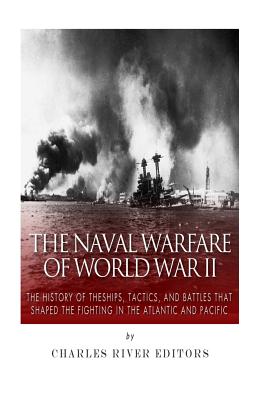
The Naval Warfare of World War II: The History of the Ships, Tactics, and Battles that Shaped the Fighting in the Atlantic and Pacific
*Includes pictures *Includes accounts of battles like Pearl Harbor, Midway, Coral Sea, and more. *Profiles the different nations' naval forces and strategies *Includes online resources and a bibliography for further reading *Includes a table of contents Naval combat underwent a significant metamorphosis during World War II. Nazi Germany and Imperial Japan launched some of the most powerful battleships ever to sail the world's oceans, yet the conflict witnessed the emergence and triumph of the aircraft carrier as the 20th century's true monarch of the seas. Submarine warfare expanded and developed, while aircraft technology and doctrine experienced several revolutionary changes due to the unforgiving demands of the new combat environment. Popular accounts of World War II frequently focus on the dominance of German panzers over the more lightly armored, lightly armed tanks of the Soviets, British, and Americans, or the superb fighting skills of the Waffen SS and ordinary Wehrmacht soldiers. Germany's land forces enjoyed an undoubted advantage over their enemies thanks to excellent vehicle technology, while German soldiers slaughtered vast numbers of Soviet conscripts and proved formidable opponents even to their better-trained English and American counterparts. However, the Axis failed to secure either the seas or the skies, and their defeat in these theaters ultimately led to their doom. Many highly advanced aircraft designs languished on the drawing boards of Junkers and Messerschmitt engineers, left undeveloped due to high command disinterest or simple lack of resources. The most advanced fighters developed by Nazi Germany and Imperial Japan were equaled or outmatched by such aircraft as the U.S. F6F Hellcat (which achieved kill ratios of between 13 to 1 and 19 to 1 against Japanese "Zero" fighters) or P-51 Mustang. America, with its vast productive resources and immense manufacturing capacity, single-handedly supplied the materiel that saved Britain and the Soviet Union from defeat. It did so by controlling the sea lanes and eventually ending much of the threat of U-boat attack, supplying England and Russia with staggering quantities of food, weapons, raw materials, trucks, tanks, aircraft, prefabricated buildings, boots, ammunition, medicines, and even entire locomotives and sets of railway rolling stock. Over 50% of the Soviet Union's entire wartime supply base, from food and clothing to weapons and vehicles, came directly from the United States. In ti
PRP: 79.36 Lei

Acesta este Prețul Recomandat de Producător. Prețul de vânzare al produsului este afișat mai jos.
71.42Lei
71.42Lei
79.36 LeiPrimești 71 puncte

Livrare in 2-4 saptamani
Descrierea produsului
*Includes pictures *Includes accounts of battles like Pearl Harbor, Midway, Coral Sea, and more. *Profiles the different nations' naval forces and strategies *Includes online resources and a bibliography for further reading *Includes a table of contents Naval combat underwent a significant metamorphosis during World War II. Nazi Germany and Imperial Japan launched some of the most powerful battleships ever to sail the world's oceans, yet the conflict witnessed the emergence and triumph of the aircraft carrier as the 20th century's true monarch of the seas. Submarine warfare expanded and developed, while aircraft technology and doctrine experienced several revolutionary changes due to the unforgiving demands of the new combat environment. Popular accounts of World War II frequently focus on the dominance of German panzers over the more lightly armored, lightly armed tanks of the Soviets, British, and Americans, or the superb fighting skills of the Waffen SS and ordinary Wehrmacht soldiers. Germany's land forces enjoyed an undoubted advantage over their enemies thanks to excellent vehicle technology, while German soldiers slaughtered vast numbers of Soviet conscripts and proved formidable opponents even to their better-trained English and American counterparts. However, the Axis failed to secure either the seas or the skies, and their defeat in these theaters ultimately led to their doom. Many highly advanced aircraft designs languished on the drawing boards of Junkers and Messerschmitt engineers, left undeveloped due to high command disinterest or simple lack of resources. The most advanced fighters developed by Nazi Germany and Imperial Japan were equaled or outmatched by such aircraft as the U.S. F6F Hellcat (which achieved kill ratios of between 13 to 1 and 19 to 1 against Japanese "Zero" fighters) or P-51 Mustang. America, with its vast productive resources and immense manufacturing capacity, single-handedly supplied the materiel that saved Britain and the Soviet Union from defeat. It did so by controlling the sea lanes and eventually ending much of the threat of U-boat attack, supplying England and Russia with staggering quantities of food, weapons, raw materials, trucks, tanks, aircraft, prefabricated buildings, boots, ammunition, medicines, and even entire locomotives and sets of railway rolling stock. Over 50% of the Soviet Union's entire wartime supply base, from food and clothing to weapons and vehicles, came directly from the United States. In ti
Detaliile produsului