



- /
- Librarie online
- /
- Carti in engleza
- /
- History
- /
- Europe
- /
- Russia & The Former Soviet Union
- /
- The Odd Man Karakozov - Claudia Verhoeven
The Odd Man Karakozov
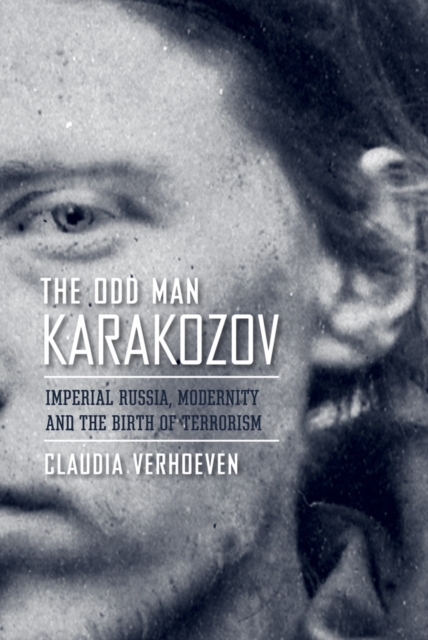
On April 4, 1866, just as Alexander II stepped out of Saint Petersburg's Summer Garden and onto the boulevard, a young man named Dmitry Karakozov pulled out a pistol and shot at the tsar. He missed, but his "unheard-of act" changed the course of Russian history--and gave birth to the revolutionary political violence known as terrorism.
Based on clues pulled out of the pockets of Karakozov's peasant disguise, investigators concluded that there had been a conspiracy so extensive as to have sprawled across the entirety of the Russian empire and the European continent. Karakozov was said to have been a member of "The Organization," a socialist network at the center of which sat a secret cell of suicide-assassins: "Hell." It is still unclear how much of this "conspiracy" theory was actually true, but of the thirty-six defendants who stood accused during what was Russia's first modern political trial, all but a few were exiled to Siberia, and Karakozov himself was publicly hanged on September 3, 1866. Because Karakozov was decidedly strange, sick, and suicidal, his failed act of political violence has long been relegated to a footnote of Russian history.
In The Odd Man Karakozov, however, Claudia Verhoeven argues that it is precisely this neglected, exceptional case that sheds a new light on the origins of terrorism. The book not only demonstrates how the idea of terrorism first emerged from the reception of Karakozov's attack, but also, importantly, what was really at stake in this novel form of political violence, namely, the birth of a new, modern political subject. Along the way, in characterizing Karakozov's as an essentially modernist crime, Verhoeven traces how his act profoundly impacted Russian culture, including such touchstones as Repin's art and Dostoevsky's literature.
By looking at the history that produced Karakozov and, in turn, the history that Karakozov produced, Verhoeven shows terrorism as a phenomenon inextricably linked to the foundations of the modern world: capitalism, enlightened law and scientific reason, ideology, technology, new media, and above all, people's participation in politics and in the making of history.
PRP: 167.09 Lei

Acesta este Prețul Recomandat de Producător. Prețul de vânzare al produsului este afișat mai jos.
150.38Lei
150.38Lei
167.09 LeiPrimești 150 puncte

Livrare in 2-4 saptamani
Descrierea produsului
On April 4, 1866, just as Alexander II stepped out of Saint Petersburg's Summer Garden and onto the boulevard, a young man named Dmitry Karakozov pulled out a pistol and shot at the tsar. He missed, but his "unheard-of act" changed the course of Russian history--and gave birth to the revolutionary political violence known as terrorism.
Based on clues pulled out of the pockets of Karakozov's peasant disguise, investigators concluded that there had been a conspiracy so extensive as to have sprawled across the entirety of the Russian empire and the European continent. Karakozov was said to have been a member of "The Organization," a socialist network at the center of which sat a secret cell of suicide-assassins: "Hell." It is still unclear how much of this "conspiracy" theory was actually true, but of the thirty-six defendants who stood accused during what was Russia's first modern political trial, all but a few were exiled to Siberia, and Karakozov himself was publicly hanged on September 3, 1866. Because Karakozov was decidedly strange, sick, and suicidal, his failed act of political violence has long been relegated to a footnote of Russian history.
In The Odd Man Karakozov, however, Claudia Verhoeven argues that it is precisely this neglected, exceptional case that sheds a new light on the origins of terrorism. The book not only demonstrates how the idea of terrorism first emerged from the reception of Karakozov's attack, but also, importantly, what was really at stake in this novel form of political violence, namely, the birth of a new, modern political subject. Along the way, in characterizing Karakozov's as an essentially modernist crime, Verhoeven traces how his act profoundly impacted Russian culture, including such touchstones as Repin's art and Dostoevsky's literature.
By looking at the history that produced Karakozov and, in turn, the history that Karakozov produced, Verhoeven shows terrorism as a phenomenon inextricably linked to the foundations of the modern world: capitalism, enlightened law and scientific reason, ideology, technology, new media, and above all, people's participation in politics and in the making of history.
Detaliile produsului