- /
- Librarie online
- /
- Carti in engleza
- /
- Religion
- /
- Holidays
- /
- Christian
- /
- The Origins of Feasts, Fasts, and Seasons in Early Christianity - Paul F. Bradshaw
The Origins of Feasts, Fasts, and Seasons in Early Christianity
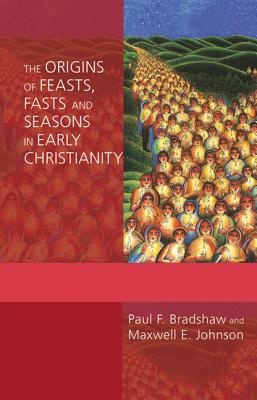
The liturgical year is a relatively modern invention. The term itself only came into use in the late sixteenth century. In antiquity, Christians did not view the various festivals and fasts that they experienced as a unified whole. Instead, the different seasons formed a number of completely unrelated cycles and tended to overlap and conflict with one another. In early Christianity, the fundamental cycle was that of the seven-day week. Taken over from Judaism by the first Christians, this was centered on Sunday rather than the sabbath. As the early Church established its identity, the days of the week set aside for fasting came to be different from those customary among the Jews. There also existed an annual cycle related to Easter.
Drawing upon the latest research, the authors track the development of the Church's feasts, fasts, and seasons, including the sabbath and Sunday, Holy Week and Easter, Christmas and Epiphany, and the feasts of the Virgin Mary, the martyrs, and other saints.
PRP: 231.14 Lei

Acesta este Prețul Recomandat de Producător. Prețul de vânzare al produsului este afișat mai jos.
208.03Lei
208.03Lei
231.14 LeiPrimești 208 puncte

Livrare in 2-4 saptamani
Descrierea produsului
The liturgical year is a relatively modern invention. The term itself only came into use in the late sixteenth century. In antiquity, Christians did not view the various festivals and fasts that they experienced as a unified whole. Instead, the different seasons formed a number of completely unrelated cycles and tended to overlap and conflict with one another. In early Christianity, the fundamental cycle was that of the seven-day week. Taken over from Judaism by the first Christians, this was centered on Sunday rather than the sabbath. As the early Church established its identity, the days of the week set aside for fasting came to be different from those customary among the Jews. There also existed an annual cycle related to Easter.
Drawing upon the latest research, the authors track the development of the Church's feasts, fasts, and seasons, including the sabbath and Sunday, Holy Week and Easter, Christmas and Epiphany, and the feasts of the Virgin Mary, the martyrs, and other saints.
Detaliile produsului