- /
- Librarie online
- /
- Carti in engleza
- /
- History
- /
- United States
- /
- Revolutionary Period (1775-1800)
- /
- The Outposts - John L. Moore
The Outposts
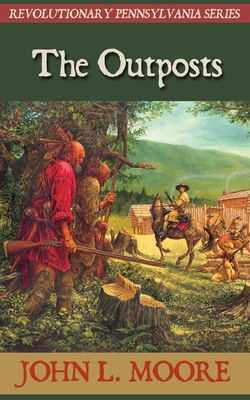
When the American Revolution began in 1775, neither the British nor the Americans wanted to involve the native tribes. "This is a family quarrel between us and Old England," the U.S. Congress told the Iroquois Confederacy. "You Indians are not concerned in it."
The Indians didn't want to take sides. "We will not suffer either the English or Americans to march an army through our country," Guyasuta, the ranking Iroquois chief in the Ohio River Valley, declared at Pittsburgh in 1776.
The natives' neutrality didn't last another year.
"The western Indians are united against us," Brigadier General Edward Hand said in September 1777. The Outposts tells how Hand led a mostly militia force from Fort Pitt into Indian Country in February 1778. When his troops met friendly Delawares in the woods, they "were so impetuous that I could not prevent their killing the man and one of the women," he said.
John L. Moore's nonfiction book draws on first-person accounts to chronicle these events.
Late 1778 saw the Americans erect two forts-Fort McIntosh at present-day Beaver, Pa., and Fort Laurens at Bolivar, Ohio-along a key trail linking Fort Pitt and Fort Detroit, 300 miles to the northwest. The construction was ordered by General Lachlan McIntosh, a Georgian who didn't appreciate the severity of northern winters.
Delaware Indians, still friendly toward the United States, welcomed Fort Laurens, but the British and their native allies realized the outpost would support an American march against Detroit. When hostile warriors prevented McIntosh from shipping provisions to the fort, soldiers in the garrison began to starve. Hungry soldiers "washed their moccasins and broiled them for food, and broiled strips of old dried hides," an elderly veteran recalled decades later.
PRP: 92.61 Lei

Acesta este Prețul Recomandat de Producător. Prețul de vânzare al produsului este afișat mai jos.
83.35Lei
83.35Lei
92.61 LeiPrimești 83 puncte

Livrare in 2-4 saptamani
Descrierea produsului
When the American Revolution began in 1775, neither the British nor the Americans wanted to involve the native tribes. "This is a family quarrel between us and Old England," the U.S. Congress told the Iroquois Confederacy. "You Indians are not concerned in it."
The Indians didn't want to take sides. "We will not suffer either the English or Americans to march an army through our country," Guyasuta, the ranking Iroquois chief in the Ohio River Valley, declared at Pittsburgh in 1776.
The natives' neutrality didn't last another year.
"The western Indians are united against us," Brigadier General Edward Hand said in September 1777. The Outposts tells how Hand led a mostly militia force from Fort Pitt into Indian Country in February 1778. When his troops met friendly Delawares in the woods, they "were so impetuous that I could not prevent their killing the man and one of the women," he said.
John L. Moore's nonfiction book draws on first-person accounts to chronicle these events.
Late 1778 saw the Americans erect two forts-Fort McIntosh at present-day Beaver, Pa., and Fort Laurens at Bolivar, Ohio-along a key trail linking Fort Pitt and Fort Detroit, 300 miles to the northwest. The construction was ordered by General Lachlan McIntosh, a Georgian who didn't appreciate the severity of northern winters.
Delaware Indians, still friendly toward the United States, welcomed Fort Laurens, but the British and their native allies realized the outpost would support an American march against Detroit. When hostile warriors prevented McIntosh from shipping provisions to the fort, soldiers in the garrison began to starve. Hungry soldiers "washed their moccasins and broiled them for food, and broiled strips of old dried hides," an elderly veteran recalled decades later.
Detaliile produsului