







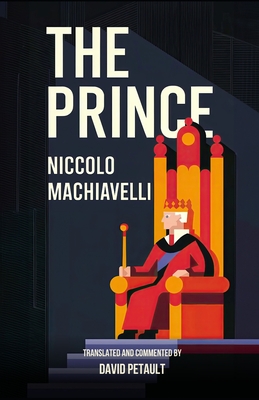
The Prince: A New Translation in Modern Accessible English
In 1513, Niccolò Machiavelli was living in enforced exile on a small farm outside Florence, recently tortured, politically destroyed, with nothing left to do but think clearly about the world that had discarded him. The book he wrote that winter - addressed to the Medici rulers who had ended his career, in the hope that demonstrating his knowledge might restore his position - failed entirely as a job application. As an act of political analysis, it changed the history of thought.
The Prince is a short book with a simple premise and inexhaustible implications: that the proper study of politics is not how rulers ought to behave according to moral ideals, but how power actually works in the world as it is. What Machiavelli found, when he looked honestly at that world, was that the conventional virtues could be fatal and their apparent opposites could be necessary - that a ruler who keeps all his promises will be destroyed by those who do not, that well-timed cruelty can be more merciful than misplaced gentleness, and that the appearance of virtue is often more useful than virtue itself.
These conclusions made The Prince one of the most banned and most read books in European history. They also made it one of the most misunderstood - taken as a celebration of wickedness by readers who missed its analytical detachment, dismissed as cynicism by readers who expected political philosophy to be a branch of ethics. What it actually is, five centuries after it was written, is something rarer and more useful: an honest account of how power operates, by a man who had been close enough to observe it carefully and had been given, by his own political destruction, nothing left to lose by telling the truth.
As relevant, and as uncomfortable, as the day it was written.
PRP: 77.42 Lei

Acesta este Prețul Recomandat de Producător. Prețul de vânzare al produsului este afișat mai jos.
61.94Lei
61.94Lei
77.42 LeiPrimești 61 puncte

Livrare in 2-4 saptamani
Descrierea produsului
In 1513, Niccolò Machiavelli was living in enforced exile on a small farm outside Florence, recently tortured, politically destroyed, with nothing left to do but think clearly about the world that had discarded him. The book he wrote that winter - addressed to the Medici rulers who had ended his career, in the hope that demonstrating his knowledge might restore his position - failed entirely as a job application. As an act of political analysis, it changed the history of thought.
The Prince is a short book with a simple premise and inexhaustible implications: that the proper study of politics is not how rulers ought to behave according to moral ideals, but how power actually works in the world as it is. What Machiavelli found, when he looked honestly at that world, was that the conventional virtues could be fatal and their apparent opposites could be necessary - that a ruler who keeps all his promises will be destroyed by those who do not, that well-timed cruelty can be more merciful than misplaced gentleness, and that the appearance of virtue is often more useful than virtue itself.
These conclusions made The Prince one of the most banned and most read books in European history. They also made it one of the most misunderstood - taken as a celebration of wickedness by readers who missed its analytical detachment, dismissed as cynicism by readers who expected political philosophy to be a branch of ethics. What it actually is, five centuries after it was written, is something rarer and more useful: an honest account of how power operates, by a man who had been close enough to observe it carefully and had been given, by his own political destruction, nothing left to lose by telling the truth.
As relevant, and as uncomfortable, as the day it was written.
Detaliile produsului