- /
- Librarie online
- /
- Carti in engleza
- /
- Political Science
- /
- Public Policy
- /
- Environmental Policy
- /
- The Resistance Dilemma: Place-Based Movements and the Climate Crisis - George Hoberg
The Resistance Dilemma: Place-Based Movements and the Climate Crisis
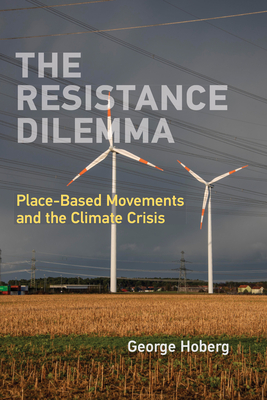
The Resistance Dilemma: Place-Based Movements and the Climate Crisis
How organized resistance to new fossil fuel infrastructure became a political force, and how this might affect the transition to renewable energy. Organized resistance to new fossil fuel infrastructure, particularly conflicts over pipelines, has become a formidable political force in North America. In this book, George Hoberg examines whether such place-based environmental movements are effective ways of promoting climate action, if they might inadvertently feed resistance to the development of renewable energy infrastructure, and what other, more innovative processes of decision-making would encourage the acceptance of clean energy systems. Focusing on a series of conflicts over new oil sands pipelines, Hoberg investigates activists' strategy of blocking fossil fuel infrastructure, often in alliance with Indigenous groups, and examines the political and environmental outcomes of these actions. After discussing the oil sands policy regime and the relevant political institutions in Canada and the United States, Hoberg analyzes in detail four anti-pipeline campaigns, examining the controversies over the Keystone XL, the most well-known of these movements and the first one to use infrastructure resistance as a core strategy; the Northern Gateway pipeline; the Trans Mountain pipeline; and the Energy East pipeline. He then considers the "resistance dilemma" the potential of place-based activism to threaten the much-needed transition to renewable energy. He examines several episodes of resistance to clean energy infrastructure in eastern Canada and the United States. Finally, Hoberg describes some innovative processes of energy decision-making, including strategic environment assessment, and cumulative impact assessment, looking at cases in British Columbia and Lower Alberta.
PRP: 310.08 Lei

Acesta este Prețul Recomandat de Producător. Prețul de vânzare al produsului este afișat mai jos.
279.07Lei
279.07Lei
310.08 LeiPrimești 279 puncte

Livrare in 2-4 saptamani
Descrierea produsului
How organized resistance to new fossil fuel infrastructure became a political force, and how this might affect the transition to renewable energy. Organized resistance to new fossil fuel infrastructure, particularly conflicts over pipelines, has become a formidable political force in North America. In this book, George Hoberg examines whether such place-based environmental movements are effective ways of promoting climate action, if they might inadvertently feed resistance to the development of renewable energy infrastructure, and what other, more innovative processes of decision-making would encourage the acceptance of clean energy systems. Focusing on a series of conflicts over new oil sands pipelines, Hoberg investigates activists' strategy of blocking fossil fuel infrastructure, often in alliance with Indigenous groups, and examines the political and environmental outcomes of these actions. After discussing the oil sands policy regime and the relevant political institutions in Canada and the United States, Hoberg analyzes in detail four anti-pipeline campaigns, examining the controversies over the Keystone XL, the most well-known of these movements and the first one to use infrastructure resistance as a core strategy; the Northern Gateway pipeline; the Trans Mountain pipeline; and the Energy East pipeline. He then considers the "resistance dilemma" the potential of place-based activism to threaten the much-needed transition to renewable energy. He examines several episodes of resistance to clean energy infrastructure in eastern Canada and the United States. Finally, Hoberg describes some innovative processes of energy decision-making, including strategic environment assessment, and cumulative impact assessment, looking at cases in British Columbia and Lower Alberta.
Detaliile produsului