



- /
- Librarie online
- /
- Carti in engleza
- /
- History
- /
- Caribbean & West Indies
- /
- Cuba
- /
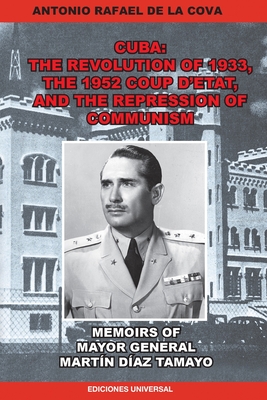
- The Revolution of 1933, the 1952 Coup d'Etat, and the Repression of Communism. Memoirs of Mayor General Martín Díaz Tamayo. - Antonio Rafael De La Cova
The Revolution of 1933, the 1952 Coup d'Etat, and the Repression of Communism. Memoirs of Mayor General Martín Díaz Tamayo.
Antonio Rafael de la Cova was born in Havana in 1950 and went into exile on February 1, 1961. He holds a PhD in History from West Virginia University (1994). He was a professor at the University of South Carolina-Columbia. He died in 2018. He was the author of Cuban Confederate Colonel: The Life of Ambrosio José Gonzales (2003), The Moncada Attack: Birth of the Cuban Revolution (2007), Colonel Henry Theodore Titus: Antebellum Soldier of Fortune and Florida Pioneer (2016), The Air War in Cuba in 1958: Memories of Lieutenant Carlos Lazo (2017), and more than a dozen essays on Cuban history in academic publications.
Martín Díaz Tamayo (1904-1995) was an illiterate peasant from Pinar del Río who worked his way up after joining the army at the age of 16 and rose to the rank of major general. During his military career he participated in the Revolution of September 4, 1933, in the coup d'état of Fulgencio Batista on March 10, 1952, and was chosen by the United States Central Intelligence Agency (CIA) in 1955 to head the Bureau for the Repression of Communist Activities (BRAC). His memoirs recount his relations with Batista for 25 years, pointing out how he became the military leader of the Revo- lution of 1933 and detailing the six month planning of the 1952 coup d'état and its realization. Díaz Tamayo was the head of Regiment No. 1 in Santiago de Cuba on November 30, 1956, at the time of the rebel uprising and the disembarkation of Fidel Castro with the Granma expedition two days later. It describes how the insurrection was stifled and why Castro survived and triumphed two years later. It also explains the founding of the BRAC and its ineffectiveness. In late 1958, the general participated in a failed CIA conspiracy to capture Batista with some thirty officers from Columbia camp and members of the July 26th Movement planning a transitional government. In exile he collaborated with the CIA to overthrow the communist regime during 1959-1962.
PRP: 247.59 Lei

Acesta este Prețul Recomandat de Producător. Prețul de vânzare al produsului este afișat mai jos.
222.83Lei
222.83Lei
247.59 LeiPrimești 222 puncte

Livrare in 2-4 saptamani
Descrierea produsului
Antonio Rafael de la Cova was born in Havana in 1950 and went into exile on February 1, 1961. He holds a PhD in History from West Virginia University (1994). He was a professor at the University of South Carolina-Columbia. He died in 2018. He was the author of Cuban Confederate Colonel: The Life of Ambrosio José Gonzales (2003), The Moncada Attack: Birth of the Cuban Revolution (2007), Colonel Henry Theodore Titus: Antebellum Soldier of Fortune and Florida Pioneer (2016), The Air War in Cuba in 1958: Memories of Lieutenant Carlos Lazo (2017), and more than a dozen essays on Cuban history in academic publications.
Martín Díaz Tamayo (1904-1995) was an illiterate peasant from Pinar del Río who worked his way up after joining the army at the age of 16 and rose to the rank of major general. During his military career he participated in the Revolution of September 4, 1933, in the coup d'état of Fulgencio Batista on March 10, 1952, and was chosen by the United States Central Intelligence Agency (CIA) in 1955 to head the Bureau for the Repression of Communist Activities (BRAC). His memoirs recount his relations with Batista for 25 years, pointing out how he became the military leader of the Revo- lution of 1933 and detailing the six month planning of the 1952 coup d'état and its realization. Díaz Tamayo was the head of Regiment No. 1 in Santiago de Cuba on November 30, 1956, at the time of the rebel uprising and the disembarkation of Fidel Castro with the Granma expedition two days later. It describes how the insurrection was stifled and why Castro survived and triumphed two years later. It also explains the founding of the BRAC and its ineffectiveness. In late 1958, the general participated in a failed CIA conspiracy to capture Batista with some thirty officers from Columbia camp and members of the July 26th Movement planning a transitional government. In exile he collaborated with the CIA to overthrow the communist regime during 1959-1962.
Detaliile produsului