



- /
- Librarie online
- /
- Carti in engleza
- /
- History
- /
- United States
- /
- State & Local
- /
- Pacific Northwest (or, Wa)
- /
- The Washington Apple: Orchards and the Development of Industrial Agriculture Volume 7 - Amanda L. Van Lanen
The Washington Apple: Orchards and the Development of Industrial Agriculture Volume 7
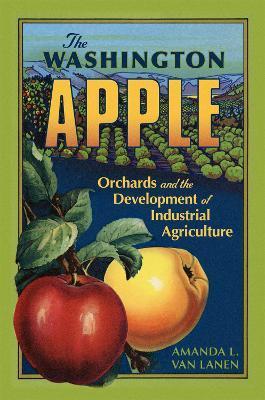
The Washington Apple: Orchards and the Development of Industrial Agriculture Volume 7
In the nineteenth century, most American farms had a small orchard or at least a few fruit-bearing trees. People grew their own apple trees or purchased apples grown within a few hundred miles of their homes. Nowadays, in contrast, Americans buy mass-produced fruit in supermarkets, and roughly 70 percent of apples come from Washington State. So how did Washington become the leading producer of America's most popular fruit? In this enlightening book, Amanda L. Van Lanen offers a comprehensive response to this question by tracing the origins, evolution, and environmental consequences of the state's apple industry. Washington's success in producing apples was not a happy accident of nature, according to Van Lanen. Apples are not native to Washington, any more than potatoes are to Idaho or peaches to Georgia. In fact, Washington apple farmers were late to the game, lagging their eastern competitors. The author outlines the numerous challenges early Washington entrepreneurs faced in such areas as irrigation, transportation, and labor. Eventually, with crucial help from railroads, Washington farmers transformed themselves into "growers" by embracing new technologies and marketing strategies. By the 1920s, the state's growers managed not only to innovate the industry but to dominate it. Industrial agriculture has its fair share of problems involving the environment, consumers, and growers themselves. In the quest to create the perfect apple, early growers did not question the long-term environmental effects of chemical sprays. Since the late twentieth century, consumers have increasingly questioned the environmental safety of industrial apple production. Today, as this book reveals, the apple industry continues to evolve in response to shifting consumer demands and accelerating climate change. Yet, through it all, the Washington apple maintains its iconic status as Washington's most valuable agricultural crop.
PRP: 325.04 Lei

Acesta este Prețul Recomandat de Producător. Prețul de vânzare al produsului este afișat mai jos.
260.03Lei
260.03Lei
325.04 LeiPrimești 260 puncte

Indisponibil
Descrierea produsului
In the nineteenth century, most American farms had a small orchard or at least a few fruit-bearing trees. People grew their own apple trees or purchased apples grown within a few hundred miles of their homes. Nowadays, in contrast, Americans buy mass-produced fruit in supermarkets, and roughly 70 percent of apples come from Washington State. So how did Washington become the leading producer of America's most popular fruit? In this enlightening book, Amanda L. Van Lanen offers a comprehensive response to this question by tracing the origins, evolution, and environmental consequences of the state's apple industry. Washington's success in producing apples was not a happy accident of nature, according to Van Lanen. Apples are not native to Washington, any more than potatoes are to Idaho or peaches to Georgia. In fact, Washington apple farmers were late to the game, lagging their eastern competitors. The author outlines the numerous challenges early Washington entrepreneurs faced in such areas as irrigation, transportation, and labor. Eventually, with crucial help from railroads, Washington farmers transformed themselves into "growers" by embracing new technologies and marketing strategies. By the 1920s, the state's growers managed not only to innovate the industry but to dominate it. Industrial agriculture has its fair share of problems involving the environment, consumers, and growers themselves. In the quest to create the perfect apple, early growers did not question the long-term environmental effects of chemical sprays. Since the late twentieth century, consumers have increasingly questioned the environmental safety of industrial apple production. Today, as this book reveals, the apple industry continues to evolve in response to shifting consumer demands and accelerating climate change. Yet, through it all, the Washington apple maintains its iconic status as Washington's most valuable agricultural crop.
Detaliile produsului