








The Will of an Eccentric: A New Translation
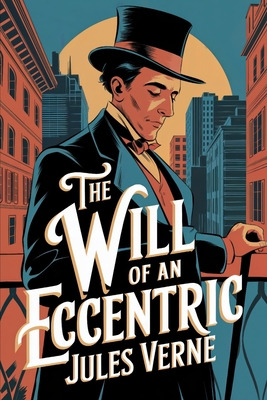
Seven contestants. One eccentric millionaire's fortune. And a cross-country race determined by dice rolls and game rules.
Chicago millionaire William J. Hypperbone dies leaving an unusual will: instead of conventional inheritance, seven contestants from diverse backgrounds must compete in a real-world version of a board game-traveling across the United States visiting cities determined by dice rolls, accumulating points according to elaborate rules, racing to complete the circuit and claim the fortune.
Jules Verne wrote The Will of an Eccentric in 1900, five years before his death, attempting to combine American travelogue with game-based narrative structure and social satire. The premise is inventive-inheritance as literal game, American geography as game board, fortune depending on dice rather than merit.
Yet the execution reveals creative exhaustion that marked his final years. The characterization is perfunctory (contestants defined by backgrounds and strategies, without psychological depth). The game mechanics quickly become tedious (chapters consist of dice rolls determining movement, feeling arbitrary rather than dramatically meaningful). The plotting is mechanical and repetitive (contestants land in location, Verne describes it, minor incident occurs, next dice roll moves them elsewhere). The understanding of American geography and society is superficial, derived from European sources rather than observation.
The social satire the premise suggests-commentary on wealth, inheritance, chance versus merit-remains disappointingly lightweight. Verne never fully exploits the satirical potential of reducing inheritance to game of chance or making fortune dependent on dice rolls rather than work or virtue.
Contemporary critics found the premise clever while recognizing the execution as tired work from an aging writer. Modern readers will find the game mechanics monotonous, the characterization thin, and the travelogue outdated and superficial.
From the author of Twenty Thousand Leagues Under the Sea-an inventive premise undermined by creative exhaustion, showing how structural cleverness cannot compensate for absent imaginative vision.
PRP: 129.35 Lei

Acesta este Prețul Recomandat de Producător. Prețul de vânzare al produsului este afișat mai jos.
116.42Lei
116.42Lei
129.35 LeiPrimești 116 puncte

Livrare in 2-4 saptamani
Descrierea produsului
Seven contestants. One eccentric millionaire's fortune. And a cross-country race determined by dice rolls and game rules.
Chicago millionaire William J. Hypperbone dies leaving an unusual will: instead of conventional inheritance, seven contestants from diverse backgrounds must compete in a real-world version of a board game-traveling across the United States visiting cities determined by dice rolls, accumulating points according to elaborate rules, racing to complete the circuit and claim the fortune.
Jules Verne wrote The Will of an Eccentric in 1900, five years before his death, attempting to combine American travelogue with game-based narrative structure and social satire. The premise is inventive-inheritance as literal game, American geography as game board, fortune depending on dice rather than merit.
Yet the execution reveals creative exhaustion that marked his final years. The characterization is perfunctory (contestants defined by backgrounds and strategies, without psychological depth). The game mechanics quickly become tedious (chapters consist of dice rolls determining movement, feeling arbitrary rather than dramatically meaningful). The plotting is mechanical and repetitive (contestants land in location, Verne describes it, minor incident occurs, next dice roll moves them elsewhere). The understanding of American geography and society is superficial, derived from European sources rather than observation.
The social satire the premise suggests-commentary on wealth, inheritance, chance versus merit-remains disappointingly lightweight. Verne never fully exploits the satirical potential of reducing inheritance to game of chance or making fortune dependent on dice rolls rather than work or virtue.
Contemporary critics found the premise clever while recognizing the execution as tired work from an aging writer. Modern readers will find the game mechanics monotonous, the characterization thin, and the travelogue outdated and superficial.
From the author of Twenty Thousand Leagues Under the Sea-an inventive premise undermined by creative exhaustion, showing how structural cleverness cannot compensate for absent imaginative vision.
Detaliile produsului




