- /
- Librarie online
- /
- Carti in engleza
- /
- History
- /
- Holocaust
- /
- The Will To Tell - Yitzhak Weizman
The Will To Tell
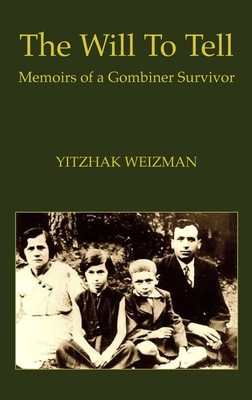
The Will To Tell
The story of the life of our late father Yitzhak Weizman was only revealed to us, his three children, when we were already parents to our own children.We always knew that he was a Holocaust survivor. He had the number 145227 tattooed on his arm.But he told us very little about his Holocaust experiences. "It was a long time ago," he used to say, and "Polanyah" (as we called Poland at the time) seemed very far away. We studied in school and read books about it, but the Holocaust was not present in our home. Unlike other children of survivors, we were not pressured to eat everything on our plates and were even allowed to waste food. "It will not help the children of Africa if you eat everything," used to say our mother, who came from a family that had been living in Israel for six generations. Our father smiled.What we did know was that our father's grandfather had been an important figure in his life. He was a successful industrialist and trader, one of the richest Jews in the town of Gombin. He introduced our father to the secrets of the family business, but he also wanted him to learn Judaism in the heder, the traditional school where Jewish boys received basic religious instruction. We also knew that our father participated on the youth movement Hashomer Hatzair, that he loved to play soccer, and that the horses in Gombin were fast - he used to say that the carts in Gombin, even when loaded with grain, were faster than the lazy soccer players in Israel.We were aware that our father was the only survivor of his family. His father Menachem, his mother Hannah, and his sister Helcia had all been murdered during the Holocaust. But we did not really know how he had survived. He kept us ignorant about it. The shadows of the past remained outside the door.Things changed when the grandchildren arrived. The new generation did not like to be kept ignorant about anything. They asked questions and wanted to receive answers. Our father could not resist them. Without the pressure of the grandchildren's questions, it is doubtful that this book would have ever been written.Yitzhak WeizmanviWe have read our father's story over and over again. He writes things as they were, almost like an objective bystander - avoiding hyperbole or emotional excess. With characteristic modesty, he writes: "I am not a hero and I never wanted to be a hero."We emphasize this fact because the figure of speech "like cattle to the slaughter" burned our father's soul. In the times of the estab
PRP: 310.00 Lei

Acesta este Prețul Recomandat de Producător. Prețul de vânzare al produsului este afișat mai jos.
279.00Lei
279.00Lei
310.00 LeiPrimești 279 puncte

Livrare in 2-4 saptamani
Descrierea produsului
The story of the life of our late father Yitzhak Weizman was only revealed to us, his three children, when we were already parents to our own children.We always knew that he was a Holocaust survivor. He had the number 145227 tattooed on his arm.But he told us very little about his Holocaust experiences. "It was a long time ago," he used to say, and "Polanyah" (as we called Poland at the time) seemed very far away. We studied in school and read books about it, but the Holocaust was not present in our home. Unlike other children of survivors, we were not pressured to eat everything on our plates and were even allowed to waste food. "It will not help the children of Africa if you eat everything," used to say our mother, who came from a family that had been living in Israel for six generations. Our father smiled.What we did know was that our father's grandfather had been an important figure in his life. He was a successful industrialist and trader, one of the richest Jews in the town of Gombin. He introduced our father to the secrets of the family business, but he also wanted him to learn Judaism in the heder, the traditional school where Jewish boys received basic religious instruction. We also knew that our father participated on the youth movement Hashomer Hatzair, that he loved to play soccer, and that the horses in Gombin were fast - he used to say that the carts in Gombin, even when loaded with grain, were faster than the lazy soccer players in Israel.We were aware that our father was the only survivor of his family. His father Menachem, his mother Hannah, and his sister Helcia had all been murdered during the Holocaust. But we did not really know how he had survived. He kept us ignorant about it. The shadows of the past remained outside the door.Things changed when the grandchildren arrived. The new generation did not like to be kept ignorant about anything. They asked questions and wanted to receive answers. Our father could not resist them. Without the pressure of the grandchildren's questions, it is doubtful that this book would have ever been written.Yitzhak WeizmanviWe have read our father's story over and over again. He writes things as they were, almost like an objective bystander - avoiding hyperbole or emotional excess. With characteristic modesty, he writes: "I am not a hero and I never wanted to be a hero."We emphasize this fact because the figure of speech "like cattle to the slaughter" burned our father's soul. In the times of the estab
Detaliile produsului