- /
- Librarie online
- /
- Carti in engleza
- /
- Social Science
- /
- Anthropology
- /
- General
- /
- The 'Woman at the Window' Came from Egypt: New interpretations of the Phoenician ivories from the Assyrian palaces of Nimrud and Khorsabad - Henriette Broekema
The 'Woman at the Window' Came from Egypt: New interpretations of the Phoenician ivories from the Assyrian palaces of Nimrud and Khorsabad
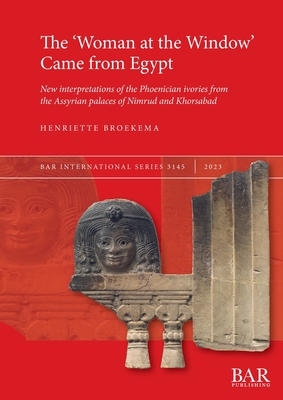
The 'Woman at the Window' Came from Egypt investigates the origin of ivory plaques found in the Assyrian palaces of Nimrud and Khorsabad from the first millennium BCE. It provides a completely new interpretation of the famous iconography of the 'Woman at the Window'. This collection of ivories, traditionally labelled as 'Phoenician', is thought to have originated from locations across the Levant. However, the Egyptian Nile Delta appears to be a more accurate locale.Pharaohs of the Third Intermediate Period, especially those of the 25th dynasty, may have commissioned them to help legitimize their fragile positions. The book's central thesis may also change our understanding and perception of the Phoenicians: it is customary to situate this Iron Age trading people in the city-states along the eastern coast of the Mediterranean, but the Nile Delta's cosmopolitan city communities should also be included. It was in these communities where the hybrid art of the Phoenician ivory carving probably originated.This book will appeal to historians studying Phoenician and Egyptian art, as well as researchers interested in the significance of the ivory panels found in Assyrian palaces.
248.00Lei
248.00Lei
Primești 248 puncte

Livrare in 2-4 saptamani
Descrierea produsului
The 'Woman at the Window' Came from Egypt investigates the origin of ivory plaques found in the Assyrian palaces of Nimrud and Khorsabad from the first millennium BCE. It provides a completely new interpretation of the famous iconography of the 'Woman at the Window'. This collection of ivories, traditionally labelled as 'Phoenician', is thought to have originated from locations across the Levant. However, the Egyptian Nile Delta appears to be a more accurate locale.Pharaohs of the Third Intermediate Period, especially those of the 25th dynasty, may have commissioned them to help legitimize their fragile positions. The book's central thesis may also change our understanding and perception of the Phoenicians: it is customary to situate this Iron Age trading people in the city-states along the eastern coast of the Mediterranean, but the Nile Delta's cosmopolitan city communities should also be included. It was in these communities where the hybrid art of the Phoenician ivory carving probably originated.This book will appeal to historians studying Phoenician and Egyptian art, as well as researchers interested in the significance of the ivory panels found in Assyrian palaces.
Detaliile produsului