




headerdesktop literatr28apr26

MAI SUNT 00:00:00:00

MAI SUNT

X

headermobile literatr28apr26

MAI SUNT 00:00:00:00

MAI SUNT

X

Transport Gratuit la comenzile de peste 50 lei

Promotii popup img

🌸LITERA până la -50%🌸

șiii🚚 Transport GRATUIT peste 50 lei!

Hai la răsfoit →

Transport Gratuit la comenzile de peste 50 lei

Theodor W. Adorno: An Introduction
De (autor): James Rolleston

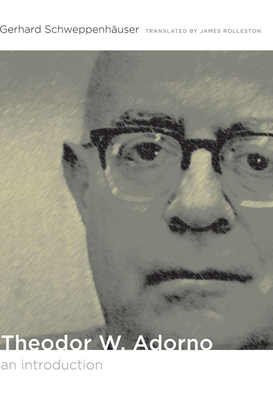
Coperta cărții 'Theodor W. Adorno: An Introduction - James Rolleston'
Theodor W. Adorno: An Introduction

De (autor): James Rolleston

Theodor W. Adorno (1903-1969) was one of the twentieth century's most important thinkers. In light of two pivotal developments-the rise of fascism, which culminated in the Holocaust, and the standardization of popular culture as a commodity indispensable to contemporary capitalism-Adorno sought to evaluate and synthesize the essential insights of Western philosophy by revisiting the ethical and sociological arguments of his predecessors: Kant, Nietzsche, Hegel, and Marx. This book, first published in Germany in 1996, provides a succinct introduction to Adorno's challenging and far-reaching thought. Gerhard Schweppenhäuser, a leading authority on the Frankfurt School of critical theory, explains Adorno's epistemology, social and political philosophy, aesthetics, and theory of culture.

After providing a brief overview of Adorno's life, Schweppenhäuser turns to the theorist's core philosophical concepts, including post-Kantian critique, determinate negation, and the primacy of the object, as well as his view of the Enlightenment as a code for world domination, his diagnosis of modern mass culture as a program of social control, and his understanding of modernist aesthetics as a challenge to conceive an alternative politics. Along the way, Schweppenhäuser illuminates the works widely considered Adorno's most important achievements: Minima Moralia, Dialectic of Enlightenment (co-authored with Horkheimer), and Negative Dialectics. Adorno wrote much of the first two of these during his years in California (1938-49), where he lived near Arnold Schoenberg and Thomas Mann, whom he assisted with the musical aesthetics at the center of Mann's novel Doctor Faustus.

Citește mai mult

-10%

transport gratuit

PRP: 241.34 Lei

!

Acesta este Prețul Recomandat de Producător. Prețul de vânzare al produsului este afișat mai jos.

217.21Lei

217.21Lei

241.34 Lei

Primești 217 puncte

Important icon msg

Primești puncte de fidelitate după fiecare comandă! 100 puncte de fidelitate reprezintă 1 leu. Folosește-le la viitoarele achiziții!

Livrare in 2-4 saptamani

Descrierea produsului

Theodor W. Adorno (1903-1969) was one of the twentieth century's most important thinkers. In light of two pivotal developments-the rise of fascism, which culminated in the Holocaust, and the standardization of popular culture as a commodity indispensable to contemporary capitalism-Adorno sought to evaluate and synthesize the essential insights of Western philosophy by revisiting the ethical and sociological arguments of his predecessors: Kant, Nietzsche, Hegel, and Marx. This book, first published in Germany in 1996, provides a succinct introduction to Adorno's challenging and far-reaching thought. Gerhard Schweppenhäuser, a leading authority on the Frankfurt School of critical theory, explains Adorno's epistemology, social and political philosophy, aesthetics, and theory of culture.

After providing a brief overview of Adorno's life, Schweppenhäuser turns to the theorist's core philosophical concepts, including post-Kantian critique, determinate negation, and the primacy of the object, as well as his view of the Enlightenment as a code for world domination, his diagnosis of modern mass culture as a program of social control, and his understanding of modernist aesthetics as a challenge to conceive an alternative politics. Along the way, Schweppenhäuser illuminates the works widely considered Adorno's most important achievements: Minima Moralia, Dialectic of Enlightenment (co-authored with Horkheimer), and Negative Dialectics. Adorno wrote much of the first two of these during his years in California (1938-49), where he lived near Arnold Schoenberg and Thomas Mann, whom he assisted with the musical aesthetics at the center of Mann's novel Doctor Faustus.

Citește mai mult

S-ar putea să-ți placă și

De același autor

Părerea ta e inspirație pentru comunitatea Libris!

Acum se comandă

Noi suntem despre cărți, și la fel este și

Newsletter-ul nostru.

Abonează-te la veștile literare și primești un cupon de -10% pentru viitoarea ta comandă!

*Reducerea aplicată prin cupon nu se cumulează, ci se aplică reducerea cea mai mare.

Mă abonez image one
Mă abonez image one
Accessibility Logo



