








Troublemakers: On the March for Civil Rights From Selma to Black Power
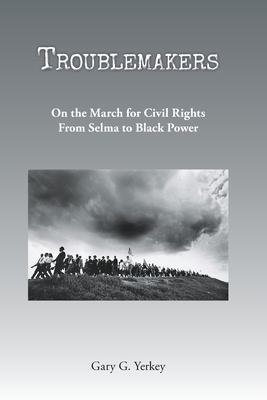
Troublemakers: On the March for Civil Rights From Selma to Black Power
The civil rights activist John Lewis called the Selma-to-Montgomery voting rights march in the spring of 1965 a major turning point not only for the segregated South but for the entire country. "It was like Gandhi's march to the sea," he said. "It transformed American politics." But Lewis also called the march, which employed nonviolence as a means of change, the "last act" of the civil rights movement as he knew it. "The road of nonviolence had essentially run out." Throughout his life, until his death last year, Lewis urged people to engage in what he called "good trouble" - nonviolent trouble - to help achieve social and economic justice for all Americans. The following year, the radical black activist Stokely Carmichael replaced Lewis as chairman of the Student Nonviolent Coordinating Committee (SNCC) and began to cast doubt on the efficacy of nonviolence as strategy for the civil rights movement. During the so-called March Against Fear - from Memphis, Tennessee, to Jackson, Mississippi - Carmichael repeatedly used the phrase "Black Power" to stir up the crowd. "To hell with nonviolence," he said. "If someone shoves me, I'm going to shove him back." This book tells the story - through the dual lens of the Selma-to-Montgomery voting rights march and the March Against Fear - of the strategic shift in the civil rights struggle of the 1960s from mobilizing mass demonstrations of nonviolent civil disobedience to engaging in a more confrontational approach designed to enable African Americans to "take power," as Carmichael put it, and to create "powerfully organized communities capable of sustaining political struggle."
PRP: 92.92 Lei

Acesta este Prețul Recomandat de Producător. Prețul de vânzare al produsului este afișat mai jos.
74.34Lei
74.34Lei
92.92 LeiPrimești 74 puncte

Livrare in 2-4 saptamani
Descrierea produsului
The civil rights activist John Lewis called the Selma-to-Montgomery voting rights march in the spring of 1965 a major turning point not only for the segregated South but for the entire country. "It was like Gandhi's march to the sea," he said. "It transformed American politics." But Lewis also called the march, which employed nonviolence as a means of change, the "last act" of the civil rights movement as he knew it. "The road of nonviolence had essentially run out." Throughout his life, until his death last year, Lewis urged people to engage in what he called "good trouble" - nonviolent trouble - to help achieve social and economic justice for all Americans. The following year, the radical black activist Stokely Carmichael replaced Lewis as chairman of the Student Nonviolent Coordinating Committee (SNCC) and began to cast doubt on the efficacy of nonviolence as strategy for the civil rights movement. During the so-called March Against Fear - from Memphis, Tennessee, to Jackson, Mississippi - Carmichael repeatedly used the phrase "Black Power" to stir up the crowd. "To hell with nonviolence," he said. "If someone shoves me, I'm going to shove him back." This book tells the story - through the dual lens of the Selma-to-Montgomery voting rights march and the March Against Fear - of the strategic shift in the civil rights struggle of the 1960s from mobilizing mass demonstrations of nonviolent civil disobedience to engaging in a more confrontational approach designed to enable African Americans to "take power," as Carmichael put it, and to create "powerfully organized communities capable of sustaining political struggle."
Detaliile produsului