- /
- Librarie online
- /
- Carti in engleza
- /
- Literary Criticism
- /
- Medieval
- /
- Violent Victorian Medievalism - Mary Boyle
Violent Victorian Medievalism
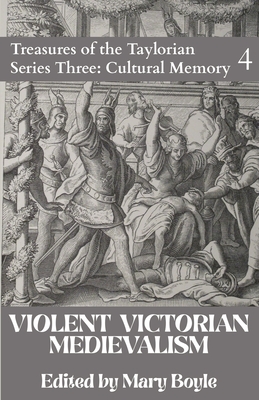
Violent Victorian Medievalism
medievalism, n. 'the reception, interpretation or recreation of the European Middle Ages in post-medieval cultures' Louise D'Arcens, 2016 A fascination with the Middle Ages shaped public life in the nineteenth century - and in exchange, it reshaped the Middle Ages into a form still dominant today. Englishness became inextricably connected with a reimagined medieval past expressed through art, architecture, and literature. English traits and values were traced to a Golden Age of chivalry, and a national character was anchored in a heroic so-called Germanic past. But chivalry and heroism necessarily exist within a martial context, and violence already permeated the geopolitics, literature, and culture of Britain's 'imperial century'. Medieval or medieval-adjacent literature offered another respectable vehicle for violence. In the 1830s, Thomas Carlyle published an essay drawing the nation's attention to a medieval epic, 'belong[ing] especially to us English Teutones'. This was the Nibelungenlied, a story of love, betrayal, vengeance, and hopeless heroism. It was decreed a potential 'German Iliad', and - like the Iliad - its body count was vast. With its frequent scenes of graphic violence and potential for ethnonationalist identity construction, the narrative incorporated various national pursuits for the Victorians. Publication of adaptations only gathered pace after the premiere of Wagner's Ring des Nibelungen, and the subject matter maintained its popularity right up to the First World War. The resulting adaptions were aimed at all age groups and many were eye-catchingly illustrated. This material was so widely reinterpreted in the long nineteenth century (1789-1914) and so emblematic for notions of a so-called Germanic identity, that it provides a useful prism through which to visualise the wider implications of violent Victorian (and Edwardian) medievalism. Children's literature of this period routinely matched a reticence about sex with scenes of extreme violence, often while simultaneously smuggling in an educational message. That message was unequivocal here, whether for children or for adults: this narrative is your cultural inheritance. The images in this exhibition reveal themselves to be clear forerunners of twentieth- and twenty-first-century medievalism, as well as mapping on to more recent trends in violent medievalism and popular culture.
PRP: 66.05 Lei

Acesta este Prețul Recomandat de Producător. Prețul de vânzare al produsului este afișat mai jos.
52.84Lei
52.84Lei
66.05 LeiPrimești 52 puncte

Livrare in 2-4 saptamani
Descrierea produsului
medievalism, n. 'the reception, interpretation or recreation of the European Middle Ages in post-medieval cultures' Louise D'Arcens, 2016 A fascination with the Middle Ages shaped public life in the nineteenth century - and in exchange, it reshaped the Middle Ages into a form still dominant today. Englishness became inextricably connected with a reimagined medieval past expressed through art, architecture, and literature. English traits and values were traced to a Golden Age of chivalry, and a national character was anchored in a heroic so-called Germanic past. But chivalry and heroism necessarily exist within a martial context, and violence already permeated the geopolitics, literature, and culture of Britain's 'imperial century'. Medieval or medieval-adjacent literature offered another respectable vehicle for violence. In the 1830s, Thomas Carlyle published an essay drawing the nation's attention to a medieval epic, 'belong[ing] especially to us English Teutones'. This was the Nibelungenlied, a story of love, betrayal, vengeance, and hopeless heroism. It was decreed a potential 'German Iliad', and - like the Iliad - its body count was vast. With its frequent scenes of graphic violence and potential for ethnonationalist identity construction, the narrative incorporated various national pursuits for the Victorians. Publication of adaptations only gathered pace after the premiere of Wagner's Ring des Nibelungen, and the subject matter maintained its popularity right up to the First World War. The resulting adaptions were aimed at all age groups and many were eye-catchingly illustrated. This material was so widely reinterpreted in the long nineteenth century (1789-1914) and so emblematic for notions of a so-called Germanic identity, that it provides a useful prism through which to visualise the wider implications of violent Victorian (and Edwardian) medievalism. Children's literature of this period routinely matched a reticence about sex with scenes of extreme violence, often while simultaneously smuggling in an educational message. That message was unequivocal here, whether for children or for adults: this narrative is your cultural inheritance. The images in this exhibition reveal themselves to be clear forerunners of twentieth- and twenty-first-century medievalism, as well as mapping on to more recent trends in violent medievalism and popular culture.
Detaliile produsului