







- /
- Librarie online
- /
- Carti in engleza
- /
- Language Arts & Disciplines
- /
- Literacy
- /
- What It Means to Be Literate: A Disability Materiality Approach to Literacy After Aphasia - Elisabeth Miller
What It Means to Be Literate: A Disability Materiality Approach to Literacy After Aphasia
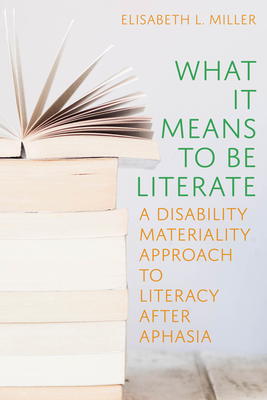
Disability and literacy are often understood as incompatible. Disability is taken to be a sign of illiteracy, and illiteracy to be a sign of disability. These oppositions generate damaging consequences for disabled students (and those labeled as such) who are denied full literacy education and for nonliterate adults who are perceived as lacking intelligence, knowledge, and ability. What It Means to Be Literate turns attention to disabled writers themselves, exposing how the cultural oppositions between disability and literacy affect how people understand themselves as literate and even as fully human. Drawing on interviews with individuals who have experienced strokes and brain injuries causing the language disability aphasia, Elisabeth L. Miller argues for the importance of taking a disability materiality approach to literacy that accounts for the embodied, material experiences of disabled people writing and reading. This approach reveals how aphasic writers' literate practices may reinscribe, challenge, or even exceed scripts around the body in literacy (how brains, hands, eyes, mouths, voice boxes, and more operate to make reading and writing happen) as well as what and how spaces, activities, tools, and materials matter in literate practice. Miller pushes for a deeper understanding of how individuals' specific bodies always matter for literate practice and identity, enabling researchers to better account for, and counter, ableist literate norms.
PRP: 511.50 Lei

Acesta este Prețul Recomandat de Producător. Prețul de vânzare al produsului este afișat mai jos.
460.35Lei
460.35Lei
511.50 LeiPrimești 460 puncte

Livrare in 2-4 saptamani
Descrierea produsului
Disability and literacy are often understood as incompatible. Disability is taken to be a sign of illiteracy, and illiteracy to be a sign of disability. These oppositions generate damaging consequences for disabled students (and those labeled as such) who are denied full literacy education and for nonliterate adults who are perceived as lacking intelligence, knowledge, and ability. What It Means to Be Literate turns attention to disabled writers themselves, exposing how the cultural oppositions between disability and literacy affect how people understand themselves as literate and even as fully human. Drawing on interviews with individuals who have experienced strokes and brain injuries causing the language disability aphasia, Elisabeth L. Miller argues for the importance of taking a disability materiality approach to literacy that accounts for the embodied, material experiences of disabled people writing and reading. This approach reveals how aphasic writers' literate practices may reinscribe, challenge, or even exceed scripts around the body in literacy (how brains, hands, eyes, mouths, voice boxes, and more operate to make reading and writing happen) as well as what and how spaces, activities, tools, and materials matter in literate practice. Miller pushes for a deeper understanding of how individuals' specific bodies always matter for literate practice and identity, enabling researchers to better account for, and counter, ableist literate norms.
Detaliile produsului