- /
- Librarie online
- /
- Carti in engleza
- /
- Young Adult Nonfiction
- /
- General
- /
- Why It's OK to Speak Your Mind - Hrishikesh Joshi
Why It's OK to Speak Your Mind
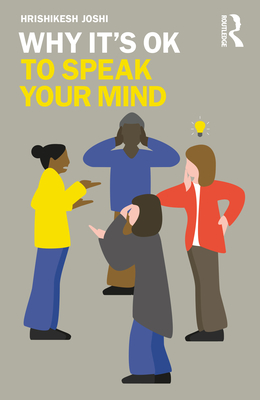
Why It's OK to Speak Your Mind
Political protests, debates on college campuses, and social media tirades make it seem like everyone is speaking their minds today. Surveys, however, reveal that many people increasingly feel like they're walking on eggshells when communicating in public. Speaking your mind can risk relationships and professional opportunities. It can alienate friends and anger colleagues. Isn't it smarter to just put your head down and keep quiet about controversial topics?
In this book, Hrishikesh Joshi offers a novel defense of speaking your mind. He explains that because we are social creatures, we never truly think alone. What we know depends on what our community knows. And by bringing our unique perspectives to bear upon public discourse, we enhance our collective ability to reach the truth on a variety of important matters.
Speaking your mind is also important for your own sake. It is essential for developing your own thinking. And it's a core aspect of being intellectually courageous and independent. Joshi argues that such independence is a crucial part of a well-lived life. The book draws from Aristotle, John Stuart Mill, Friedrich Nietzsche, Bertrand Russell, and a range of contemporary thinkers to argue that it's OK to speak your mind.
Key Features Shows that we have not just a right but a moral duty to publicly share what we know.
Argues that discussing your unique ideas with others is essential for developing as a critical thinker.
Explores the value of intellectual honesty and independence in the writings of John Stuart Mill and Friedrich Nietzsche and connects their thinking to contemporary problems.
Argues that avoiding cultural blind spots today is important for the fate of future generations.
In this book, Hrishikesh Joshi offers a novel defense of speaking your mind. He explains that because we are social creatures, we never truly think alone. What we know depends on what our community knows. And by bringing our unique perspectives to bear upon public discourse, we enhance our collective ability to reach the truth on a variety of important matters.
Speaking your mind is also important for your own sake. It is essential for developing your own thinking. And it's a core aspect of being intellectually courageous and independent. Joshi argues that such independence is a crucial part of a well-lived life. The book draws from Aristotle, John Stuart Mill, Friedrich Nietzsche, Bertrand Russell, and a range of contemporary thinkers to argue that it's OK to speak your mind.
Key Features Shows that we have not just a right but a moral duty to publicly share what we know.
Argues that discussing your unique ideas with others is essential for developing as a critical thinker.
Explores the value of intellectual honesty and independence in the writings of John Stuart Mill and Friedrich Nietzsche and connects their thinking to contemporary problems.
Argues that avoiding cultural blind spots today is important for the fate of future generations.
PRP: 239.90 Lei

Acesta este Prețul Recomandat de Producător. Prețul de vânzare al produsului este afișat mai jos.
215.91Lei
215.91Lei
239.90 LeiPrimești 215 puncte

Livrare in 2-4 saptamani
Descrierea produsului
Political protests, debates on college campuses, and social media tirades make it seem like everyone is speaking their minds today. Surveys, however, reveal that many people increasingly feel like they're walking on eggshells when communicating in public. Speaking your mind can risk relationships and professional opportunities. It can alienate friends and anger colleagues. Isn't it smarter to just put your head down and keep quiet about controversial topics?
In this book, Hrishikesh Joshi offers a novel defense of speaking your mind. He explains that because we are social creatures, we never truly think alone. What we know depends on what our community knows. And by bringing our unique perspectives to bear upon public discourse, we enhance our collective ability to reach the truth on a variety of important matters.
Speaking your mind is also important for your own sake. It is essential for developing your own thinking. And it's a core aspect of being intellectually courageous and independent. Joshi argues that such independence is a crucial part of a well-lived life. The book draws from Aristotle, John Stuart Mill, Friedrich Nietzsche, Bertrand Russell, and a range of contemporary thinkers to argue that it's OK to speak your mind.
Key Features Shows that we have not just a right but a moral duty to publicly share what we know.
Argues that discussing your unique ideas with others is essential for developing as a critical thinker.
Explores the value of intellectual honesty and independence in the writings of John Stuart Mill and Friedrich Nietzsche and connects their thinking to contemporary problems.
Argues that avoiding cultural blind spots today is important for the fate of future generations.
In this book, Hrishikesh Joshi offers a novel defense of speaking your mind. He explains that because we are social creatures, we never truly think alone. What we know depends on what our community knows. And by bringing our unique perspectives to bear upon public discourse, we enhance our collective ability to reach the truth on a variety of important matters.
Speaking your mind is also important for your own sake. It is essential for developing your own thinking. And it's a core aspect of being intellectually courageous and independent. Joshi argues that such independence is a crucial part of a well-lived life. The book draws from Aristotle, John Stuart Mill, Friedrich Nietzsche, Bertrand Russell, and a range of contemporary thinkers to argue that it's OK to speak your mind.
Key Features Shows that we have not just a right but a moral duty to publicly share what we know.
Argues that discussing your unique ideas with others is essential for developing as a critical thinker.
Explores the value of intellectual honesty and independence in the writings of John Stuart Mill and Friedrich Nietzsche and connects their thinking to contemporary problems.
Argues that avoiding cultural blind spots today is important for the fate of future generations.
Detaliile produsului