- /
- Librarie online
- /
- Carti in engleza
- /
- Science
- /
- Environmental Science
- /
- Wind Turbine Generator Impacts to Marine Vessel Radar - National Academies Of Sciences Engineeri
Wind Turbine Generator Impacts to Marine Vessel Radar
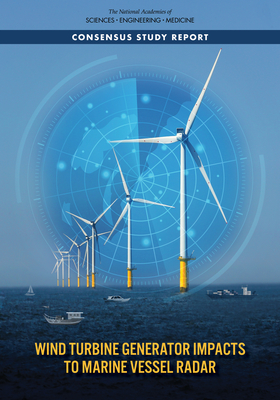
Offshore wind energy development is poised to expand rapidly across the U.S. Outer Continental Shelf over the next decade, as part of a government-wide effort to develop more renewable sources of energy. Offshore wind energy planning and development has expanded along the U.S. Atlantic Coast, and to areas in the Gulf of Mexico and Pacific Coast. However, the maritime community has expressed concern that wind turbine generators, which are constructed predominantly of steel, can interfere with radar used in navigation. A particular concern is interference with marine vessel radar, which is a critical instrument for navigation, collision avoidance, and use in search and rescue missions, with secondary uses including activities like detecting reflectors on fishing nets or birds to indicate the presence of schools of fish. Previous studies of the impacts of wind turbine generators on radar relied on data from European wind farms - however, wind turbines located in or planned for the U.S. Outer Continental Shelf are larger, wider, and laid out in different configurations.
Conducted at the request of the Bureau of Ocean Energy Management, this report identifies and characterizes the impacts of wind turbine generators on the efficacy of marine vessel radar on vessels operating within or near existing and planned offshore wind facilities on the U.S. Outer Continental Shelf. The report recommends pursing two courses of action to reduce impacts by: (1) filling knowledge gaps through data collection, modeling and analysis, and focused research on wind turbine generator characteristics; and (2) pursuing practicable options to reduce interference on marine vessel radar such as enhanced operator training, use of radar reflectors on small vessels, use of reference buoys, evaluation of radar mounting procedures, new radar designs, and the development of wind turbine generators with reduced radar signatures.
PRP: 218.40 Lei

Acesta este Prețul Recomandat de Producător. Prețul de vânzare al produsului este afișat mai jos.
196.56Lei
196.56Lei
218.40 LeiPrimești 196 puncte

Livrare in 2-4 saptamani
Descrierea produsului
Offshore wind energy development is poised to expand rapidly across the U.S. Outer Continental Shelf over the next decade, as part of a government-wide effort to develop more renewable sources of energy. Offshore wind energy planning and development has expanded along the U.S. Atlantic Coast, and to areas in the Gulf of Mexico and Pacific Coast. However, the maritime community has expressed concern that wind turbine generators, which are constructed predominantly of steel, can interfere with radar used in navigation. A particular concern is interference with marine vessel radar, which is a critical instrument for navigation, collision avoidance, and use in search and rescue missions, with secondary uses including activities like detecting reflectors on fishing nets or birds to indicate the presence of schools of fish. Previous studies of the impacts of wind turbine generators on radar relied on data from European wind farms - however, wind turbines located in or planned for the U.S. Outer Continental Shelf are larger, wider, and laid out in different configurations.
Conducted at the request of the Bureau of Ocean Energy Management, this report identifies and characterizes the impacts of wind turbine generators on the efficacy of marine vessel radar on vessels operating within or near existing and planned offshore wind facilities on the U.S. Outer Continental Shelf. The report recommends pursing two courses of action to reduce impacts by: (1) filling knowledge gaps through data collection, modeling and analysis, and focused research on wind turbine generator characteristics; and (2) pursuing practicable options to reduce interference on marine vessel radar such as enhanced operator training, use of radar reflectors on small vessels, use of reference buoys, evaluation of radar mounting procedures, new radar designs, and the development of wind turbine generators with reduced radar signatures.
Detaliile produsului