headerdesktop weekendcopii29mai26

MAI SUNT 00:00:00:00

MAI SUNT

X

headermobile weekendcopii29mai26

MAI SUNT 00:00:00:00

MAI SUNT

X

Transport Gratuit la peste 50 lei

Promotii popup img

Câștigă un iPad mini 📱

Transport GRATUIT peste 50 lei

-20% și -80% la cărțile pentru copii și YA

Intră în concurs »

Transport Gratuit la peste 50 lei

Legal reasoning and argument. A handbook

De (autor): Remus Titiriga

0
(0 review-uri)
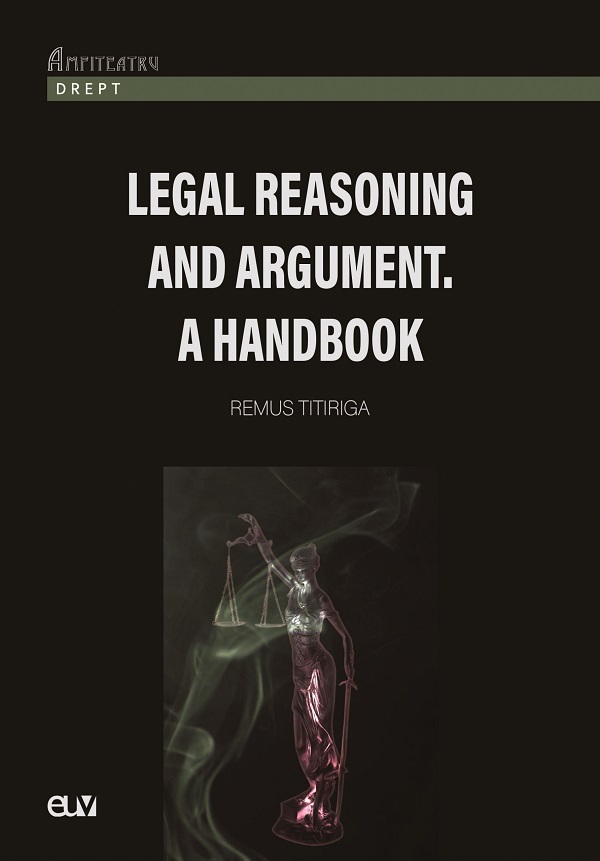
Coperta cărții 'Legal reasoning and argument. A handbook - Remus Țițirigă'
Rasfoieste
Legal reasoning and argument. A handbook

De (autor): Remus Titiriga

0
(0 review-uri)
This book, the first of its kind, offers a comprehensive exploration of German legal theory and practice. Its thorough coverage, with a broader applicability to legal systems in general, is a reassuring resource for legal scholars, students, and professionals. The book is divided into seven main sections, serving as a clear roadmap for readers. It begins by explaining the fundamental process of applying legal norms, including their structure, how they are expanded and applied to specific cases, and the concept of subsumption, which involves fitting a particular case under a general legal rule. It then introduces the judicial syllogism as a critical tool in legal reasoning. The second section delves into the history of legal interpretation in Germany, tracing the evolution of different schools of thought from Savigny‘s canon of interpretation methods through various movements such as conceptual jurisprudence (Begriffsjurisprudenz), the School of Objective Interpretation, and the Free Law School, culminating in the doctrine of interests (Interessenjurisprudenz). The third part explores the debate between subjective and objective interpretation systems, presenting arguments for both sides. It also proposes a potential reconciliation of the two approaches, suggesting that a balanced approach that considers both the lawgiver‘s subjective intentions and the law‘s objective meaning could be the most effective. The following sections (IV, V, and VII) break down specific methods of interpretation: literal, subjective, and objective. Each of these is explored in detail, discussing their aims, structures, and applications in legal practice. The book provides examples and case studies to illustrate these concepts. Section VI focuses on the development of law, distinguishing between interpretation and development, and exploring the concept of gaps in the law. It presents various arguments and techniques for developing law and filling legal gaps, including analogies, restrictive interpretation, and teleological reduction. The book‘s practical approach, rich in examples, case studies, and annexes, is designed to equip readers with tools to apply the theoretical concepts in real-world legal scenarios, fostering a deep and confident understanding of the topic.
Citește mai mult

44.40Lei

44.40Lei

Primești 44 puncte

Important icon msg

Primești puncte de fidelitate după fiecare comandă! 100 puncte de fidelitate reprezintă 1 leu. Folosește-le la viitoarele achiziții!

În stoc

Livrare

Estimare livrare miercuri, 3 iunie

Important icon msg

Acest termen de livrare este estimativ. În cazul perioadelor aglomerate pot apărea întârzieri.

Livrarea produselor din stoc se realizează în decursul a 24-48 de ore (zile lucrătoare) de la plasarea comenzii.

Livrarea cărților în engleză aflate în stocul furnizorilor noștri se realizează în intervalul de 2-4 săptămâni, afișat în pagina de produs. Toate comenzile care conțin un titlu din această categorie vor fi livrate la termenul cel mai îndelungat. În cazul în care dorești împărțirea comenzii, te rugăm să ne contactezi pentru a-ți comunica toate condițiile. Poți găsi aceste informații și în secțiunea Termeni și Condiții.

Descrierea produsului

This book, the first of its kind, offers a comprehensive exploration of German legal theory and practice. Its thorough coverage, with a broader applicability to legal systems in general, is a reassuring resource for legal scholars, students, and professionals. The book is divided into seven main sections, serving as a clear roadmap for readers. It begins by explaining the fundamental process of applying legal norms, including their structure, how they are expanded and applied to specific cases, and the concept of subsumption, which involves fitting a particular case under a general legal rule. It then introduces the judicial syllogism as a critical tool in legal reasoning. The second section delves into the history of legal interpretation in Germany, tracing the evolution of different schools of thought from Savigny‘s canon of interpretation methods through various movements such as conceptual jurisprudence (Begriffsjurisprudenz), the School of Objective Interpretation, and the Free Law School, culminating in the doctrine of interests (Interessenjurisprudenz). The third part explores the debate between subjective and objective interpretation systems, presenting arguments for both sides. It also proposes a potential reconciliation of the two approaches, suggesting that a balanced approach that considers both the lawgiver‘s subjective intentions and the law‘s objective meaning could be the most effective. The following sections (IV, V, and VII) break down specific methods of interpretation: literal, subjective, and objective. Each of these is explored in detail, discussing their aims, structures, and applications in legal practice. The book provides examples and case studies to illustrate these concepts. Section VI focuses on the development of law, distinguishing between interpretation and development, and exploring the concept of gaps in the law. It presents various arguments and techniques for developing law and filling legal gaps, including analogies, restrictive interpretation, and teleological reduction. The book‘s practical approach, rich in examples, case studies, and annexes, is designed to equip readers with tools to apply the theoretical concepts in real-world legal scenarios, fostering a deep and confident understanding of the topic.
Citește mai mult

S-ar putea să-ți placă și

De același autor

Părerea ta e inspirație pentru comunitatea Libris!

Istoricul tău de navigare

Acum se comandă

Întrebări frecvente

Ce subiecte abordează lucrarea "Legal reasoning and argument"?

Lucrarea explorează teoria juridică, interpretarea legală, silogismul judiciar și jurisprudența. Abordează, de asemenea, logica juridică, argumentarea și raționamentul juridic, precum și teoria argumentării.

Cui se adresează cartea "Legal reasoning and argument"?

Cartea este o resursă utilă pentru studenții la drept și pentru profesioniștii din domeniul juridic, oferind o perspectivă asupra raționamentului și argumentării legale.

În ce limbă este scrisă lucrarea "Legal reasoning and argument"?

Lucrarea "Legal reasoning and argument. A handbook" este scrisă integral în limba engleză.

Noi suntem despre cărți, și la fel este și

Newsletter-ul nostru.

Abonează-te la veștile literare și primești un cupon de EXTRA -10% pentru viitoarea ta comandă!

Mă abonez image one
Mă abonez image one
Accessibility Logo