








Cleopatra Dismounts
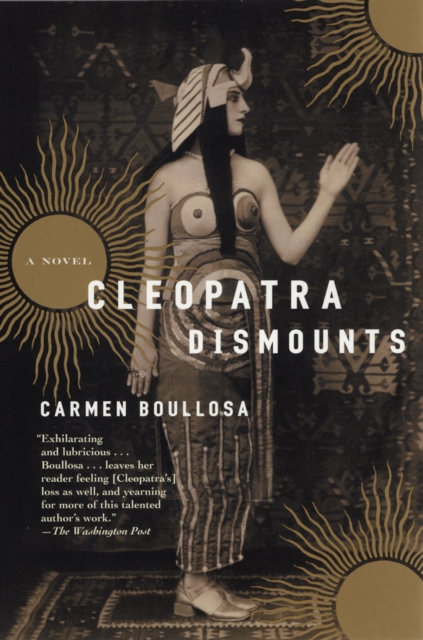
Cleopatra Dismounts
Carmen Boullosa is one of Latin America's most original voices, and in Cleopatra Dismounts she has written a remarkable reconstruction of the life of the Egyptian queen, who famously died in Marc Antony's arms. But is this really the true Cleopatra?
Through the intervention of Cleopatra's scribe and informer Diomedes, Boullosa creates two previous Cleopatras, and in effect two deliriously wild other lives for the young monarch-a girl escaping the intrigues of royal society, and the young queen who is carried across the sea on the back of a magical bull, to live among the Amazons and become part of their society.
Magical, multifaceted, and rippling with luminous imagination, Cleopatra Dismounts is a work that recalls Jeanette Winterson's Sexing the Cherry and confirms Carmen Boullosa as an important international voice.
Carmen Boullosa's Cleopatra Dismounts tells three versions of the life of Cleopatra. In the first sequence, Marc Antony had just disemboweled himself, knowing they had lost the war against Octavian and believing that Cleopatra was dead. Hugging his corpse, Cleopatra castigates Octavian and history for its betrayal of her, recalling variously how she had herself delivered to Caesar in a roll of carpet, and bore his child (Caesarion); the twins and third child she bore to Marc Antony; the bitterness of the recent military defeat. At this point Diomedes, variously described as an informer and her official chronicler, intercedes, admitting that this version of the story is not true to the brilliant, accomplished woman who was the true Cleopatra really was. Telling of how he betrayed Cleopatra, by altering the histories of her reign and allowing Caesar and others to destroy or change her scrolls, he begins again with the story of Cleopatra's flight from Pompey (the Roman leader who was placed in charge of Cleopatra and her brothers and sisters after Ptolemy Auletes, her father and ruler of Egypt, died). The girl queen (Cleopatra inherited the throne as a teenager) sneaks with several faithful servants out of the palace into a wagon, accompanied by a group of brightly costumed gladiators, on her way to Ascalon. She and her supporters carve the words "Queen of Kings" (Cleopatra's motto in real history) into the boards of the wagon in which she is traveling, and leave it behind when they reach Rome. When they are beset by pirates, Cleopatra stages an elaborate show using some costumes the young gladiator Apollodorus, who has become part of<
Through the intervention of Cleopatra's scribe and informer Diomedes, Boullosa creates two previous Cleopatras, and in effect two deliriously wild other lives for the young monarch-a girl escaping the intrigues of royal society, and the young queen who is carried across the sea on the back of a magical bull, to live among the Amazons and become part of their society.
Magical, multifaceted, and rippling with luminous imagination, Cleopatra Dismounts is a work that recalls Jeanette Winterson's Sexing the Cherry and confirms Carmen Boullosa as an important international voice.
Carmen Boullosa's Cleopatra Dismounts tells three versions of the life of Cleopatra. In the first sequence, Marc Antony had just disemboweled himself, knowing they had lost the war against Octavian and believing that Cleopatra was dead. Hugging his corpse, Cleopatra castigates Octavian and history for its betrayal of her, recalling variously how she had herself delivered to Caesar in a roll of carpet, and bore his child (Caesarion); the twins and third child she bore to Marc Antony; the bitterness of the recent military defeat. At this point Diomedes, variously described as an informer and her official chronicler, intercedes, admitting that this version of the story is not true to the brilliant, accomplished woman who was the true Cleopatra really was. Telling of how he betrayed Cleopatra, by altering the histories of her reign and allowing Caesar and others to destroy or change her scrolls, he begins again with the story of Cleopatra's flight from Pompey (the Roman leader who was placed in charge of Cleopatra and her brothers and sisters after Ptolemy Auletes, her father and ruler of Egypt, died). The girl queen (Cleopatra inherited the throne as a teenager) sneaks with several faithful servants out of the palace into a wagon, accompanied by a group of brightly costumed gladiators, on her way to Ascalon. She and her supporters carve the words "Queen of Kings" (Cleopatra's motto in real history) into the boards of the wagon in which she is traveling, and leave it behind when they reach Rome. When they are beset by pirates, Cleopatra stages an elaborate show using some costumes the young gladiator Apollodorus, who has become part of<
PRP: 105.40 Lei

Acesta este Prețul Recomandat de Producător. Prețul de vânzare al produsului este afișat mai jos.
94.86Lei
94.86Lei
105.40 LeiPrimești 94 puncte

Indisponibil
Descrierea produsului
Carmen Boullosa is one of Latin America's most original voices, and in Cleopatra Dismounts she has written a remarkable reconstruction of the life of the Egyptian queen, who famously died in Marc Antony's arms. But is this really the true Cleopatra?
Through the intervention of Cleopatra's scribe and informer Diomedes, Boullosa creates two previous Cleopatras, and in effect two deliriously wild other lives for the young monarch-a girl escaping the intrigues of royal society, and the young queen who is carried across the sea on the back of a magical bull, to live among the Amazons and become part of their society.
Magical, multifaceted, and rippling with luminous imagination, Cleopatra Dismounts is a work that recalls Jeanette Winterson's Sexing the Cherry and confirms Carmen Boullosa as an important international voice.
Carmen Boullosa's Cleopatra Dismounts tells three versions of the life of Cleopatra. In the first sequence, Marc Antony had just disemboweled himself, knowing they had lost the war against Octavian and believing that Cleopatra was dead. Hugging his corpse, Cleopatra castigates Octavian and history for its betrayal of her, recalling variously how she had herself delivered to Caesar in a roll of carpet, and bore his child (Caesarion); the twins and third child she bore to Marc Antony; the bitterness of the recent military defeat. At this point Diomedes, variously described as an informer and her official chronicler, intercedes, admitting that this version of the story is not true to the brilliant, accomplished woman who was the true Cleopatra really was. Telling of how he betrayed Cleopatra, by altering the histories of her reign and allowing Caesar and others to destroy or change her scrolls, he begins again with the story of Cleopatra's flight from Pompey (the Roman leader who was placed in charge of Cleopatra and her brothers and sisters after Ptolemy Auletes, her father and ruler of Egypt, died). The girl queen (Cleopatra inherited the throne as a teenager) sneaks with several faithful servants out of the palace into a wagon, accompanied by a group of brightly costumed gladiators, on her way to Ascalon. She and her supporters carve the words "Queen of Kings" (Cleopatra's motto in real history) into the boards of the wagon in which she is traveling, and leave it behind when they reach Rome. When they are beset by pirates, Cleopatra stages an elaborate show using some costumes the young gladiator Apollodorus, who has become part of<
Through the intervention of Cleopatra's scribe and informer Diomedes, Boullosa creates two previous Cleopatras, and in effect two deliriously wild other lives for the young monarch-a girl escaping the intrigues of royal society, and the young queen who is carried across the sea on the back of a magical bull, to live among the Amazons and become part of their society.
Magical, multifaceted, and rippling with luminous imagination, Cleopatra Dismounts is a work that recalls Jeanette Winterson's Sexing the Cherry and confirms Carmen Boullosa as an important international voice.
Carmen Boullosa's Cleopatra Dismounts tells three versions of the life of Cleopatra. In the first sequence, Marc Antony had just disemboweled himself, knowing they had lost the war against Octavian and believing that Cleopatra was dead. Hugging his corpse, Cleopatra castigates Octavian and history for its betrayal of her, recalling variously how she had herself delivered to Caesar in a roll of carpet, and bore his child (Caesarion); the twins and third child she bore to Marc Antony; the bitterness of the recent military defeat. At this point Diomedes, variously described as an informer and her official chronicler, intercedes, admitting that this version of the story is not true to the brilliant, accomplished woman who was the true Cleopatra really was. Telling of how he betrayed Cleopatra, by altering the histories of her reign and allowing Caesar and others to destroy or change her scrolls, he begins again with the story of Cleopatra's flight from Pompey (the Roman leader who was placed in charge of Cleopatra and her brothers and sisters after Ptolemy Auletes, her father and ruler of Egypt, died). The girl queen (Cleopatra inherited the throne as a teenager) sneaks with several faithful servants out of the palace into a wagon, accompanied by a group of brightly costumed gladiators, on her way to Ascalon. She and her supporters carve the words "Queen of Kings" (Cleopatra's motto in real history) into the boards of the wagon in which she is traveling, and leave it behind when they reach Rome. When they are beset by pirates, Cleopatra stages an elaborate show using some costumes the young gladiator Apollodorus, who has become part of<
Detaliile produsului




