

Countdown header img desk

MAI SUNT 00:00:00:00

MAI SUNT

X

Countdown header img  mob

MAI SUNT 00:00:00:00

MAI SUNT

X

Promotii popup img

🎀 Carte CADOU 🎀

la orice comandă »

Communication Skills for Surgeons: A Contemporary Guide
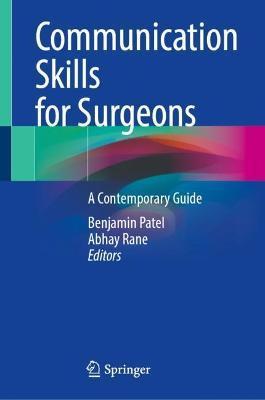
De (autor): Benjamin Patel

Communication Skills for Surgeons: A Contemporary Guide - Benjamin Patel

Communication Skills for Surgeons: A Contemporary Guide

De (autor): Benjamin Patel


Historically, communication was described as a secondary, or 'soft skill' for surgeons. Now, astute communication, both with patients and with colleagues, forms a fundamental element of holistic surgical practice and comprises a core component of the 'Non-Technical Skills for Surgeons' that are increasingly recognised in modern surgical practice.

Good communication is required during each patient interaction: history taking, explanation, consent, breaking bad news, and managing difficult encounters such as the demanding or angry patient. Good communication with patients improves patient trust, compliance and overall satisfaction, reduces complaints and malpractice claims.


High quality communication is also fundamental when interacting with colleagues: in theatre, on the ward, whilst making referrals and organising special tests. In the busy schedules of medical professionals, such communication must be succinct and relevant. Team structures must empower all members to speak up, so as to prevent harm being done. Suboptimal communication is a root cause for the majority of serious adverse events. Furthermore, good communication reduces job stress and enhances satisfaction for the surgeon.

Good communication is not an inborn behaviour; it is a learned skill that is based on key principles. Studies have clearly demonstrated that education in communication improves patient outcomes and satisfaction. Several frameworks have been described, to facilitate good communication in certain scenarios: SPIKES for breaking bad news, SBAR for handover, surgical briefs and de-briefs, to name a few.


This textbook will be aimed towards medical students, surgical trainees and surgical consultants internationally. It is relevant to every-day practice, examinations and OSCEs, such as medical finals, MRCS, FRCS and international equivalents, and interviews where role play is often featured.

Citește mai mult

-10%

transport gratuit

PRP: 367.12 Lei

!

Acesta este Prețul Recomandat de Producător. Prețul de vânzare al produsului este afișat mai jos.

330.41Lei

330.41Lei

367.12 Lei

Primești 330 puncte

Important icon msg

Primești puncte de fidelitate după fiecare comandă! 100 puncte de fidelitate reprezintă 1 leu. Folosește-le la viitoarele achiziții!

Indisponibil

Descrierea produsului


Historically, communication was described as a secondary, or 'soft skill' for surgeons. Now, astute communication, both with patients and with colleagues, forms a fundamental element of holistic surgical practice and comprises a core component of the 'Non-Technical Skills for Surgeons' that are increasingly recognised in modern surgical practice.

Good communication is required during each patient interaction: history taking, explanation, consent, breaking bad news, and managing difficult encounters such as the demanding or angry patient. Good communication with patients improves patient trust, compliance and overall satisfaction, reduces complaints and malpractice claims.


High quality communication is also fundamental when interacting with colleagues: in theatre, on the ward, whilst making referrals and organising special tests. In the busy schedules of medical professionals, such communication must be succinct and relevant. Team structures must empower all members to speak up, so as to prevent harm being done. Suboptimal communication is a root cause for the majority of serious adverse events. Furthermore, good communication reduces job stress and enhances satisfaction for the surgeon.

Good communication is not an inborn behaviour; it is a learned skill that is based on key principles. Studies have clearly demonstrated that education in communication improves patient outcomes and satisfaction. Several frameworks have been described, to facilitate good communication in certain scenarios: SPIKES for breaking bad news, SBAR for handover, surgical briefs and de-briefs, to name a few.


This textbook will be aimed towards medical students, surgical trainees and surgical consultants internationally. It is relevant to every-day practice, examinations and OSCEs, such as medical finals, MRCS, FRCS and international equivalents, and interviews where role play is often featured.

Citește mai mult

De același autor

Părerea ta e inspirație pentru comunitatea Libris!

Istoricul tău de navigare

Acum se comandă

Noi suntem despre cărți, și la fel este și

Newsletter-ul nostru.

Abonează-te la veștile literare și primești un cupon de -10% pentru viitoarea ta comandă!

*Reducerea aplicată prin cupon nu se cumulează, ci se aplică reducerea cea mai mare.

Mă abonez image one
Mă abonez image one
Accessibility Logo