


- /
- Librarie online
- /
- Carti in engleza
- /
- Linguistics
- /
- Connell Guide to Shakespeare's Hamlet
Connell Guide to Shakespeare's Hamlet
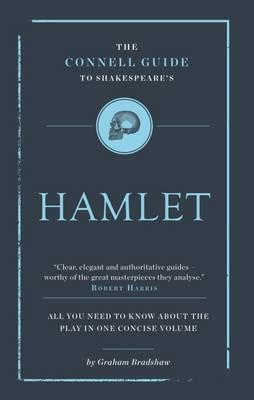
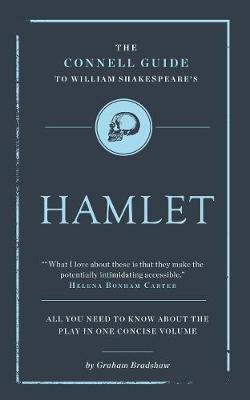
Connell Guide to Shakespeare's Hamlet
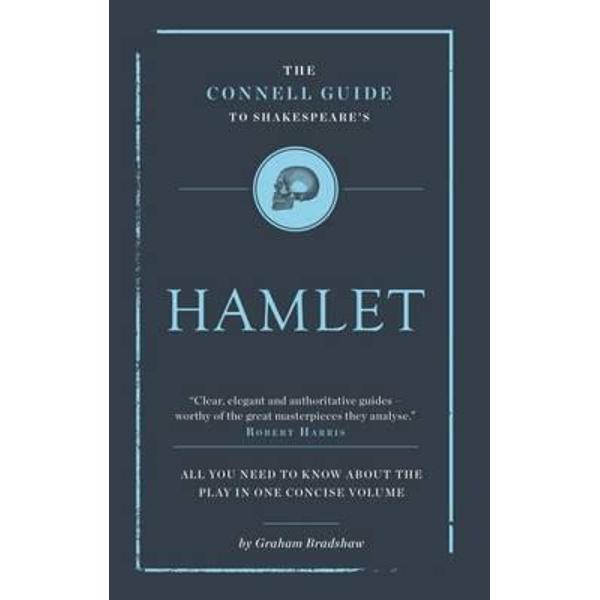
In the four centuries since Shakespeare's death in 1616, Hamlet has almost always been regarded as Shakespeare's greatest play. This is not surprising. As Barbara Everett has observed, Hamlet was not only "the first great tragedy in Europe for two thousand years"; it was, and still is, "the world's most sheerly entertaining tragedy, the cleverest, perhaps even the funniest". The character of Hamlet utterly dominates the play he so reluctantly inhabits to a degree that is rivalled only by Prospero in The Tempest. Even when he isn't on stage, speaking nearly 40% of the play's text, the other characters are talking and worrying about him. This is the most obvious reason why Hamlet criticism over the years has been so Hamlet-centred: many critics, from Coleridge through to A. C. Bradley and beyond, see the play and its other characters almost entirely through Hamlet's eyes. In this book Graham Bradshaw sets out to correct this. For in his view the play is no exception to - and indeed can be seen as an extreme example of - Shakespeare's usual dramatic method, which was never to press or even reveal his own view on controversial issues like the divine right of kings or honour or ghosts and purgatory, but to "frame" these issues by assembling characters who think and feel differently about them. With Shakespeare it is hard, even impossible, to know what he thinks about (say) revenge or incest or suicide - and Hamlet's view is often strikingly different from the views of those around him. If the doubts about whether the Ghost in Hamlet is the messenger of divine justice or a devilish instrument of damnation were ever finally resolved, the play would be diminished, or shrivel into a museum piece.
PRP: 61.13 Lei

Acesta este Prețul Recomandat de Producător. Prețul de vânzare al produsului este afișat mai jos.
55.02Lei
55.02Lei
61.13 LeiPrimești 55 puncte

Indisponibil
Descrierea produsului
In the four centuries since Shakespeare's death in 1616, Hamlet has almost always been regarded as Shakespeare's greatest play. This is not surprising. As Barbara Everett has observed, Hamlet was not only "the first great tragedy in Europe for two thousand years"; it was, and still is, "the world's most sheerly entertaining tragedy, the cleverest, perhaps even the funniest". The character of Hamlet utterly dominates the play he so reluctantly inhabits to a degree that is rivalled only by Prospero in The Tempest. Even when he isn't on stage, speaking nearly 40% of the play's text, the other characters are talking and worrying about him. This is the most obvious reason why Hamlet criticism over the years has been so Hamlet-centred: many critics, from Coleridge through to A. C. Bradley and beyond, see the play and its other characters almost entirely through Hamlet's eyes. In this book Graham Bradshaw sets out to correct this. For in his view the play is no exception to - and indeed can be seen as an extreme example of - Shakespeare's usual dramatic method, which was never to press or even reveal his own view on controversial issues like the divine right of kings or honour or ghosts and purgatory, but to "frame" these issues by assembling characters who think and feel differently about them. With Shakespeare it is hard, even impossible, to know what he thinks about (say) revenge or incest or suicide - and Hamlet's view is often strikingly different from the views of those around him. If the doubts about whether the Ghost in Hamlet is the messenger of divine justice or a devilish instrument of damnation were ever finally resolved, the play would be diminished, or shrivel into a museum piece.
Detaliile produsului