








Curative Violence: Rehabilitating Disability, Gender, and Sexuality in Modern Korea
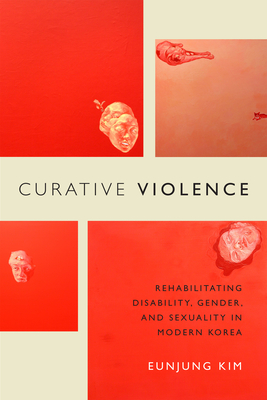
Curative Violence: Rehabilitating Disability, Gender, and Sexuality in Modern Korea
In Curative Violence Eunjung Kim examines what the social and material investment in curing illnesses and disabilities tells us about the relationship between disability and Korean nationalism. Kim uses the concept of curative violence to question the representation of cure as a universal good and to understand how nonmedical and medical cures come with violent effects that are not only symbolic but also physical. Writing disability theory in a transnational context, Kim tracks the shifts from the 1930s to the present in the ways that disabled bodies and narratives of cure have been represented in Korean folktales, novels, visual culture, media accounts, policies, and activism. Whether analyzing eugenics, the management of Hansen's disease, discourses on disabled people's sexuality, violence against disabled women, or rethinking the use of disabled people as a metaphor for life under Japanese colonial rule or under the U.S. military occupation, Kim shows how the possibility of life with disability that is free from violence depends on the creation of a space and time where cure is seen as a negotiation rather than a necessity.
PRP: 284.19 Lei

Acesta este Prețul Recomandat de Producător. Prețul de vânzare al produsului este afișat mai jos.
255.77Lei
255.77Lei
284.19 LeiPrimești 255 puncte

Indisponibil
Descrierea produsului
In Curative Violence Eunjung Kim examines what the social and material investment in curing illnesses and disabilities tells us about the relationship between disability and Korean nationalism. Kim uses the concept of curative violence to question the representation of cure as a universal good and to understand how nonmedical and medical cures come with violent effects that are not only symbolic but also physical. Writing disability theory in a transnational context, Kim tracks the shifts from the 1930s to the present in the ways that disabled bodies and narratives of cure have been represented in Korean folktales, novels, visual culture, media accounts, policies, and activism. Whether analyzing eugenics, the management of Hansen's disease, discourses on disabled people's sexuality, violence against disabled women, or rethinking the use of disabled people as a metaphor for life under Japanese colonial rule or under the U.S. military occupation, Kim shows how the possibility of life with disability that is free from violence depends on the creation of a space and time where cure is seen as a negotiation rather than a necessity.
Detaliile produsului