





Death in the Pot: The Impact of Food Poisoning on History
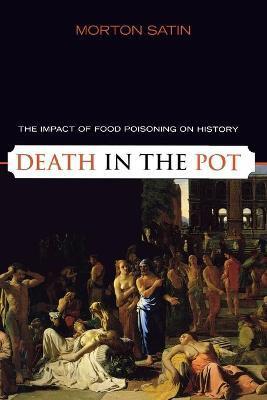
Death in the Pot: The Impact of Food Poisoning on History
Both a fascinating glimpse into history from a unique angle and an authoritative reference work on food safety, this engrossing narrative offers entertaining and informative reading.
Did food poisoning play a role in the Salem witch trials, leading to the hanging of nineteen men and women? Which poison recently laced the food of Russian ex-KGB agent Viktor Litvinenko, and how did it kill him? In Death in the Pot, internationally renowned food expert Morton Satin documents several culinary mishaps and misdeeds in an engrossing narrative that spans the ancient world to the present day. Historic events both tragic and bizarre have resulted from adulterated food. In the fifth century BCE, the great plague of Athens, probably caused by contaminated cereals, led to the defeat of the Athenians in the Peloponnesian War. In the prescientific Middle Ages, illnesses resulting from contaminated food were often attributed to the wrath of God or malevolent spirits. Heavily infectious ergot induced a spasmodic muscle condition, which the Church named St. Anthony's Fire and interpreted as retribution by God on heretics. Similarly, in seventeenth-century America the hallucinogenic symptoms of moldy grain were thought by Puritans to be signs of witchcraft. Even the madness of King George III, which played a role in the American Revolution, may have been induced by accidental arsenic poisoning. In the twentieth century, Satin recounts the efforts of modern industrial societies to make food safer; in some cases these efforts were heroic. For example, in the early days of the Food and Drug Administration a Poison Squad was formed, consisting of young scientists who willingly acted as guinea pigs to test the toxic effects of chemical additives. Today, the government has focused on the hazards of food bioterrorism. Satin concludes by describing measures taken to protect the public from intentional and unintentional poisoning, as well as recounting recent poisoning incidents. Both a fascinating glimpse into history from a unique angle and an authoritative reference work on food safety, Death in the Pot offers entertaining and informative reading for laypersons as well as experts in food technology and public health.
Did food poisoning play a role in the Salem witch trials, leading to the hanging of nineteen men and women? Which poison recently laced the food of Russian ex-KGB agent Viktor Litvinenko, and how did it kill him? In Death in the Pot, internationally renowned food expert Morton Satin documents several culinary mishaps and misdeeds in an engrossing narrative that spans the ancient world to the present day. Historic events both tragic and bizarre have resulted from adulterated food. In the fifth century BCE, the great plague of Athens, probably caused by contaminated cereals, led to the defeat of the Athenians in the Peloponnesian War. In the prescientific Middle Ages, illnesses resulting from contaminated food were often attributed to the wrath of God or malevolent spirits. Heavily infectious ergot induced a spasmodic muscle condition, which the Church named St. Anthony's Fire and interpreted as retribution by God on heretics. Similarly, in seventeenth-century America the hallucinogenic symptoms of moldy grain were thought by Puritans to be signs of witchcraft. Even the madness of King George III, which played a role in the American Revolution, may have been induced by accidental arsenic poisoning. In the twentieth century, Satin recounts the efforts of modern industrial societies to make food safer; in some cases these efforts were heroic. For example, in the early days of the Food and Drug Administration a Poison Squad was formed, consisting of young scientists who willingly acted as guinea pigs to test the toxic effects of chemical additives. Today, the government has focused on the hazards of food bioterrorism. Satin concludes by describing measures taken to protect the public from intentional and unintentional poisoning, as well as recounting recent poisoning incidents. Both a fascinating glimpse into history from a unique angle and an authoritative reference work on food safety, Death in the Pot offers entertaining and informative reading for laypersons as well as experts in food technology and public health.
PRP: 264.95 Lei

Acesta este Prețul Recomandat de Producător. Prețul de vânzare al produsului este afișat mai jos.
211.96Lei
211.96Lei
264.95 LeiPrimești 211 puncte
Livrare in 2-4 saptamani
Descrierea produsului
Both a fascinating glimpse into history from a unique angle and an authoritative reference work on food safety, this engrossing narrative offers entertaining and informative reading.
Did food poisoning play a role in the Salem witch trials, leading to the hanging of nineteen men and women? Which poison recently laced the food of Russian ex-KGB agent Viktor Litvinenko, and how did it kill him? In Death in the Pot, internationally renowned food expert Morton Satin documents several culinary mishaps and misdeeds in an engrossing narrative that spans the ancient world to the present day. Historic events both tragic and bizarre have resulted from adulterated food. In the fifth century BCE, the great plague of Athens, probably caused by contaminated cereals, led to the defeat of the Athenians in the Peloponnesian War. In the prescientific Middle Ages, illnesses resulting from contaminated food were often attributed to the wrath of God or malevolent spirits. Heavily infectious ergot induced a spasmodic muscle condition, which the Church named St. Anthony's Fire and interpreted as retribution by God on heretics. Similarly, in seventeenth-century America the hallucinogenic symptoms of moldy grain were thought by Puritans to be signs of witchcraft. Even the madness of King George III, which played a role in the American Revolution, may have been induced by accidental arsenic poisoning. In the twentieth century, Satin recounts the efforts of modern industrial societies to make food safer; in some cases these efforts were heroic. For example, in the early days of the Food and Drug Administration a Poison Squad was formed, consisting of young scientists who willingly acted as guinea pigs to test the toxic effects of chemical additives. Today, the government has focused on the hazards of food bioterrorism. Satin concludes by describing measures taken to protect the public from intentional and unintentional poisoning, as well as recounting recent poisoning incidents. Both a fascinating glimpse into history from a unique angle and an authoritative reference work on food safety, Death in the Pot offers entertaining and informative reading for laypersons as well as experts in food technology and public health.
Did food poisoning play a role in the Salem witch trials, leading to the hanging of nineteen men and women? Which poison recently laced the food of Russian ex-KGB agent Viktor Litvinenko, and how did it kill him? In Death in the Pot, internationally renowned food expert Morton Satin documents several culinary mishaps and misdeeds in an engrossing narrative that spans the ancient world to the present day. Historic events both tragic and bizarre have resulted from adulterated food. In the fifth century BCE, the great plague of Athens, probably caused by contaminated cereals, led to the defeat of the Athenians in the Peloponnesian War. In the prescientific Middle Ages, illnesses resulting from contaminated food were often attributed to the wrath of God or malevolent spirits. Heavily infectious ergot induced a spasmodic muscle condition, which the Church named St. Anthony's Fire and interpreted as retribution by God on heretics. Similarly, in seventeenth-century America the hallucinogenic symptoms of moldy grain were thought by Puritans to be signs of witchcraft. Even the madness of King George III, which played a role in the American Revolution, may have been induced by accidental arsenic poisoning. In the twentieth century, Satin recounts the efforts of modern industrial societies to make food safer; in some cases these efforts were heroic. For example, in the early days of the Food and Drug Administration a Poison Squad was formed, consisting of young scientists who willingly acted as guinea pigs to test the toxic effects of chemical additives. Today, the government has focused on the hazards of food bioterrorism. Satin concludes by describing measures taken to protect the public from intentional and unintentional poisoning, as well as recounting recent poisoning incidents. Both a fascinating glimpse into history from a unique angle and an authoritative reference work on food safety, Death in the Pot offers entertaining and informative reading for laypersons as well as experts in food technology and public health.
Detaliile produsului



