








Democracy in Central Asia
Democracy in Central Asia
Promoting democracy has long been a priority of Western foreign policy. In practice, however, international attempts to expand representative forms of government have been inconsistent and are often perceived in the West to have been failures. The states of Central Asia, in particular, seem to be "democracy resistant," and their governments have continued to support various forms of authoritarianism in the decades following the Soviet Union's collapse.
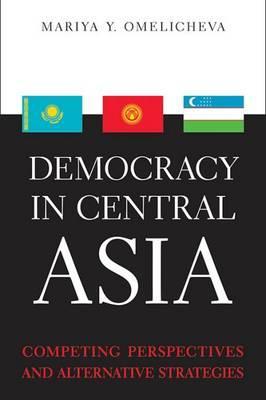
In Democracy in Central Asia, Mariya Omelicheva examines the beliefs and values underlying foreign policies of the major global powers - the United States, the European Union, Russia, and China - in order to understand their efforts to influence political change in Kazakhstan, Kyrgyzstan, and Uzbekistan. Omelicheva has traveled extensively in the region, collecting data from focus groups and public opinion surveys. She draws on the results of her fieldwork as well as on official documents and statements of democracy-promoting nations in order to present a provocative new analysis. Her study reveals that the governments and citizens of Central Asia have developed their own views on democracy supported by the Russian and Chinese models rather than by Western examples.
The vast majority of previous scholarly work on this subject has focused on the strategies of democratization pursued by one agent such as the United States or the European Union. Omelicheva shifts the focus from democracy promoters' methods to their message and expands the scope of existing analysis to include multiple sources of influence. Her fresh approach illuminates the full complexity of both global and regional notions of good governance and confirms the importance of social-psychological and language-based perspectives in understanding the obstacles to expanding egalitarianism.
In Democracy in Central Asia, Mariya Omelicheva examines the beliefs and values underlying foreign policies of the major global powers - the United States, the European Union, Russia, and China - in order to understand their efforts to influence political change in Kazakhstan, Kyrgyzstan, and Uzbekistan. Omelicheva has traveled extensively in the region, collecting data from focus groups and public opinion surveys. She draws on the results of her fieldwork as well as on official documents and statements of democracy-promoting nations in order to present a provocative new analysis. Her study reveals that the governments and citizens of Central Asia have developed their own views on democracy supported by the Russian and Chinese models rather than by Western examples.
The vast majority of previous scholarly work on this subject has focused on the strategies of democratization pursued by one agent such as the United States or the European Union. Omelicheva shifts the focus from democracy promoters' methods to their message and expands the scope of existing analysis to include multiple sources of influence. Her fresh approach illuminates the full complexity of both global and regional notions of good governance and confirms the importance of social-psychological and language-based perspectives in understanding the obstacles to expanding egalitarianism.
PRP: 415.14 Lei

Acesta este Prețul Recomandat de Producător. Prețul de vânzare al produsului este afișat mai jos.
373.63Lei
373.63Lei
415.14 LeiPrimești 373 puncte

Indisponibil
Descrierea produsului
Promoting democracy has long been a priority of Western foreign policy. In practice, however, international attempts to expand representative forms of government have been inconsistent and are often perceived in the West to have been failures. The states of Central Asia, in particular, seem to be "democracy resistant," and their governments have continued to support various forms of authoritarianism in the decades following the Soviet Union's collapse.
In Democracy in Central Asia, Mariya Omelicheva examines the beliefs and values underlying foreign policies of the major global powers - the United States, the European Union, Russia, and China - in order to understand their efforts to influence political change in Kazakhstan, Kyrgyzstan, and Uzbekistan. Omelicheva has traveled extensively in the region, collecting data from focus groups and public opinion surveys. She draws on the results of her fieldwork as well as on official documents and statements of democracy-promoting nations in order to present a provocative new analysis. Her study reveals that the governments and citizens of Central Asia have developed their own views on democracy supported by the Russian and Chinese models rather than by Western examples.
The vast majority of previous scholarly work on this subject has focused on the strategies of democratization pursued by one agent such as the United States or the European Union. Omelicheva shifts the focus from democracy promoters' methods to their message and expands the scope of existing analysis to include multiple sources of influence. Her fresh approach illuminates the full complexity of both global and regional notions of good governance and confirms the importance of social-psychological and language-based perspectives in understanding the obstacles to expanding egalitarianism.
In Democracy in Central Asia, Mariya Omelicheva examines the beliefs and values underlying foreign policies of the major global powers - the United States, the European Union, Russia, and China - in order to understand their efforts to influence political change in Kazakhstan, Kyrgyzstan, and Uzbekistan. Omelicheva has traveled extensively in the region, collecting data from focus groups and public opinion surveys. She draws on the results of her fieldwork as well as on official documents and statements of democracy-promoting nations in order to present a provocative new analysis. Her study reveals that the governments and citizens of Central Asia have developed their own views on democracy supported by the Russian and Chinese models rather than by Western examples.
The vast majority of previous scholarly work on this subject has focused on the strategies of democratization pursued by one agent such as the United States or the European Union. Omelicheva shifts the focus from democracy promoters' methods to their message and expands the scope of existing analysis to include multiple sources of influence. Her fresh approach illuminates the full complexity of both global and regional notions of good governance and confirms the importance of social-psychological and language-based perspectives in understanding the obstacles to expanding egalitarianism.
Detaliile produsului