








Edible Wild Plants of the Prairie: An Ethnobotanical Guide
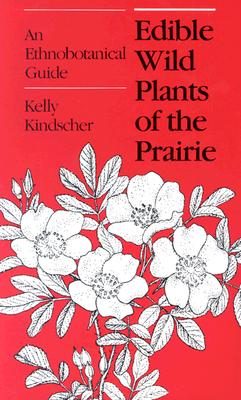
Edible Wild Plants of the Prairie: An Ethnobotanical Guide
Long before sunflower seeds became a popular snack food, they were a foodstuff valued by Native Americans. For some 10,000 years, from the end of the Pleistocene to the 1800s, the indigenous peoples of the plains regarded edible native plants, like the sunflower, as an important source of food. Not only did plants provide sustenance during times of scarcity, but they also added variety to what otherwise would have been a monotonous diet of game. Nevertheless, the use of native plants as food sharply declined when white men settled the Great Plains and imposed their own culture with its differing notions of what was fit to eat. Those notions tended to excluded from the accepted diet such plants as soapweed, labsquarter, ground cherry, prairie turnip, and prickly pear. Today it is strange to think of eating chokecherries, which were a key ingredient in that staple of the Indian diet, permmican. Based on plant lore documented by historical and achaeological evidence, Edible Wild Plants of the Prairie related how 122 plant species were once used as food by the native and immigrant residents on the prairie. Written for a broad audience of amateur naturalists, botanists, ethnologists, anthropologists, and agronomists, this guide is intended to educate the reader about wild plants as food sources, to synthesize information on the potential use of native flora as new food crops, and to encourage the conservation and cultivation of prairie plants. By writing about the edible flora of the American prairie Kelly Kindscher has provided us with the first edible plant book devoted to the region that Walt Whitman called "North America's characteristic landscape" and the Willa Cather called "the floor of the sky." In describing how plants were used for food, he has drawn upon information concerning tribes that inhabited the prairie bioregion. As a consequence, his book serves as a handy compendium for readers seeking to learn more about historical uses of plants by Native Americans. The book is organized into fifty-one chapters arranged alphabetically by scientific name. For those who are interested in finding and identifying the plants, the book provides line drawings, distribution maps, and botanical and habitat descriptions. The ethnobotanical accounts of food use form the major portion of the text, but the reader will also find information on the parts of the plants used, harvesting, propagation (for home gardeners), and the preparation and taste of wild food plan
PRP: 154.94 Lei

Acesta este Prețul Recomandat de Producător. Prețul de vânzare al produsului este afișat mai jos.
123.95Lei
123.95Lei
154.94 LeiPrimești 123 puncte

Indisponibil
Descrierea produsului
Long before sunflower seeds became a popular snack food, they were a foodstuff valued by Native Americans. For some 10,000 years, from the end of the Pleistocene to the 1800s, the indigenous peoples of the plains regarded edible native plants, like the sunflower, as an important source of food. Not only did plants provide sustenance during times of scarcity, but they also added variety to what otherwise would have been a monotonous diet of game. Nevertheless, the use of native plants as food sharply declined when white men settled the Great Plains and imposed their own culture with its differing notions of what was fit to eat. Those notions tended to excluded from the accepted diet such plants as soapweed, labsquarter, ground cherry, prairie turnip, and prickly pear. Today it is strange to think of eating chokecherries, which were a key ingredient in that staple of the Indian diet, permmican. Based on plant lore documented by historical and achaeological evidence, Edible Wild Plants of the Prairie related how 122 plant species were once used as food by the native and immigrant residents on the prairie. Written for a broad audience of amateur naturalists, botanists, ethnologists, anthropologists, and agronomists, this guide is intended to educate the reader about wild plants as food sources, to synthesize information on the potential use of native flora as new food crops, and to encourage the conservation and cultivation of prairie plants. By writing about the edible flora of the American prairie Kelly Kindscher has provided us with the first edible plant book devoted to the region that Walt Whitman called "North America's characteristic landscape" and the Willa Cather called "the floor of the sky." In describing how plants were used for food, he has drawn upon information concerning tribes that inhabited the prairie bioregion. As a consequence, his book serves as a handy compendium for readers seeking to learn more about historical uses of plants by Native Americans. The book is organized into fifty-one chapters arranged alphabetically by scientific name. For those who are interested in finding and identifying the plants, the book provides line drawings, distribution maps, and botanical and habitat descriptions. The ethnobotanical accounts of food use form the major portion of the text, but the reader will also find information on the parts of the plants used, harvesting, propagation (for home gardeners), and the preparation and taste of wild food plan
Detaliile produsului




