





Egypt's Housing Crisis: The Shaping of Urban Space
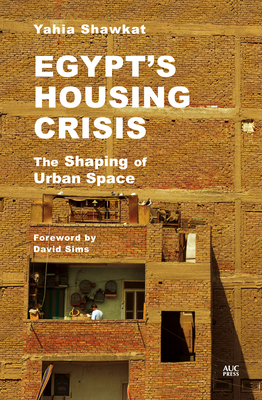
Egypt's Housing Crisis: The Shaping of Urban Space
A provocative analysis of the roots of Egypt's housing crisis and the ways in which it can be tackled Along with football and religion, housing is a fundamental cornerstone of Egyptian life: it can make or break marriage proposals, invigorate or slow down the economy, and popularize or embarrass a ruler. Housing is political. Almost every Egyptian ruler over the last eighty years has directly associated himself with at least one large-scale housing project. It is also big business, with Egypt currently the world leader in per capita housing production, building at almost double China's rate, and creating a housing surplus that counts in the millions of units. Despite this, Egypt has been in the grip of a housing crisis for almost eight decades. From the 1940s onward, officials deployed a number of policies to create adequate housing for the country's growing population. By the 1970s, housing production had outstripped population growth, but today half of Egypt's one hundred million people cannot afford a decent home. Egypt's Housing Crisis takes presidential speeches, parliamentary reports, legislation, and official statistics as the basis with which to investigate the tools that officials have used to 'solve' the housing crisis--rent control, social housing, and amnesties for informal self-building--as well as the inescapable reality of these policies' outcomes. Yahia Shawkat argues that wars, mass displacement, and rural-urban migration played a part in creating the problem early on, but that neoliberal deregulation, crony capitalism and corruption, and neglectful planning have made things steadily worse ever since. In the final analysis he asks, is affordable housing for all really that hard to achieve?
PRP: 361.31 Lei

Acesta este Prețul Recomandat de Producător. Prețul de vânzare al produsului este afișat mai jos.
289.05Lei
289.05Lei
361.31 LeiPrimești 289 puncte
Indisponibil
Descrierea produsului
A provocative analysis of the roots of Egypt's housing crisis and the ways in which it can be tackled Along with football and religion, housing is a fundamental cornerstone of Egyptian life: it can make or break marriage proposals, invigorate or slow down the economy, and popularize or embarrass a ruler. Housing is political. Almost every Egyptian ruler over the last eighty years has directly associated himself with at least one large-scale housing project. It is also big business, with Egypt currently the world leader in per capita housing production, building at almost double China's rate, and creating a housing surplus that counts in the millions of units. Despite this, Egypt has been in the grip of a housing crisis for almost eight decades. From the 1940s onward, officials deployed a number of policies to create adequate housing for the country's growing population. By the 1970s, housing production had outstripped population growth, but today half of Egypt's one hundred million people cannot afford a decent home. Egypt's Housing Crisis takes presidential speeches, parliamentary reports, legislation, and official statistics as the basis with which to investigate the tools that officials have used to 'solve' the housing crisis--rent control, social housing, and amnesties for informal self-building--as well as the inescapable reality of these policies' outcomes. Yahia Shawkat argues that wars, mass displacement, and rural-urban migration played a part in creating the problem early on, but that neoliberal deregulation, crony capitalism and corruption, and neglectful planning have made things steadily worse ever since. In the final analysis he asks, is affordable housing for all really that hard to achieve?
Detaliile produsului



